
The Rupina La Trek is the wildest way to approach Manaslu, climbing to a 4,720-metre pass on the mountain's rarely visited south side and crossing a landscape of glaciers, alpine lakes, and pine forest that sees only a handful of foreign trekkers each year. The route runs from the historic town of Gorkha up the Daraundi Khola valley, past the Gurung village of Barpak, and over the Rupina La pass into the upper Budi Gandaki. It is a strenuous 16 to 20-day camping trek that demands fitness, a full crew, and a tolerance for long days without lodges. If you have already done the Manaslu Circuit Trek and want a deeper, quieter version of the region, this is it.
Trek Overview
The standard Rupina La Trek runs 16 to 20 days and covers roughly 130 kilometres of trail in the Manaslu and Ganesh Himal region. The route starts at Gorkha, the historical capital of Nepal and the starting point of the Prithvi Narayan Shah unification in the 18th century. It climbs through the Daraundi valley to Barpak, the Gurung village that was the epicentre of the 2015 Gorkha earthquake, then continues up to the Rupina La pass at 4,720 metres. After the pass the trail drops into the Budi Gandaki valley and can exit either back to Gorkha or down to Besisahar in the Annapurna region. The route is a full camping trek with no tea houses above Barpak.
Why Visit
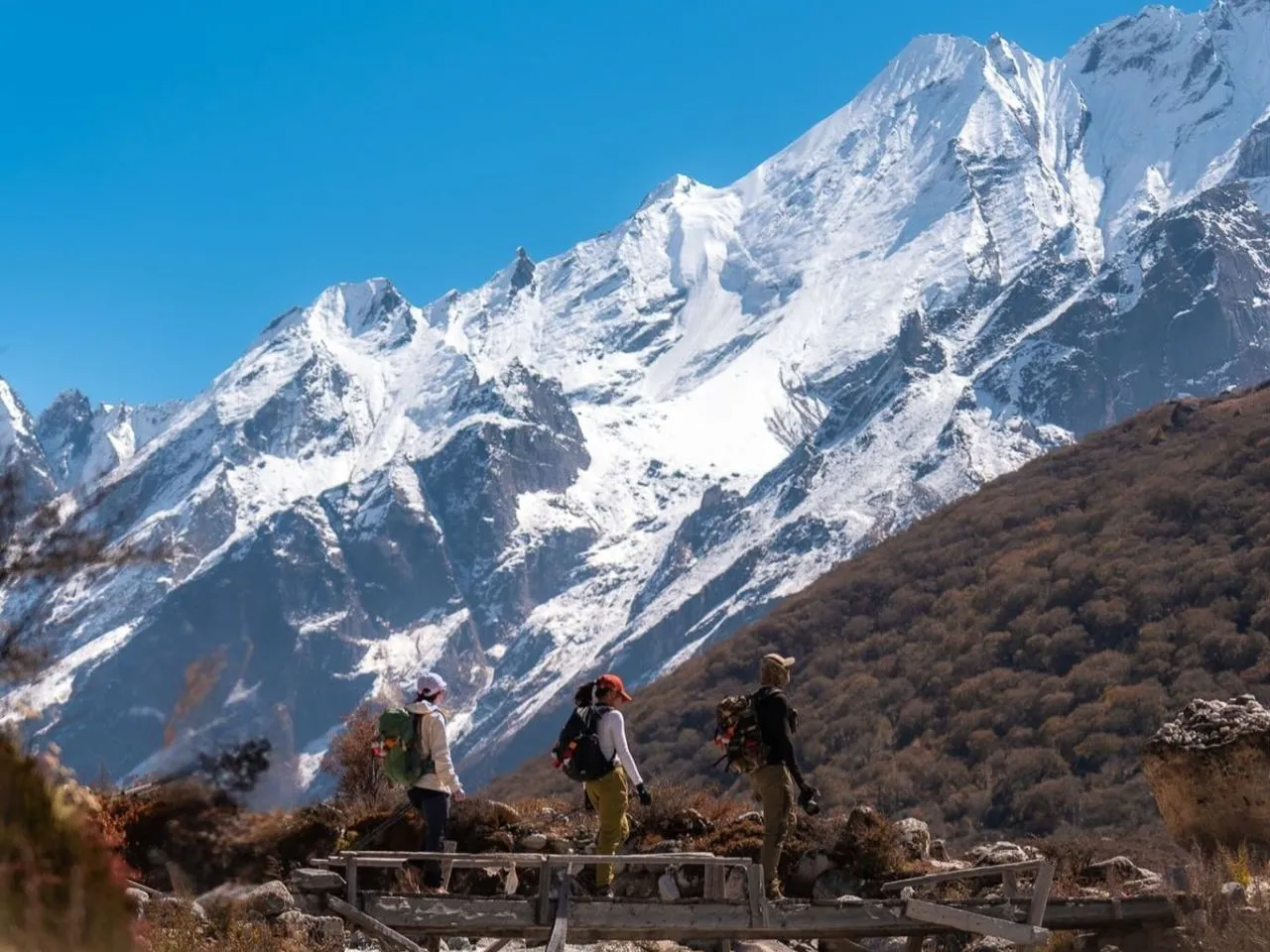
The main reason to do this trek is the solitude. The Manaslu Circuit Trek now sees 5,000 plus trekkers a year, but the Rupina La south-side route sees fewer than a hundred. You walk through old-growth pine and rhododendron forest, past glacier-fed rivers, and over a high pass that was used by local herders for centuries before trekkers discovered it. The historical dimension is also strong: Gorkha is the founding kingdom of modern Nepal, and Barpak is the village where the 2015 earthquake was centred. The mountain views from the pass take in Manaslu (8,163 m), Himalchuli, and the Ganesh Himal range. If you want a genuine expedition-style trek without the crowds of the main circuits, this is one of the best in Nepal.
Best Time to Trek
The best months are October to November and April to May. Autumn (October and November) gives the clearest views after the monsoon, with daytime temperatures of 10 to 18 degrees Celsius at trekking altitude and cold nights down to minus 5 degrees at the pass. Spring (April and May) is warmer and brings rhododendron blooms to the lower forest, though morning haze can obscure distant peaks. Winter (December to February) is not recommended because deep snow can block the pass. We avoid the monsoon (June to September) because the trail becomes a river of mud and the Budi Gandaki crossings become dangerous. For a 2027 trip, aim for mid-October to mid-November for the best combination of stable weather and clear views.
Difficulty Level
The Rupina La Trek is rated strenuous. Daily walking time is five to eight hours on a mix of village paths, herder trails, and boulder-hopping on glacial moraine. The trail above Barpak is unmaintained and route-finding is difficult without an experienced guide. There is a sustained climb of 2,000 metres from Barpak to the pass, and the pass itself can involve short sections of loose snow in early autumn. You need to be comfortable with camping life, cold nights, and basic conditions for 10 to 14 days. Prior experience on a trek like the Manaslu Circuit Trek, the Annapurna Circuit Trek, or the Everest Base Camp Trek is strongly recommended before attempting Rupina La.
Duration
Most operators run an 18-day itinerary, with 15 walking days and three days for access and exit. A shorter 16-day version skips a side trip to the Manaslu glacier viewpoint. A longer 20-day version adds a rest day at Barpak and an acclimatisation day near the pass. Plan two buffer days in Kathmandu at either end in case of road delays or weather. We recommend the 18 to 20-day version to allow for proper acclimatisation and to walk at a sustainable pace.
Route Details
The classic route runs Gorkha to Barpak to Lapu to Rupina La pass to Nyak to Jagat (optional exit) and back to Gorkha or on to Besisahar. From Gorkha the trail climbs steadily through the Daraundi Khola valley to Barpak (1,900 m), a large Gurung village with spectacular mountain views. Above Barpak the trail enters pine forest and climbs to Lapu (2,300 m), the last permanent village before the pass. The approach to Rupina La crosses the Manaslu Conservation Area boundary, climbs past glacial lakes, and reaches the 4,720-metre pass on day 9 or 10. The descent drops into the Nyak valley and joins the Manaslu Circuit trail at Jagat or Philim, from where you can exit to Besisahar or return over another pass to Gorkha.
Itinerary Overview
Day 1: Drive Kathmandu to Gorkha (5-6 hours, 1,100 m). Day 2: Trek Gorkha to Khanchok (6 hours, 1,400 m). Day 3: Trek Khanchok to Barpak (6 hours, 1,900 m). Day 4: Acclimatisation day at Barpak. Day 5: Trek Barpak to Lapu (5-6 hours, 2,300 m). Day 6: Trek Lapu to Rupina La base camp (5-6 hours, 3,800 m). Day 7: Acclimatisation day. Day 8: Trek base camp to Rupina La pass (4,720 m) and descend to Nyak phedi (6-7 hours, 3,500 m). Day 9: Trek to Nyak (3,000 m). Day 10: Trek to Jagat (1,300 m). Day 11-15: Return to Gorkha or exit to Besisahar.
최대 고도
The maximum altitude is 4,720 metres at the Rupina La pass. Nights are spent at 3,500 to 3,800 metres for two to three days near the pass, which is firmly in the altitude-risk zone. Proper acclimatisation is essential: plan at least two rest days between Barpak and the pass, ascend no more than 500 metres of sleeping altitude per day above 3,000 metres, and stay hydrated. If you feel a severe headache, nausea, or breathlessness at altitude, descend immediately. The pass itself is not technical but can involve loose snow in early autumn, so crampons may be needed.
Weather
Daytime temperatures at trekking altitude range from 8 to 18 degrees Celsius in spring and autumn, with cold nights down to minus 5 to minus 10 degrees at the pass. Winter nights can drop to minus 15 degrees with deep snow blocking the trail. The monsoon brings heavy rain from late June to early September, and the river crossings on this route become dangerous. Carry a warm down jacket, a four-season sleeping bag, and full windproof and waterproof shell layers. The pass is exposed to wind, so pack a balaclava and warm gloves for the crossing day.
Accommodation
Below Barpak there are basic lodges and homestays in the Gurung villages. Above Barpak the route is camping-only: you will sleep in tents at established campsites along the trail for 10 to 12 nights. The camp crew sets up the dining tent, kitchen, and toilet tent at each stop. Sleeping mats (closed-cell foam or inflatable) and a four-season sleeping bag rated to minus 15 degrees are essential. Standards are basic but the crew makes the camps as comfortable as possible with hot drinks, warm meals, and a wood stove in the dining tent on cold evenings.
Tea Houses
There are a few basic tea houses in Gorkha, Khanchok, and Barpak at the start and end of the trek. Above Barpak there are no tea houses; you rely on the camping crew for all meals and lodging. The tea houses that exist are simple family-run guesthouses with shared squat toilets and foam mattresses. Food is basic Nepali fare. If you exit via Jagat on the Manaslu Circuit, you rejoin the tea-house network for the final days of the trek.
캠핑
The Rupina La Trek is a full camping trek above Barpak, and the camping setup is expedition-style. The crew carries two-person mountain tents, a dining tent with table and chairs, a kitchen tent, and a toilet tent. A typical camp setup includes a cook, kitchen boy, and one porter per two trekkers to carry personal gear, plus porters for the group gear. Camp is set up and taken down by the crew each day. Bring your own sleeping bag, sleeping mat, and a small camp pillow. Evening meals are served in the dining tent with hot soup, a main course, and tea. The camping life is part of the appeal for many trekkers, but be prepared for cold nights and basic conditions.
Food
Below Barpak, lodge menus offer dal bhat, fried rice, chowmein, and momos. Above Barpak the camp cook prepares all meals: breakfast is usually porridge, eggs, Tibetan bread, and tea; lunch is packed (sandwiches, boiled eggs, fruit, biscuits); dinner is soup, dal bhat, vegetable curry, and occasionally pasta or noodles. The crew carries fresh vegetables for the first week and switches to tinned and dried food higher up. Bring your own snacks (chocolate, nuts, energy bars) for the long days. Food allergies and vegetarian preferences can be accommodated with advance notice.
Drinking Water
Safe drinking water is sourced from streams and springs along the trail and boiled by the camp crew each evening and morning. Carry at least two litres per person for the day, refilling at lunch stops. We recommend a SteriPen or purification tablets as a backup. Avoid single-use plastic bottles, which are not sold above Barpak anyway. The water at high altitude tastes clean but always treat it. Carry a thermos for hot drinks on the pass-crossing day.
전기
Below Barpak the route is on the national grid in the larger villages, but power cuts are common. Above Barpak there is no electricity; the camp crew may carry a small solar panel for charging the satellite phone and crew devices. Carry at least two power banks rated to 10,000 mAh each for your phone, camera, and headlamp. Solar chargers work well in clear weather but are unreliable in cloud. Bring spare camera batteries and a headlamp with fresh cells.
Internet & Mobile Network
Nepal Telecom has 3G coverage in Gorkha and Barpak, but the signal disappears above Barpak and does not return until you reach the Manaslu Circuit trail near Jagat. Ncell coverage is patchier. Most lodges below Barpak do not offer WiFi. Buy a local SIM at Kathmandu before the trek, and download offline maps. Carry a satellite communicator (Garmin inReach or similar) for safety, as you will be out of mobile coverage for 10 to 12 days.
수송
The trailhead at Gorkha is a 5 to 6-hour drive from Kathmandu on the Prithvi Highway and a side road. Public buses run daily but are crowded; we recommend a private jeep through your trekking company. If you exit at Besisahar, the drive back to Kathmandu is about 6 to 7 hours. For 2027 trips, budget $150 to $250 per person for jeep transfers each way. Some itineraries fly back from Pokhara if they exit via the Annapurna side, which adds $120 to $180 for the domestic flight.
Required Permits
You need two permits: a Manaslu Conservation Area Permit (MCAP) and a TIMS Card. The MCAP costs about $30 per person and the TIMS Card is $10 to $20. Both are arranged in Kathmandu through your trekking company. Bring four passport photos and a copy of your passport. No restricted-area permit is required for the Rupina La south-side route (unlike the Manaslu Circuit, which requires a restricted-area permit). The permits are checked at the Manaslu Conservation Area entrance gate above Barpak.
포장 목록
Pack for high altitude and cold nights. Essentials: mountaineering-grade trekking boots, four pairs of trekking socks, a down jacket rated to minus 15, a fleece mid-layer, a hard shell jacket and trousers, two base layers, trekking trousers, a warm hat, a balaclava, warm gloves and liner gloves, sunglasses (category 4), high-SPF sunscreen, a headlamp with spare batteries, a 2-litre water bottle, a small first-aid kit including Diamox, and personal medication. Trekking poles are essential for the pass crossing. Bring a four-season sleeping bag, a closed-cell foam mat, and a 50 to 60-litre backpack. Crampons may be needed in early autumn.
Budget Guide
The Rupina La Trek is expensive because of the full camping crew and long duration.
| 항목 | Cost (USD) |
|---|---|
| 허가 | $50 |
| Transport Kathmandu-Gorkha-Besisahar-Kathmandu | $200-300 |
| Guide (18 days) | $360-540 |
| Cook and kitchen crew (18 days) | $360-540 |
| Porters (18 days, 3 porters) | $540-810 |
| Food and lodging (18 days) | $360-540 |
| Camping gear rental | $100-150 |
| Total (full-service 18-day trek) | $1,970-2,930 |
An organised 18-day Rupina La Trek from Kathmandu costs $2,200 to $3,200 per person including everything. For 2027 trips, budget 5 to 10 percent more due to inflation. Insurance with helicopter rescue is mandatory and costs $100 to $180.
Photography Tips
The Rupina La pass at sunrise is the money shot, with Manaslu rising directly above and the Ganesh Himal range to the east. A wide-angle lens (16 to 35mm) covers the panorama; a 70 to 200mm is useful for compressing the distant peaks and for portraits of the crew on the pass. The glacial lakes on the approach make excellent foreground subjects with reflections of the peaks. Barpak village, with its stone houses and terraced fields, is one of the most photogenic Gurung villages in Nepal. Carry lens cloths for dust and a small tripod for low-light shots at camp.
Wildlife
The Manaslu Conservation Area is home to the endangered snow leopard, though sightings are extremely rare. More commonly seen are Himalayan tahr, blue sheep, musk deer, and the Himalayan marmot. The forests below Barpak hold barking deer, wild boar, and rhesus macaque. Birdlife includes Himalayan monal, koklass pheasant, blood pheasant, and various birds of prey. The high pastures near the pass are good for snowcock and griffon vultures. Keep a respectful distance from all wildlife, particularly any livestock guarding dogs in the herder camps.
Flora
The route crosses subtropical chir pine forest at lower elevations, transitioning to oak, rhododendron, and laurel forest at mid-elevations. Spring (April to May) brings rhododendron blooms in red, pink, and white along the climb to Lapu. The forests above Lapu have a mix of birch, fir, and juniper, with moss and lichens in the wetter sections. The alpine meadows above 4,000 metres are carpeted with wildflowers in late spring and summer, including primulas, gentians, and edelweiss. The pass itself is above the vegetation line, with bare rock, snow, and glacial ice. Do not pick alpine flowers.
Local Culture
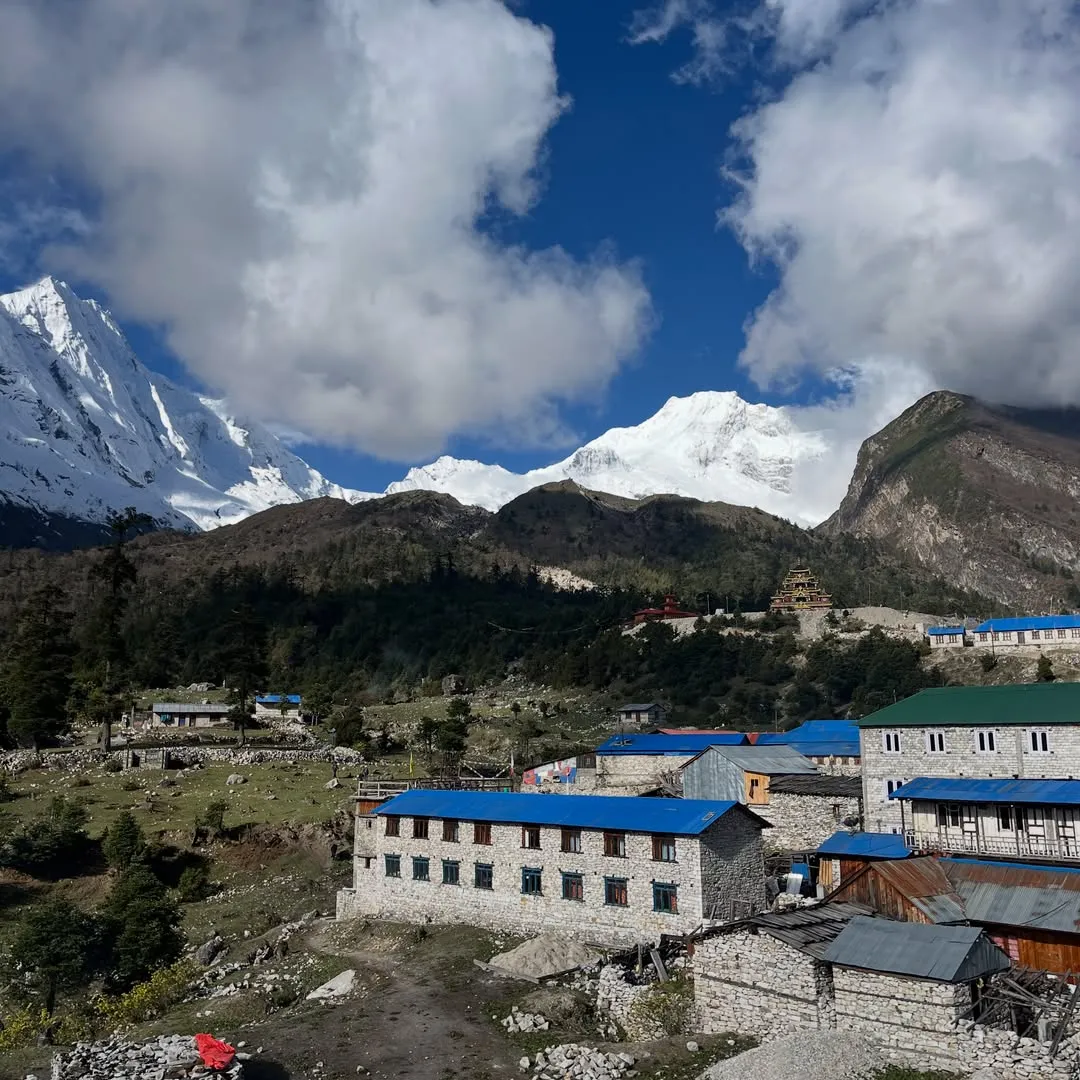
The trek passes through Gurung and Ghale villages in the lower Daraundi valley, with Tibetan-influenced Buddhist communities higher up near the Manaslu Circuit. Barpak is a large Gurung village known for its recruitment into the British and Indian Gurkha regiments, and many families have members serving abroad. The village was the epicentre of the 2015 Gorkha earthquake, and reconstruction is still visible. Most families combine subsistence farming with seasonal work in Kathmandu or abroad. Dress modestly when passing through villages and always ask before photographing people. The Buddhist gompas near Nyak are worth a visit if you exit via the Manaslu Circuit.
Local Villages
Gorkha (1,100 m) is the historical capital of Nepal and the starting point of the trek, with the Gorkha Durbar palace and the Kalika temple. Khanchok (1,400 m) is a small Gurung village on the Daraundi river, the first overnight stop. Barpak (1,900 m) is a large Gurung village of about 1,000 houses, the epicentre of the 2015 earthquake, and the last tea-house stop before the pass. Lapu (2,300 m) is a small seasonal herder settlement at the edge of the forest line. Nyak (3,000 m) is a Tibetan-influenced village on the Manaslu side of the pass, the first permanent settlement after the crossing.
Safety Tips
The Rupina La Trek is a serious wilderness trek and you must be self-sufficient. Carry a comprehensive first-aid kit including Diamox, dexamethasone, blister plasters, paracetamol, and rehydration salts. Treat all water before drinking. The pass crossing is exposed and can be dangerous in bad weather or fresh snow; check the forecast and turn back if conditions deteriorate. Carry a satellite communicator, as mobile coverage disappears above Barpak. Travel with a licensed guide and a full camping crew. River crossings can be dangerous in and after rain; the crew will help you assess and cross safely. Do not attempt this trek without prior high-altitude experience.
Altitude Sickness Guide
The maximum altitude is 4,720 metres at the Rupina La pass, with two to three nights spent at 3,500 to 3,800 metres. The risk of altitude sickness is significant. Ascend slowly: plan no more than 500 metres of sleeping altitude gain per day above 3,000 metres, and include at least two acclimatisation days between Barpak and the pass. Common mild symptoms include mild headache, reduced appetite, and mild breathlessness. More serious symptoms requiring immediate descent include severe headache, vomiting, ataxia (loss of balance), and breathlessness at rest. Consider taking Diamox (125 to 250 mg twice daily) from Barpak onwards as prophylaxis. Stay hydrated, eat regular meals, and avoid alcohol. The pass day is long; start early and turn back if anyone shows serious symptoms.
Emergency Contacts
The nearest hospital is in Gorkha town, about 3 to 5 days' walk from the pass. For serious emergencies, helicopter evacuation to Kathmandu is the standard response. There is a small health post in Barpak with basic facilities. Mobile coverage is unavailable above Barpak, so a satellite phone or Garmin inReach is essential. Your insurance must cover helicopter rescue from high altitude. Program your insurance assistance number, your trekking company's 24-hour line, and the Himalayan Rescue Association number into your satellite device and carry them in print. Inform family of your expected check-in schedule.
Responsible Tourism
Carry out all waste, including toilet paper and food wrappers, above Barpak where there is no infrastructure. Use established campsites rather than creating new ones. Do not approach wildlife too closely, particularly herds of blue sheep or tahr. Buy local food in villages rather than importing from Kathmandu where possible. Tip your crew fairly: about $20 per day for the guide, $15 per day for the cook, and $10 per day for porters. Respect the cultural and religious significance of the mountains to local communities. If you encounter herder camps, ask permission before setting up your own camp nearby.
자주 묻는 질문
These are the questions we hear most often about the Rupina La Trek, with answers reflecting 2027 conditions.
요약
The Rupina La Trek is a 16 to 20-day strenuous camping trek to a 4,720-metre pass on the south side of Manaslu, running from Gorkha through Barpak and over the pass to the Manaslu Circuit trail. The route is one of the least-trekked in Nepal, with no tea houses above Barpak and a full camping crew required. Highlights include the historic town of Gorkha, the Gurung village of Barpak, the panoramic views from the Rupina La pass, and the genuine wilderness experience. The access is straightforward, but the trek itself demands fitness, acclimatisation discipline, and a tolerance for camping life. Plan 18 to 20 days, budget $2,200 to $3,200, and bring a spirit of expedition.
결론
If you have done the Manaslu Circuit Trek or the Annapurna Circuit Trek and want a deeper, quieter, more expedition-style experience of the Manaslu region, the Rupina La Trek is one of the best options in Nepal. The combination of historical Gorkha, the resilient Gurung village of Barpak, the wild south-side approach, and the high pass makes it a genuinely memorable trek. Plan a 2027 trip for October, hire an experienced guide and full camping crew, and bring solid high-altitude gear. This is the kind of trek that gives you the solitude and adventure that the main circuits of Nepal no longer offer.
추천 트레킹 패키지
탐험할 트레킹 장소
Explore Trips in Nepal
Hand-picked guided trips to this destination

 English
 Deutsch
 Svenska
 Dansk
Dansk Русский
 Français
 Português
 Español
 Polski
 简体中文
简体中文 日本語
日本語 ไทย
ไทย العربية
 한국어
한국어