
Quick Answer
The best Upper Dolpo trek operators in 2027 to 2030 share four traits: they run 18 to 24 day routes from Juphal, carry their own tents and cook crew above 4,000 m, hold proven Shey Gompa and Kang La crossing experience, and stock fuel and food at high camps before the group arrives. The route crosses three passes above 5,000 m and has no teahouse coverage above Ringmo, so full camping logistics are mandatory. Total cost runs $2,400 to $3,800 per person including the $500 Upper Dolpo restricted area permit.
Detailed Breakdown
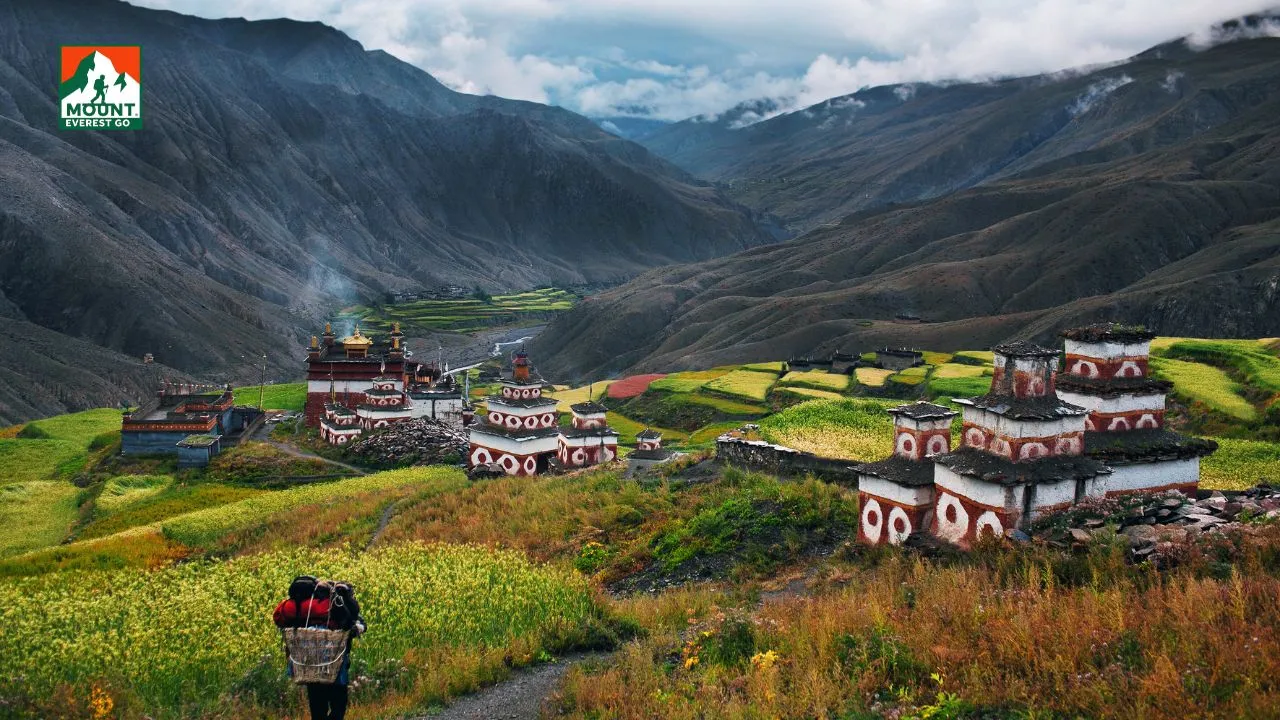
Upper Dolpo sits behind the Himalaya in rain shadow and sees fewer than 800 trekkers per year. The standard 24 day circuit starts at Juphal, climbs to Shey Phoksundo Lake at 3,640 m, crosses Kang La at 5,360 m to Shey Gompa, then crosses Saldang La at 5,200 m and Jeng La at 5,090 m before descending to Do Tarap and back to Juphal. No teahouses exist above Ringmo, so the operator must carry tents, food, and fuel for 14 to 18 nights.
A reliable operator submits the Upper Dolpo restricted area permit application at least 21 days before the start date, names a licensed guide who has run the route at least three times, and pre positions food and kerosene at Shey Gompa and Tokyu to cut porter loads. Ask for the last three permit numbers, the satellite phone number that connects to Nepalgunj, and the contingency plan for snow on Kang La.
Cost/Component Breakdown
| Component | Cost (USD) |
|---|---|
| Upper Dolpo Restricted Area Permit (10 days) | $500 |
| Shey Phoksundo National Park Permit | $30 |
| TIMS Card | $17 |
| Nepalgunj to Juphal flights (round trip) | $320 to $380 |
| Licensed guide (22 days) | $660 to $880 |
| Cook and kitchen crew (22 days) | $700 to $950 |
| Porter crew (22 days, 1 per trekker) | $1,100 to $1,500 |
| Camping gear and kitchen kit | $200 to $320 |
| Food and fuel (22 days) | $520 to $720 |
| Satellite phone rental and crew insurance | $120 to $180 |
| Total per person (group of 4) | $2,400 to $3,800 |
What Affects the Answer
Three factors shape operator quality. First, route variant: the 24 day circuit crosses three passes and needs full camping, while the shorter 18 day Shey Phoksundo to Shey Gompa out and back cuts one pass and reduces cost by $600 per person. Pick operators who offer both and explain the trade off.
Second, season: monsoon months from June to September are the only window when Upper Dolpo is passable, since winter snow blocks Kang La from November to May. Operators who claim year round crossings are not credible.
Third, group size: a 4 person group needs 6 to 8 porters for 22 days, while a 2 person group needs 4 porters. Solo trekkers cannot obtain the restricted area permit. Match the group size to the operator crew ratio.
Booking Tips
Shortlist 4 operators with Upper Dolpo trips run in 2025 or 2026. Ask each for the last three permit numbers, the named guide, and the satellite phone check protocol. Reject any operator who quotes under $2,300 per person, since that signals skipped crew insurance or understocked high camps.
Confirm the operator pre positions food at Shey Gompa and Tokyu. Pay 30 percent deposit by credit card, 50 percent on arrival in Nepalgunj, and 20 percent at Juphal trailhead. Avoid any operator who demands 100 percent upfront in cash.
Comparison With Alternatives
Compared with Lower Dolpo, which runs 12 to 14 days and stays below 4,000 m with teahouse coverage at Do Tarap and Ringmo, Upper Dolpo needs full camping and a $500 permit versus $90. Trekkers short on time should pick Lower Dolpo; trekkers wanting Shey Gompa and the high crossings should pick Upper Dolpo.
Compared with Upper Mustang, which runs 14 to 17 days on a similar rain shadow plateau with teahouse lodging at Lo Manthang, Upper Dolpo is wilder and more physically demanding. Mustang suits trekkers wanting culture; Dolpo suits trekkers wanting wilderness.
Common Mistakes to Avoid
Do not book an Upper Dolpo operator who quotes 14 days. The route needs 18 days minimum for safe acclimatization across the three 5,000 m passes.
Avoid operators with no Kang La contingency plan. Snow on Kang La in October forces 1 to 3 day waits, and an unprepared crew runs out of food. Skip any plan that omits the Upper Dolpo restricted area permit from the quote, since you cannot buy it independently.
FAQ
How many days should an Upper Dolpo trek take?18 to 24 days. The standard circuit crosses three passes above 5,000 m and needs 14 to 18 nights of camping above Ringmo.
Can I trek Upper Dolpo independently?No. The restricted area permit requires a licensed guide and a group of two, with no teahouse coverage above Ringmo.
What permit cost should I expect?$500 for the 10 day Upper Dolpo permit, $30 for Shey Phoksundo, and $17 for TIMS. Extensions cost $50 per day.
Which months are safe for Upper Dolpo?June to September during the monsoon. Winter snow blocks the high passes from November to May, and the spring window is unreliable.
What crew ratio should a 4 person group use?One licensed guide, one cook, one kitchen helper, and 6 to 8 porters for 22 days. Solo porter trekkers should not attempt.
Summary
The best Upper Dolpo trek operators in 2027 to 2030 run 18 to 24 day routes from Juphal, carry full camping logistics above Ringmo, and pre position food at Shey Gompa and Tokyu. Total cost runs $2,400 to $3,800 per person for a 4 person group. Verify three recent permit numbers and a Kang La contingency plan before booking.
Conclusion
Book an Upper Dolpo operator that names a guide with three or more crossings, pre positions food at high camps, and carries a satellite phone to Nepalgunj. Pay in stages, lock in the monsoon window, and reject any quote under $2,300. The right operator turns the 5,360 m Kang La crossing into a controlled wilderness trek.
Recommended Trek Packages
Trekking Places to Explore
Explore Trips in Nepal
Hand-picked guided trips to this destination

 English
 Deutsch
 Svenska
 Dansk
Dansk Русский
 Français
 Português
 Español
 Polski
 简体中文
简体中文 日本語
日本語 ไทย
ไทย العربية
 한국어
한국어