- Duration
- 16 days
- Max altitude
- 6,461 m
- Difficulty
- Medium
- Group size
- Max 12
- From
- US$2,000
Region: Everest Region
Overview
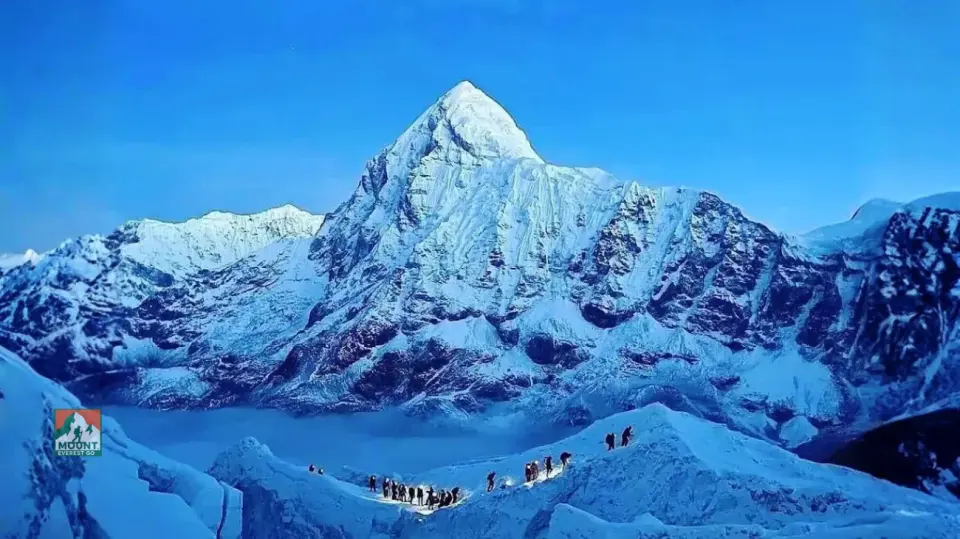
Standing proudly at 6,461 meters (21,190 ft), Mera Peak is the tallest trekking peak in Nepal. It lies in the heart of the Khumbu region, east of the Dudh Kosi River, and offers one of the most accessible yet truly rewarding Himalayan climbs. Though the journey is long and physically demanding, the ascent itself is not technically complex—making it ideal for adventurers with basic mountaineering experience.
The trek begins in Kathmandu, followed by a breathtaking flight to Lukla, the gateway to the Everest region. From there, the trail winds through remote Sherpa villages, rhododendron and pine forests, and the beautiful Hinku Valley. You’ll pass through places like Chutanga, Thuli Kharka, Kothe, and Tangnang, all while gradually acclimatizing to the altitude.
From Khare (4,800m), the trail leads to Mera La (5,415m) and onward to High Camp, where climbers prepare for their summit push. The climb to the top of Mera Peak (6,461m) is unforgettable—gentle snow slopes lead to panoramic views of five of the world’s highest mountains: Everest, Lhotse, Makalu, Cho Oyu, and Kanchenjunga.
This expedition combines classic Himalayan trekking with a real alpine ascent, without technical climbing difficulty, making it the perfect introduction to high-altitude mountaineering. Supported by experienced Sherpa climbers, porters, and a dedicated crew, Mera Peak Climbing ensures safety, comfort, and a lifetime memory of summiting Nepal’s highest trekking peak.
Read Before you book Mera Peak Climbing
Difficulty Level
Mera Peak Climbing is rated Alpine PD (Peu Difficile)—technically straightforward but physically demanding due to altitude. You’ll use crampons, ice axe, and ropes on the summit day. Ideal for trekkers with basic mountaineering experience or prior high-altitude trekking background.
Preparation & Fitness
Train for at least 2–3 months before departure with long hikes, cardio, and endurance workouts. Focus on building leg strength and stamina. Weekend hikes with a backpack (5–6 hours) are excellent preparation.
Health & Altitude
Altitude sickness can occur above 3,000m. Our itinerary includes proper acclimatization days. We carry a first aid kit, oximeter, and portable oxygen at all times. Guides are trained in AMS management, and helicopter evacuation can be arranged if needed (insurance required).
Accommodation & Meals
In Kathmandu: 3-star hotel with breakfast (e.g., Himalayan Suite or Sampada Garden).
During Trek: Lodges or teahouses with simple twin-sharing rooms.
High Camp: Tent accommodation with warm sleeping arrangements and mess tent for meals.
Meals: Nutritious Nepali and Western-style dishes—rice, pasta, lentils, eggs, and vegetables, with tea/coffee provided.
Safety & Communication
All expeditions are equipped with a satellite phone, radio sets, and high-altitude medical kits. Guides monitor weather reports and maintain communication between camps.
Group Size
Minimum 2 participants, maximum 10 for personalized guidance. Each 2-member group has 1 Sherpa at the climbing stage for safety and support.
After you book: Mera Peak packing list, route map & places
Once your place is confirmed, prepare with our Mera Peak packing list, follow the Mera Peak route map, and meet the gateway town on the trail: Lukla.
Highlights
- Summit Mera Peak (6,461m) – the highest trekking peak in Nepal
- Enjoy 360° views of Everest, Lhotse, Makalu, Cho Oyu, and Kanchenjunga
- Trek through remote Hinku Valley and untouched Himalayan forests
- Experience authentic Sherpa culture and local villages
- Expert climbing Sherpas with 2:1 support ratio during summit
- Perfect acclimatization schedule for safe altitude gain
- Wilderness adventure far from crowded Everest trails
Day-by-day itinerary
Day 1: Arrival in Kathmandu (1,400m)
1,400 m
Arrive in Kathmandu, where our local team greets you at the airport and transfers you to your hotel. In the evening, attend a briefing about your Mera Peak climb and enjoy a welcome dinner.
Accommodation: 3 Stars Hotel · Meals: Dinner · Overnight: Kathmandu (1400 m)
Day 2: Prepare for Trekking and Explore Kathmandu Valley
Prepare for Trekking and Explore Kathmandu Valley (1,350m)
Check your climbing gear, collect permits, and explore Kathmandu’s cultural highlights such as Swayambhunath and Durbar SquareDay 3: Flight Kathmandu – Lukla – Trek to Chutanga (3,500m)
3,500 m
Take a scenic mountain flight to Lukla and start your trek toward Chutanga through pine forests and Sherpa settlements.
Accommodation: Tea House · Meals: Breakfast, Lunch, Dinner · Overnight: Chutanga (3500 m)
Day 4: Trek from Chutanga to Thuli Kharka (4,300m)
4,300 m
Cross the Zatrwa La Pass for your first major ascent. Magnificent mountain views accompany you as you reach Thuli Kharka.
Accommodation: Tea House · Meals: Breakfast, Lunch, Dinner · Overnight: Thuli Kharka (4300 m)
Day 5: Trek from Thuli Kharka to Kothe (3,580m)
3,580 m
Descend through forested paths and follow the Hinku River to reach Kothe—a quiet settlement surrounded by lush greenery.
Accommodation: Tea House · Meals: Breakfast, Lunch, Dinner · Overnight: Kothe (3580 m)
Day 6: Trek from Kothe to Tangnang (4,356m)
4,356 m
Continue up the Hinku Valley with views of Mera Peak ahead. Tangnang is a beautiful alpine village beneath glacial moraines.
Accommodation: Tea House · Meals: Breakfast, Lunch, Dinner · Overnight: Tangnang (4356 m)
Day 7: Hike to Thangnang Ri (5,000m) – Return to Tangnang
5,000 m
A day for acclimatization and training hikes. Climb Thangnang Ri to strengthen your lungs and enjoy stunning glacier views.
Accommodation: Tea House · Meals: Breakfast, Lunch, Dinner · Overnight: Thangnang Ri (5000 m)
Day 8: Trek from Tangnang to Khare (4,800m)
4,800 m
Follow the trail over lateral moraines to Khare, the last village before Mera Peak. Prepare for your climb and rest.
Accommodation: Tea House · Meals: Breakfast, Lunch, Dinner · Overnight: Khare (4800 m)
Day 9: Acclimatization in Khare
Spend an extra day at Khare practicing rope techniques and adjusting to high altitude.
Accommodation: Tea House · Meals: Breakfast, Lunch, Dinner
Day 10: Trek from Khare – Mera La (5,415m) – Mera High Camp
5,780 m
Cross the Mera La glacier and continue to High Camp. Overnight in tents with full expedition support.
Accommodation: Camping · Meals: Breakfast, Lunch, Dinner · Overnight: Mera High Camp (5780 m)
Day 11: Summit Mera Peak (6,461m) – Return to Khare
6,461 m
Start early for the summit push. After several hours of steady ascent on snow slopes, reach the top of Mera Peak and witness breathtaking Himalayan panoramas. Descend safely to Khare.
Accommodation: Tea House · Meals: Breakfast, Lunch, Dinner · Overnight: Mera Peak (6461 m)
Day 12: Trek from Khare to Kothe
Retrace your steps down to Kothe through alpine meadows and pine forests.
Accommodation: Tea House · Meals: Breakfast, Lunch, Dinner
Day 13: Trek from Kothe to Thuli Kharka
Ascend back through the rhododendron forest to Thuli Kharka.
Accommodation: Tea House · Meals: Breakfast, Lunch, Dinner
Day 14: Trek from Thuli Kharka to Lukla
Cross the Zatrwa La Pass again and descend to Lukla for the final night of celebration with your climbing crew.
Accommodation: Tea House · Meals: Breakfast, Lunch, Dinner
Day 15: Fly Back to Kathmandu
Enjoy one last mountain flight and transfer to your hotel in Kathmandu. Free afternoon for rest or shopping.
Accommodation: 3 Stars Hotel · Meals: Breakfast, Lunch
Day 16: Final Departure
Final Departure
Transfer to the international airport for your onward flight. End of your Mera Peak Climbing adventure.
What's included
- Airport pick-up and drop-off by private vehicle
- 3-night hotel accommodation in Kathmandu with breakfast
- Welcome and farewell dinners in Kathmandu
- All domestic flights (Kathmandu – Lukla – Kathmandu)
- Expedition royalty and climbing permits (NMA & National Park)
- Food and accommodation during trek and climb (3 meals/day + tea/coffee)
- Licensed English-speaking guide and professional climbing Sherpa (2 member: 1 Sherpa)
- Porters (1 porter per 2 members, up to 25kg per person)
- High camp tents, mess tent, kitchen equipment, EPI gas, and climbing gear (group use)
- Staff insurance, salary, food, and transportation
- Weather forecasts and oximeter for altitude monitoring
- Mera Peak Climbing Certificate issued by NMA
Not included
- International flights
- Nepal entry visa fee (USD 50 for 30 days)
- Meals in Kathmandu (except welcome/farewell dinner)
- Personal climbing gear and clothing
- Personal expenses (laundry, Wi-Fi, hot showers, alcohol, etc.)
- Travel insurance covering high-altitude evacuation (mandatory)
- Filming and drone permit fees
- Extra accommodation due to delays or early returns
- Tips for guides, porters, and climbing staff (recommended USD 100 minimum)
Fitness & eligibility: Mera Peak Climbing – 16 Days
Who can join
- You are in good general health and enjoy long days on foot in the mountains.
- Earlier hill walking or trekking helps: the itinerary shows how long and how high each day is.
- Travel insurance that covers trekking up to the highest point of your trip, emergency medical costs and helicopter evacuation is required.
- A passport valid for at least six months after your arrival and a visa for the country you visit.
Fitness required
- Able to walk several hours a day on uneven, rocky and steep mountain paths.
- Able to carry a small day pack with water, snacks and warm layers.
- Regular walking, hill walks, stair climbing, running or cycling in the 6 to 8 weeks before the trip make the days much easier.
Health and awareness
- Please tell us before booking about any heart, lung or blood pressure condition, diabetes, recent surgery or pregnancy.
- If you have a medical condition or take regular medicine, ask your doctor whether a trek at high altitude is safe for you.
- Headache, nausea, dizziness, poor sleep or breathlessness at rest can be signs of altitude sickness: tell your guide at once.
- Walk at a slow, steady pace, drink plenty of water and keep to the acclimatisation days in the itinerary.
Things to Carry / Packing
FAQs
How difficult is Mera Peak Climbing?
Mera Peak is physically challenging but technically moderate. Basic mountaineering experience is sufficient.
Do I need previous climbing experience?
Some experience with crampons and ropes helps but is not mandatory with a Sherpa guide.
What’s the best time to climb Mera Peak?
Spring (March–May) and Autumn (September–November) offer the best weather and stable snow conditions.
What permits are required?
NMA Climbing Permit, Makalu Barun National Park entry, and local municipality permits—all included.
Is travel insurance necessary?
Yes. Your insurance must cover emergency helicopter evacuation above 6,000m.
What kind of accommodation is available during the trek?
Teahouses up to Khare, and tents at High Camp.
How cold does it get?
At High Camp, temperatures can drop below -15°C at night. Proper clothing and sleeping bags are essential.
Is Mera Peak suitable for beginners?
Yes, if you have good fitness, determination, and basic mountain experience, Mera Peak is an excellent first Himalayan climb.