
Trek Overview
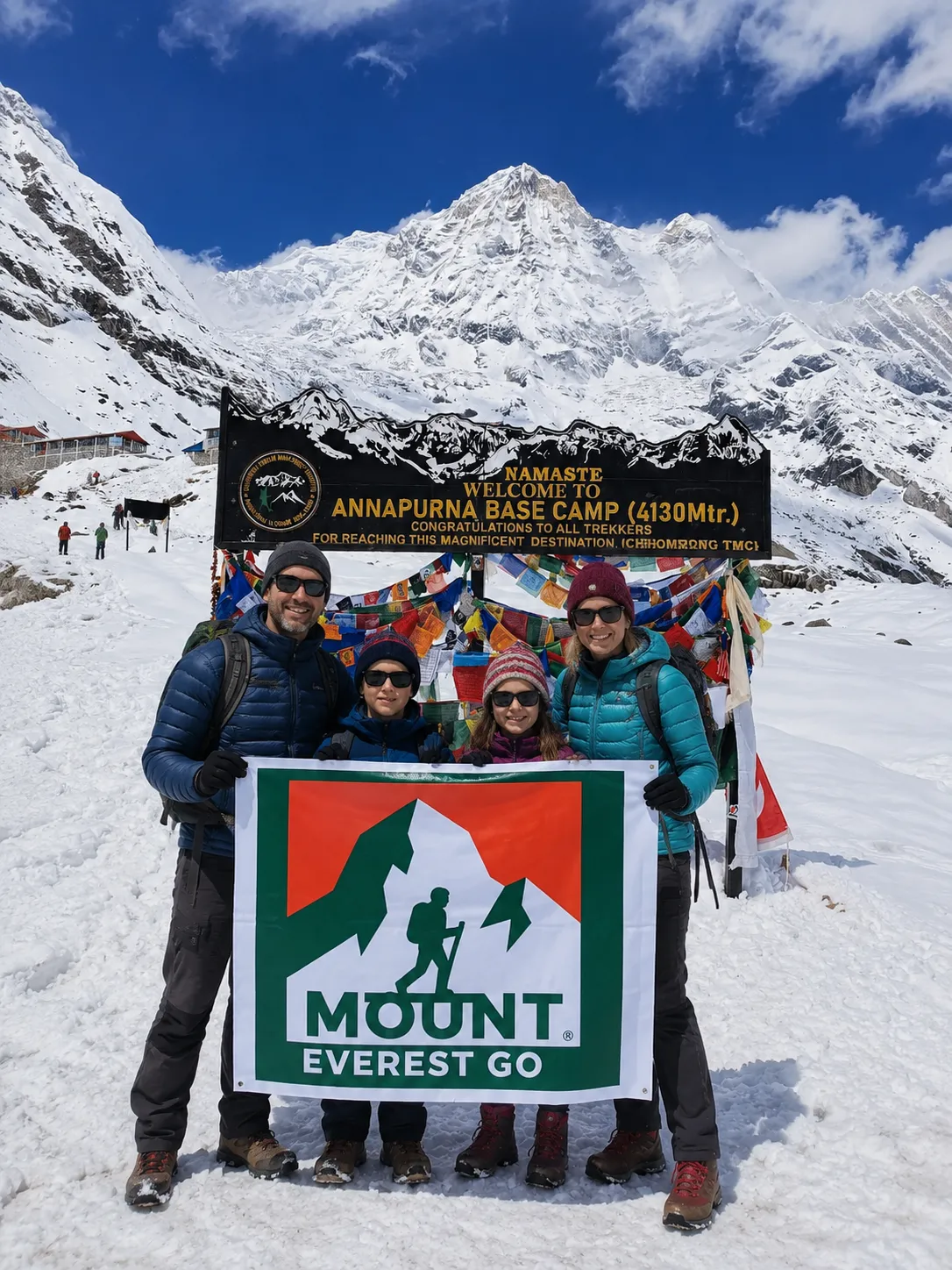
The Annapurna Base Camp Trek takes you from subtropical Pokhara valleys into a high glacial amphitheatre in just over a week of walking. The route enters the Annapurna Sanctuary through a narrow gorge between Hiunchuli and Machhapuchhre, opening out at base camp into a 360-degree wall of Himalayan giants. Over 10 to 14 days you cover 110 kilometres of tea-house walking, climbing from 1,000 metres to 4,130 metres in a steady, well-supported ascent. It is one of the few high-altitude treks in Nepal where tea-house lodges run all the way to the destination, making it accessible to a wide range of fit trekkers.
Why Visit
You come here for the 360-degree mountain walls at base camp, with Annapurna I, South Annapurna, Hiunchuli, and Machhapuchhre surrounding you on all sides. The route packs in an extraordinary range of ecology in a single trek, from rhododendron forest at 2,000 metres to glacial moraine at 4,000 metres. The hot springs at Jhinu Danda on the descent are a genuine reward for the climbing days, and the Gurung village culture in Ghandruk and Chhomrong is among the most accessible in Nepal. Compared with the Annapurna Circuit Trek, this is the focused high-altitude experience with a clear single destination.
Best Time to Trek
Spring (March to May) and Autumn (October to November) are the two reliable windows for this trek. Spring brings warmer days, blooming rhododendron, and the clearest morning views from base camp. Autumn delivers the most stable weather of the year, cold nights at base camp, and excellent visibility after the monsoon. Winter is possible but the base camp lodges may close and the high section above Deurali becomes very cold, so we recommend it only for experienced groups.
Difficulty Level
We rate the Annapurna Base Camp Trek as Challenging, primarily because of the altitude rather than technical terrain. There is no pass to cross and no glacier travel, but you sleep one night at 4,130 metres at base camp and several nights above 3,000 metres. The trail is well-graded with thousands of stone steps, which can be hard on the knees on the descent. Fit walkers with no previous high-altitude experience can complete the trek with the standard acclimatisation day at Annapurna Base Camp.
Duration
The standard itinerary runs 10 to 14 days from Nayapul back to Nayapul, with the longer end including Ghandruk and the hot springs at Jhinu Danda. Most trekkers complete it in 11 days, which gives a manageable pace and an acclimatisation day at Dingboche. Shorter 7-day versions exist but they cut the cultural stops and we do not recommend them. Add two days for Kathmandu and Pokhara logistics, and your full trip length is 12 to 16 days.
Route Details
The trail starts at Nayapul and climbs through Ghandruk and Chhomrong to the gate of the Annapurna Sanctuary. Above Chhomrong the route enters the deep gorge between Hiunchuli and Machhapuchhre, with the famous narrow section at Hinku Cave. The gorge opens out into the sanctuary at Deurali and Machhapuchhre Base Camp, then climbs the final moraine to Annapurna Base Camp at 4,130 metres. The return follows the same trail, with an optional descent through Jhinu Danda for the hot springs and a return via Ghandruk or Landruk.
Itinerary Overview
Day 1: Drive to Nayapul, trek to Ghandruk. Day 2: Trek to Chhomrong. Day 3: Trek to Dovan. Day 4: Trek to Deurali. Day 5: Trek to Machhapuchhre Base Camp. Day 6: Trek to Annapurna Base Camp, afternoon acclimatisation. Day 7: Sunrise at ABC, descend to Bamboo. Day 8: Trek to Jhinu Danda, hot springs. Day 9: Trek to Landruk. Day 10: Trek to Nayapul, drive to Pokhara. Day 11: Drive or fly to Kathmandu with a buffer day.
Maximum Altitude
The high point is Annapurna Base Camp at 4,130 metres (13,550 feet), reached on day 6 after a gradual climb through the sanctuary. Machhapuchhre Base Camp at 3,700 metres is the previous night's stop. Oxygen levels at base camp are roughly 60 percent of sea level, and most trekkers feel some effect on the final climb. The acclimatisation afternoon at base camp is non-negotiable for safe descent.
Weather
Daytime temperatures in autumn range from 12 to 18 degrees Celsius in Ghandruk, dropping well below freezing at base camp. Spring is warmer but cloudier in the afternoons, with the clearest morning views from base camp in March and April. Night temperatures at Annapurna Base Camp fall to minus 8 to minus 12 degrees Celsius even in peak season. The sanctuary is famously cold at night because cold air sinks into the glacial amphitheatre.
Accommodation
Tea-house lodges run the full route from Nayapul to Annapurna Base Camp, with rooms costing $3 to $10 per night on the standard plan. The lodges at Ghandruk, Chhomrong, and ABC are well-run and comfortable, with attached bathrooms at the lower elevations. The base camp lodges are basic but well-equipped, with gas heaters in the dining room and Western-style food. We recommend booking ahead through your guide in peak season because the ABC lodges fill early.
Tea Houses
The tea houses on this route are among the best in Nepal, with spacious dining rooms, gas heaters, and Western-style toilets at most lodges. The dining room is the social hub after sunset, with trekkers, guides, and porters sharing the warmth and the standard evening routine. Blankets are usually provided but we recommend bringing your own sleeping bag rated to minus 15 degrees Celsius. The host families at Ghandruk and Chhomrong are Gurung, with a distinct culture, food, and dress from the Sherpa of the Khumbu.
Camping
This trek uses tea-house lodging; camping is not typically required. The Annapurna Sanctuary is a strictly regulated area, with camping only allowed at designated sites under the ACAP permit system.
Food
The menu on this route is varied and good, with dal bhat, momos, chow mein, pasta, pizza, and porridge the staples. Dal bhat remains the value choice with unlimited refills, and the bakeries at Ghandruk and Chhomrong serve decent apple pie. Gurung specialities include gundruk (fermented leaf) soup and dhindo (millet porridge), worth trying at least once. We suggest avoiding meat above Chhomrong because of refrigeration limits.
Drinking Water
Boiled water is sold at every lodge for $0.50 to $3 per litre depending on altitude, and a UV pen or filter bottle is the cheapest long-term option. Bottled water is widely available below Chhomrong but is banned above to reduce plastic waste in the sanctuary. We recommend bringing a reusable bottle plus a purification method and treating tap or stream water along the way. Plan for three to four litres per day above 3,000 metres to support acclimatisation.
Electricity
Hydroelectric power runs from Nayapul to Deurali, with solar power at Machhapuchhre Base Camp and Annapurna Base Camp. Charging fees run from $1 to $4 per device, with limited availability at the higher lodges. Carry a 10,000 mAh power bank as a minimum, with a 20,000 mAh backup for the two high-section nights. Keep all batteries inside your sleeping bag at night because cold drains them fast above 3,500 metres.
Internet & Mobile Network
Ncell and NTC mobile signal is available at most villages up to Deurali, with the signal disappearing above Machhapuchhre Base Camp. Wi-Fi is available at most lodges below Deurali for $2 to $3 per day. The signal disappears entirely in the sanctuary above Machhapuchhre Base Camp, so plan for offline use during the two high-section nights. We recommend downloading offline maps and a satellite messenger for safety.
Transportation
The trek starts at Nayapul, reached by a 2-hour drive from Pokhara, which is itself a 25-minute flight or 7-hour bus ride from Kathmandu. Most trekkers fly into Kathmandu, take a flight or tourist bus to Pokhara, then a private jeep to Nayapul. Helicopter return from ABC to Pokhara is available for $1,500 to $2,500 per flight, sharable between trekkers. The trail itself is walking only, with no road access above Nayapul.
Required Permits
You need the Annapurna Conservation Area Permit (ACAP) and the TIMS Card, the standard set for the Annapurna region. Permits cost roughly $50 combined and can be issued in Pokhara or Kathmandu before starting the trek. The same permits cover the entire ABC route, including the Annapurna Sanctuary. Your guide or agency will normally arrange everything before you drive to Nayapul.
Packing List
Bring a four-season sleeping bag rated to minus 15 degrees Celsius, a down jacket, a windproof shell, thermal base layers, a warm hat and gloves, and sturdy broken-in boots. Trekking poles are essential for the thousands of stone steps on the descent from ABC. Pack a headlamp with spare batteries, a 2-litre water bottle, a basic first aid kit with Diamox, and high-SPF sun protection. A 30-litre daypack plus a duffel for the porter is the standard configuration.
Budget Guide
Costs are lower than the Khumbu treks because there are no flights, with the Kathmandu to Pokhara transport the main expense. The table below shows typical 2027 ranges for an 11-day trek.
| Item | Budget Range (USD) |
|---|---|
| Guide and porter (full trek) | $300 to $550 |
| Kathmandu to Pokhara return | $80 to $200 |
| Pokhara to Nayapul jeep (return) | $20 to $50 |
| Permits (ACAP + TIMS) | $40 to $50 |
| Accommodation (11 nights) | $40 to $150 |
| Food and drinks | $250 to $400 |
| Gear rental in Kathmandu | $40 to $120 |
| Total per person | $900 to $1,800 |
Photography Tips
Sunrise at Annapurna Base Camp is the photographic goal of this trek, with the first light hitting Annapurna I and South Annapurna above the glacial amphitheatre. Machhapuchhre, the famous Fishtail peak, gives the iconic shot from Machhapuchhre Base Camp in late afternoon. The stone-paved village of Ghandruk with Machhapuchhre behind is the cultural shot of the route. Carry a wide angle for the sanctuary and a telephoto for compressed mountain shots.
Wildlife
The Annapurna Sanctuary is habitat for the Himalayan tahr, the musk deer, and the yellow-throated marten, all regularly seen above Deurali. The forests below Chhomrong have langur monkeys, barking deer, and a wide range of birdlife. Birdlife includes the Himalayan monal, blood pheasant, and the koklass pheasant. Snow leopard is present in the upper sanctuary but very rarely seen, with most sightings in winter.
Flora
The lower trail passes through subtropical forest with sal, chestnut, and rhododendron, with peak bloom in April. Above 2,500 metres the forest shifts to oak, maple, and birch with bamboo understorey. Above 3,500 metres the forest thins into juniper scrub and alpine meadow with gentians, primula, and edelweiss. The sanctuary itself is high-altitude semi-desert with moss, lichen, and scattered cushion plants.
Local Culture
The route passes through Gurung villages, with a distinct culture from the Sherpa of the Khumbu. The Gurung are traditionally farmers and Gurkha soldiers, with their own language, dress, and cuisine. Ghandruk is the cultural heart of the route, with a museum, traditional stone houses, and the Annapurna Conservation office. We recommend trying the local gundruk soup and asking lodge owners about Gurung traditions.
Local Villages
Ghandruk is the largest Gurung village on the route, with a museum, traditional houses, and the famous close-up view of Machhapuchhre. Chhomrong is the gateway to the sanctuary, with stone-paved streets and comfortable lodges. Jhinu Danda is the hot springs village, with three natural pools beside the Modi Khola river. Landruk and Tolka on the return leg offer a quieter alternative to Ghandruk for the final overnight.
Safety Tips
Acclimatise properly with a slow ascent to Deurali and an acclimatisation afternoon at ABC. Carry your own Diamox and a basic first aid kit, and register with your embassy before leaving Kathmandu. Helicopter rescue insurance is recommended, with policies starting at $120 for full coverage. Avalanche risk exists in the narrow section above Deurali in winter and early spring, so check conditions with your guide.
Altitude Sickness Guide
Acute Mountain Sickness affects roughly 20 percent of trekkers on this route, with the night at 4,130 metres at base camp the main stressor. Mild symptoms include headache, nausea, and poor sleep, and they usually resolve with rest and hydration. Severe symptoms require immediate descent to Machhapuchhre Base Camp at 3,700 metres. We recommend a preventive Diamox dose of 125 mg twice daily from Deurali onward.
Emergency Contacts
The Annapurna Conservation Area office in Ghandruk is the main contact on the lower route, and the ACAP office at Machhapuchhre Base Camp handles the upper section. Helicopter rescue is available through Fishtail Air, Saga Rescue, and Simrik Air, all on 24-hour call from Pokhara. Keep your insurance policy number, rescue contact, and passport copy with your guide at all times. The tourist police in Pokhara can be reached at 1144.
Responsible Tourism
Bottled water is banned above Chhomrong to reduce plastic waste in the sanctuary, so carry a reusable bottle and a purification method. Tip your porter and guide fairly, with $5 per day per porter and $9 per day per guide being a reasonable minimum. Carry all battery waste back to Pokhara because the sanctuary has no proper disposal system. Respect Gurung culture in Ghandruk and Chhomrong, and ask before photographing people or inside homes.
Frequently Asked Questions
These are the questions we hear most often from trekkers planning the Annapurna Base Camp Trek, with answers reflecting current trail conditions for 2027 to 2030.
Summary
The Annapurna Base Camp Trek is the most accessible high-altitude trek in Nepal, with tea-house lodges all the way to 4,130 metres and a 360-degree mountain wall at the destination. With 10 to 14 days on the trail and a budget of $900 to $1,800, it is achievable for any fit walker willing to acclimatise properly. The route includes the cultural highlights of Ghandruk, the hot springs at Jhinu Danda, and the famous fishtail of Machhapuchhre. We rank it as the best first high-altitude trek in Nepal.
Conclusion
Standing inside the Annapurna Sanctuary at sunrise, with 360-degree walls of snow and ice rising on every side, you understand why this trek has such a loyal following among first-time and experienced trekkers alike. The Annapurna Base Camp Trek delivers a serious high-altitude experience with the best tea-house infrastructure in Nepal, all on a manageable 11-day itinerary. Plan ahead, acclimatise properly, and treat the sanctuary with respect. Book 2027 and 2028 dates early because the base camp lodges fill up fast in peak season.
Recommended Trek Packages
Trekking Places to Explore
Explore Trips in Nepal
Hand-picked guided trips to this destination

 English
 Deutsch
 Svenska
 Dansk
Dansk Русский
 Français
 Português
 Español
 Polski
 简体中文
简体中文 日本語
日本語 ไทย
ไทย العربية
 한국어
한국어