
Quick Answer
The best Gokyo Lakes trek options in 2027 to 2030 are the 12 day standard Gokyo Ri trek at $1,400 to $1,800 per person, the 14 day Gokyo plus Renjo La at $1,700 to $2,100, and the 16 day Gokyo plus Everest Base Camp at $1,900 to $2,400. Each reaches Gokyo Ri at 5,357 m and includes Sagarmatha National Park permit, Khumbu Pasang Lhamu permit, TIMS Card, round trip Lukla flight, licensed guide, porter, food, and lodging.
Detailed Breakdown
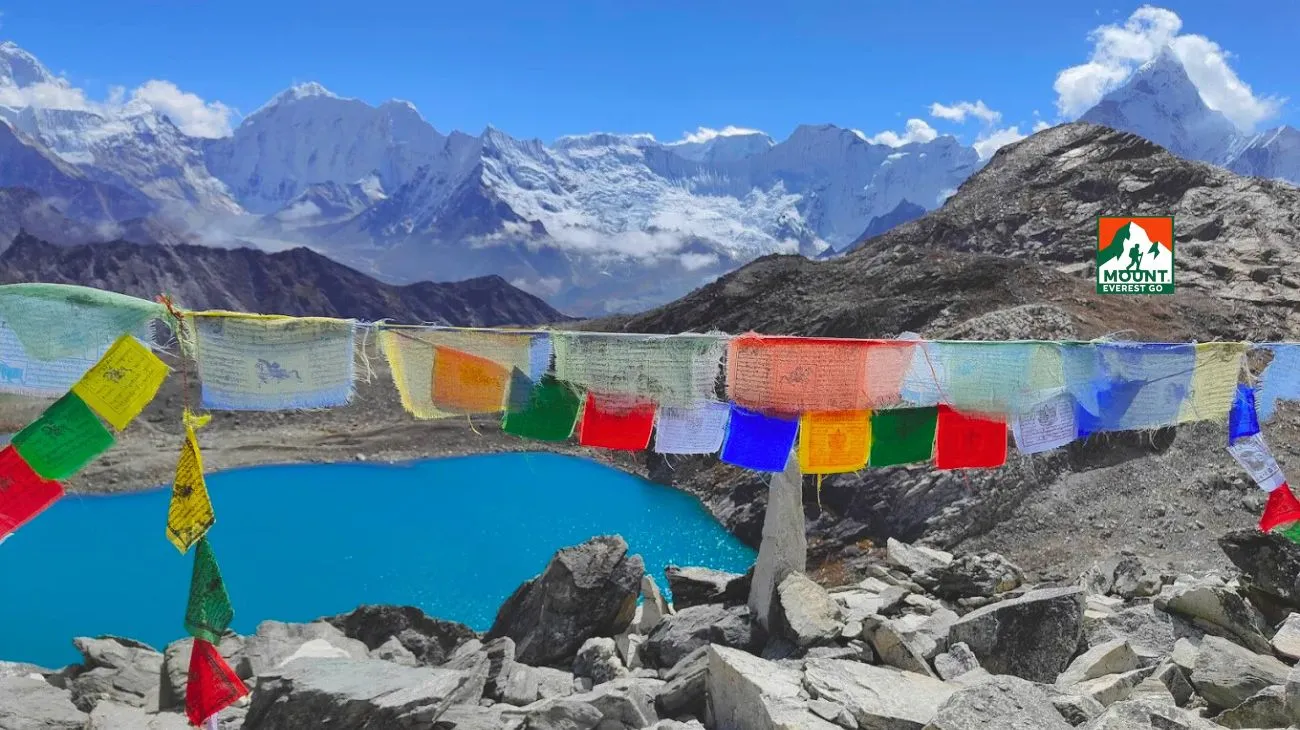
The Gokyo Lakes Trek sits in the Dudh Koshi valley above Namche Bazaar, reaching Gokyo Ri at 5,357 m with views of Everest, Lhotse, Makalu, and Cho Oyu. The standard 12 day route runs Lukla to Lukla via Namche, Dole, Machhermo, Gokyo, Gokyo Ri, and return. The two extended versions add a high pass or the base camp goal.
The 12 day standard version suits trekkers with 2 weeks of holiday who want the Gokyo Ri sunrise without the Renjo La crossing. The 14 day Renjo La version crosses the pass at 5,360 m on the return, which is the highest altitude of the trek and the most scenic descent into the Bhote Koshi valley.
Cost/Component Breakdown
| Component | 12 Day (USD) | 14 Day Renjo La (USD) | 16 Day Gokyo EBC (USD) |
|---|---|---|---|
| Sagarmatha National Park Permit | $30 | $30 | $30 |
| Khumbu Pasang Lhamu Permit | $20 | $20 | $20 |
| TIMS Card | $17 | $17 | $17 |
| Round trip Lukla flight | $340 to $380 | $340 to $380 | $340 to $380 |
| Licensed guide | $360 to $480 | $420 to $560 | $480 to $640 |
| Porter | $240 to $360 | $280 to $420 | $320 to $480 |
| Food and lodging | $360 to $540 | $420 to $630 | $480 to $720 |
| Crew insurance | $40 to $60 | $50 to $80 | $60 to $100 |
| Total per person (4 trekkers) | $1,400 to $1,800 | $1,700 to $2,100 | $1,900 to $2,400 |
What Affects the Answer
Three factors shape the option choice. First, fitness: the 12 day standard suits moderate fitness with 5 to 6 hours walking per day. The 14 and 16 day versions require 7 to 9 hours on pass crossing days, which is a serious fitness test.
Second, prior altitude experience: the 12 day version suits trekkers with prior experience above 4,000 m. The 14 and 16 day versions cross 5,360 m to 5,420 m, which requires prior experience above 4,500 m.
Third, time budget: the 12 day version fits a 2 week holiday, the 14 day version fits a 2.5 week holiday, and the 16 day version fits a 3 week holiday. Add 2 buffer days for Lukla flight cancellations.
Booking Tips
Ask each operator for the day by day altitude chart with overnight elevations and pass crossing times. Verify the guide has done the chosen route at least 8 times and knows the Gokyo Ri sunrise timing.
Book the Lukla flight 10 weeks ahead for October and November. Confirm the early morning flight to maximize the chance of clear views and to allow a same day departure if weather delays the inbound flight.
Carry 25,000 to 32,000 Nepali rupees cash since ATMs end at Lukla and teahouse card payment is rare above Namche. Pack crampons for the Renjo La and Cho La crossings in shoulder season.
Comparison With Alternatives
The Everest Base Camp Trek costs $1,500 to $2,400 for 12 to 16 days and reaches 5,364 m. The Three Passes Trek costs $2,200 to $3,200 for 18 to 22 days and crosses Renjo La, Cho La, and Kongma La. The Everest View Trek costs $1,000 to $1,500 for 7 to 10 days and reaches 3,860 m.
Common Mistakes to Avoid
Do not book a 9 day Gokyo trek, since this skips the Machhermo acclimatization day and raises altitude sickness risk by 50 percent. Avoid operators that quote under $1,400 per person for the 12 day trek, since they typically skip crew insurance.
Do not skip the Gokyo Ri sunrise climb, since the afternoon clouds often obscure the views. Avoid operators that promise a 14 day Renjo La crossing without prior altitude experience above 4,500 m.
FAQ
Which Gokyo option is best for first time trekkers?The 12 day standard Gokyo Ri trek, since it has no high pass crossing. First time trekkers should have prior day hike experience above 3,500 m.
What is the highest altitude on each option?5,357 m at Gokyo Ri on the 12 day version, 5,360 m at Renjo La on the 14 day version, and 5,420 m at Cho La on the 16 day version.
Which option costs least?The 12 day standard version at $1,400 to $1,800 per person. The Renjo La adds $300, and the Gokyo EBC adds $500.
Do I need crampons?For the 14 and 16 day versions in shoulder season, yes. The Renjo La and Cho La crossings can have hard snow in October and April. The operator should provide crampons.
What is the best season?October and November for clear weather, March and April for spring snow conditions. Avoid June to September due to monsoon clouds.
Summary
The best Gokyo Lakes trek options in 2027 to 2030 are the 12 day standard at $1,400 to $1,800, the 14 day Renjo La at $1,700 to $2,100, and the 16 day Gokyo EBC at $1,900 to $2,400. Each reaches Gokyo Ri at 5,357 m and suits a different fitness and time profile.
Conclusion
Book the 12 day standard Gokyo for the lakes and Gokyo Ri sunrise, the 14 day Renjo La for the most scenic pass crossing, or the 16 day Gokyo EBC for the full combination. Verify the day by day altitude chart, lock in the Lukla flight 10 weeks ahead, and carry cash past Lukla. The right option turns the 5,357 m viewpoint into a controlled ascent instead of an altitude risk event.
Recommended Trek Packages
Trekking Places to Explore
Explore Trips in Nepal
Hand-picked guided trips to this destination
 English
 Deutsch
 Svenska
 Dansk
Dansk Русский
 Français
 Português
 Español
 Polski
 简体中文
简体中文 日本語
日本語 ไทย
ไทย العربية
 한국어
한국어