

When to call the chopper, and when to walk it down. Your insurance MUST cover up to 6,000m or you are financially on your own. Here is what the trekking industry does not broadcast.
At a Glance, Key Statistics
| $15K+ Max Rescue | 6,000m Min Coverage | 500+ Rescues / Year | $19.7M 2026 Fraud | 1 in 3 Get AMS >4000m |
It is 11 p.m. at Dingboche, 4,410 metres above sea level. A 42-year-old trekker from London has lost coordination, cannot walk a straight line, and has a skull-splitting headache. His guide knows the signs immediately: High Altitude Cerebral Edema, HACE. He needs to be off this mountain within hours, not tomorrow morning.
The helicopter arrives at dawn. The man survives. The bill? $4,800 USD. His insurance policy covered trekking up to 4,000m. Dingboche sits at 4,410m. He was 410 metres too high. Every dollar came out of his pocket.
This is the single most common, most preventable, and most expensive insurance mistake on the Everest trail. And it happens every season, not to unprepared backpackers, but to intelligent, well-travelled people who simply bought the wrong policy.
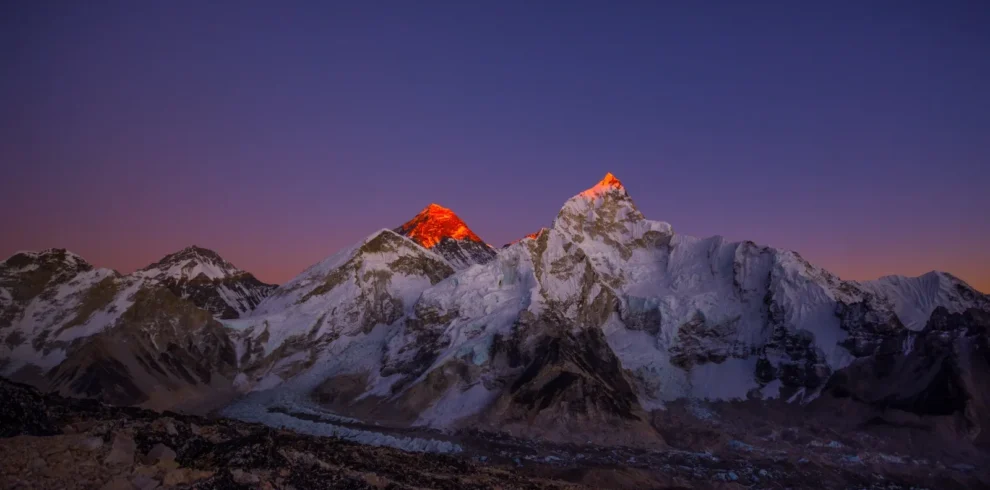
Step into the heart of the Himalayas and follow the legendary trail to Everest Base Camp. This 14-day adventure blends…

The Short Annapurna Circuit Trek is a week-long journey that captures the essence of Nepal’s most iconic trekking route. In…
This Langtang Valley trek perfectly combines natural beauty, Tamang culture, ancient monasteries, and stunning alpine landscapes. You’ll walk through lush…
| CRITICAL RULE If your insurance does not explicitly state coverage ‘up to 6,000 metres’ with helicopter evacuation included, you are not adequately covered for Everest Base Camp, Annapurna Circuit, or Manaslu, full stop. Read your policy before you book your flight. |
1. The Altitude Trap That Bankrupts Tourists Every Season
Nepal’s trekking routes pass through some of the highest and most remote terrain on Earth. Everest Base Camp sits at 5,364m. Kala Patthar, the iconic viewpoint every EBC trekker climbs, is 5,545m. The Thorong La pass on Annapurna Circuit crosses 5,416m. All of these are well above the cut-off point of most standard travel insurance policies, which typically cap coverage at 3,000m to 4,000m.
Why the altitude limit is the most dangerous clause in your policy
Standard travel insurance is designed for typical holidays: a twisted ankle in Tuscany, lost luggage in Bangkok, a cancelled flight. When insurers write altitude exclusions, they draw a line specifically designed to exclude the extreme rescue costs of the Himalayas.
The result: a policy that looks comprehensive, medical emergencies, evacuation, 24/7 assistance, fails the moment you step above a certain elevation. The altitude clause is buried on page 14. Trekkers discover it on page one of their hospital bill.
Altitude Reality Check, Where the Popular Treks Actually Go
| Destination | Altitude | Standard Policy Status |
| Standard policy altitude limit | ~4,000m | DANGER, Most treks exceed this |
| Namche Bazaar (EBC route) | 3,440m | Just below, but you won’t stop here |
| Thorong La Pass (Annapurna) | 5,416m | NOT COVERED by standard policy |
| Everest Base Camp | 5,364m | NOT COVERED by standard policy |
| Kala Patthar viewpoint | 5,545m | NOT COVERED by standard policy |
| Recommended minimum coverage | 6,000m | COVERED, full safety margin |
| MANDATORY SINCE 2024 Nepal made travel insurance mandatory for all foreign trekkers in 2024. You cannot obtain a TIMS card or trekking permit without showing valid insurance. Officers check at permit offices and trail checkpoints. |
2. How Much Does Helicopter Rescue Actually Cost?
The numbers are not theoretical. The Khumbu region alone sees hundreds of helicopter rescues every trekking season. Here is a realistic breakdown of what a real evacuation costs:
| Rescue Location | Cost (USD) |
| Namche Bazaar → Kathmandu (3,440m) | $3,000 – $5,000 |
| Dingboche / Pheriche (4,200–4,370m) | $4,000 – $6,000 |
| Lobuche / Gorakshep (4,900–5,140m) | $6,000 – $10,000 |
| Everest Base Camp / Kala Patthar (above 5,000m) | $8,000 – $12,000 |
| Trekking peaks above 6,000m | $10,000 – $15,000+ |
| Kathmandu ICU (per day) | $1,000 / day |
A helicopter evacuation from above 5,000m, followed by ICU admission in Kathmandu and repatriation to Europe or North America, can easily surpass $50,000 USD total. In 2024, 47 trekkers faced bankruptcy from medical bills not covered by their policy.
| THE CREDIT CARD INSURANCE TRAP Fewer than 10% of credit card travel insurance policies adequately cover trekking above 4,000m. Most cap evacuation at $10,000-$25,000, nowhere near enough for a high-altitude rescue plus hospitalisation and repatriation. Print your credit card policy and read the altitude and adventure activity exclusion clauses before assuming you are covered. |
3. Medical Emergency vs. Comfort Evacuation: The Line That Matters
Not every helicopter that lifts off from a Nepal ridgeline is responding to a life-or-death situation. The distinction between a covered medical emergency evacuation and a comfort evacuation is the most legally consequential, and most poorly understood, aspect of Nepal trekking insurance.
What counts as a true medical emergency evacuation
A genuine medical evacuation is triggered by objectively life-threatening conditions requiring immediate descent:
- HACE (High Altitude Cerebral Edema): fluid on the brain; confusion, loss of coordination, altered consciousness
- HAPE (High Altitude Pulmonary Edema): fluid in the lungs; extreme breathlessness, pink frothy cough
- Severe AMS: progressing despite medication and rest, and not responding to descent
- Traumatic injury: fracture or head trauma that cannot be managed with descent on foot
- Cardiac events, severe hypothermia, or other acute medical crises
What does NOT qualify as a medical evacuation
These are comfort evacuations, out-of-pocket expenses. They are also precisely how the 2026 fraud network operated:
- Exhaustion or general fatigue after completing the trek
- Mild AMS symptoms (headache, nausea) that resolve with rest and hydration
- Not wanting to walk back down for several days
- Mild dehydration or an upset stomach
- General altitude discomfort without objective clinical deterioration
| THE GOLDEN RULE If you can walk and talk and your condition is not actively deteriorating, you almost certainly do not need a helicopter. Descend on foot, even 300-500 metres of altitude loss often resolves mild AMS within hours. Always call your insurer’s emergency line BEFORE calling for a helicopter. |
4. The Non-Negotiable Insurance Checklist
Run your policy through this checklist before any Nepal trek. If any REQUIRED item fails, do not proceed with that policy.
| INSURANCE REQUIREMENT | |
| YES | Altitude coverage explicitly stated to at least 6,000m |
| YES | Helicopter evacuation explicitly included (not just ‘evacuation’) |
| YES | Trekking listed as a covered activity in your specific plan tier |
| YES | Medical coverage of at least $250,000 USD |
| YES | 24/7 emergency assistance phone number available and saved offline |
| NO | Do NOT rely on agent summaries, read the full policy PDF |
| NO | Do NOT assume your home country health insurance covers you |
| NO | Do NOT use credit card insurance as primary coverage above 4,000m |
5. Best Insurance Providers for Nepal Trekking (2026)
The following providers have a verified track record of paying Nepal helicopter evacuation claims. Always verify current policy terms directly, altitude limits change regularly.
| Provider | Best For | Key Notes |
| World Nomads | Most Popular | Explorer plan covers 6,000m + heli. Purchasable after departure. |
| IMG Global | Long-Term Travellers | High evacuation limits, expedition flexibility, direct billing. |
| Global Rescue | Remote / High Risk | No altitude limit. Pair with a medical policy. High premium. |
| Battleface | Buy After Departure | Covers 6,000m + heli. Purchasable from within Nepal. |
| CTG-Plus | Nepal-Local Option | ~$150 / 14 days. Direct billing, no upfront payment needed. |
| SafetyWing | Digital Nomads | Monthly subscription. Verify altitude + heli limits carefully. |
| COST CONTEXT A proper high-altitude policy for a 2-3 week Nepal trek costs $150-$400 USD. A helicopter evacuation from above 5,000m costs $6,000-$12,000. The maths is not complicated. The insurance is not expensive. The consequences of skipping it are. |
6. The $19.7 Million Fake Rescue Scandal (2026)
BREAKING: Nepal Charges 32 in Himalayan Rescue Fraud Network
| $19.7M Total Fraud | 171 Fake Rescues | 4,782 Tourists Affected | 32 Charged |
In early 2026, Nepal’s Central Investigation Bureau (CIB) arrested executives from three prominent mountain rescue agencies following a months-long investigation into one of the most sophisticated insurance fraud networks in Himalayan tourism history.
How the alleged scheme operated
Step 1: Inducing illness. Guides allegedly mixed baking soda into trekkers’ food, causing severe gastrointestinal distress mimicking altitude sickness. In other cases, Diamox was administered with excessive water to induce symptoms justifying a rescue call.
Step 2: Manufacturing the emergency. Guides told exhausted trekkers returning from EBC that they were ‘at risk of dying’ and that immediate evacuation was necessary.
Step 3: Billing fraud. A single helicopter carrying four tourists generated four separate full-price invoices, each submitted to a different insurer as a dedicated rescue. In one case, a single flight generated $31,100 in insurance claims plus a separate $11,890 hospital bill.
Step 4: The commission chain. Hospitals paid 20-25% of the insurance payout to referring trekking companies and a further 20-25% to helicopter operators. Everyone in the chain profited.
The fraud was first exposed in 2018. A government committee produced a 700-page report and recommended action. No action was taken. It took until 2026, and mass protests in 2025, before formal charges were filed against 32 individuals.
The consequences extend beyond individual fraudsters. Several major international insurers, including Travellers Assists, have entirely stopped selling trekking coverage for Nepal. This drives up premiums for every legitimate trekker who needs a rescue.
7. Inside the Guide’s Decision: “Should We Call the Heli?”
Here is the conversation a guide has on the radio when a client shows altitude symptoms, in Nepali, on a crackling radio, at 4,000+ metres.
| “Ke garnu parcha? Dudh Koshi ma pathaideu ki afnai oralideu? Birse pahile oxygen diyau… Hawa thik chha… Helicopter aaucha ki aaudaina? Insurance chha? Kasko naam?” Translation: “What should we do? Send them down to Dudh Koshi or walk them down ourselves? Give them oxygen first… The weather looks okay… Will the helicopter come or not? Do they have insurance? What is the name?” — Composite radio dialogue, Khumbu region (translated from Nepali) |
What a responsible guide actually considers
Experienced guides in the Khumbu follow a hierarchy of intervention before calling for a helicopter:
- Assess pulse oximeter reading and mental clarity. SpO2 below 70% with confusion = immediate evacuation, no waiting.
- Administer supplemental oxygen if available. Observe for 30-60 minutes to determine if condition is stabilising or deteriorating.
- If stable: descend on foot by 300-1,000m. Most mild-to-moderate AMS resolves rapidly with altitude loss.
- Contact insurer’s 24/7 emergency line. Describe symptoms. Get verbal approval on record BEFORE confirming helicopter dispatch.
- If HACE / HAPE suspected: call helicopter, administer Gamow bag if available, begin immediate descent while helicopter is arranged. No waiting.
| CRITICAL: CALL BEFORE THE HELICOPTER DEPARTS Your insurer needs to be contacted before the helicopter takes off, not after you land in Kathmandu. Know your insurer’s emergency number. Store it offline on your phone before you leave Lukla. Poor signal is not a defence that all insurers accept for lack of pre-authorisation. |

8. How to Protect Yourself, Before and During the Trek
Before you fly to Nepal
Read your policy in full, specifically the Exclusions section. Look for: altitude limit, adventure activity exclusions, helicopter evacuation sub-limits, and pre-existing condition clauses. If the altitude limit is not clearly stated, call the insurer and get written confirmation.
Disclose all medical conditions honestly. Undisclosed pre-existing conditions are the number one reason insurers void claims. Heart conditions, asthma, or prior altitude sickness episodes must be declared.
Print your policy and highlight the altitude clause. Show it to your guide on day one. A seasoned Sherpa can spot inadequate coverage language immediately.
During the trek
Contact your insurer before the helicopter is confirmed, ideally the moment you suspect a serious situation is developing. Do not wait until you are in Kathmandu.
Never let a guide, trekking company representative, or hospital contact the insurer on your behalf without you present. The 2026 fraud investigation found that in multiple cases, insurer contact was made by operators, not patients, allowing fraudulent details to be submitted.
Ask for itemised bills at every stage. At the hospital, request a complete itemised breakdown of every charge. Photograph it. The fraud investigation documented hospitals submitting claims for ICU admissions for patients discharged within the hour.
| WORLD NOMADS SPECIFIC TIP If you are insured with World Nomads: contact their 24/7 emergency assistance line directly, not through a local agent. The investigation found that local ‘assistance companies’ in Nepal operated within the same network as fraudulent hospitals and rescue operators. Insist on a direct line to your insurer’s home-country emergency centre. |
9. Frequently Asked Questions
How much does a helicopter rescue in Nepal cost without insurance?
A rescue without insurance costs $3,000 to $15,000+ depending on altitude. Rescues from above 5,000m typically cost $6,000-$12,000. Hospital admission in Kathmandu adds $1,000 per day in ICU costs. Repatriation to Europe or North America can add $20,000-$40,000. The full bill is yours immediately, with no negotiation.
What altitude does my insurance need to cover for Everest Base Camp?
Your insurance must explicitly cover a minimum of 6,000m. EBC itself is at 5,364m, but Kala Patthar reaches 5,545m. A 6,000m limit gives a safety margin for weather delays and route variations. Never rely on implied coverage, the altitude limit must be stated in your policy document.
Is helicopter rescue insurance mandatory in Nepal?
Since 2024, travel insurance with helicopter evacuation coverage is practically mandatory. You cannot obtain a TIMS card or trekking permits without showing valid insurance. Checkpoints on major routes verify coverage. Any reputable trekking agency will not confirm your booking without proof of adequate insurance.
What is the difference between a medical evacuation and a comfort evacuation?
A medical evacuation is for clinically verified, life-threatening conditions, HACE, HAPE, severe trauma, where immediate descent is necessary to prevent death or permanent injury. A comfort evacuation is when a trekker requests a helicopter for non-emergency reasons: exhaustion, mild headache, not wanting to walk back. Insurers cover medical evacuations. Comfort evacuations are an out-of-pocket expense, and a core mechanism of the fraud that has driven several insurers out of the Nepal market.
Can I buy trekking insurance after arriving in Nepal?
Yes, World Nomads and Battleface both allow purchase from within Nepal. CTG-Plus (Himalayan Guardian Nepal) is available at Thamel offices in Kathmandu with 24-hour activation. Allow at least 48 hours for policies to activate and for emergency contacts to be properly recorded.
How do I avoid being caught in the Nepal rescue scam?
Always contact your insurer directly, not through a local intermediary, before any evacuation is confirmed. Never accept a guide’s suggestion to exaggerate symptoms. Request itemised bills for all hospital charges. Report pressure to accept unnecessary medical treatment to Nepal Tourism Board and your insurer immediately.
DISCLAIMER
This article is for informational purposes only and reflects research current to May 2026. Insurance policy terms change regularly, always verify coverage directly with your insurer before travel. The altitude sickness information provided is general in nature and does not constitute medical advice. Consult a physician before trekking at high altitude, particularly if you have pre-existing cardiovascular or respiratory conditions. Source research: Kathmandu Post, OCCRP, Business Standard, HimalayanHero.com, MountEverestGo.com, iTrekEverest, GearJunkie.

 English
 Deutsch
 Svenska
 Dansk
Dansk Русский
 Français
 Português
 Español
 Polski
 简体中文
简体中文 日本語
日本語 ไทย
ไทย العربية
 한국어
한국어