
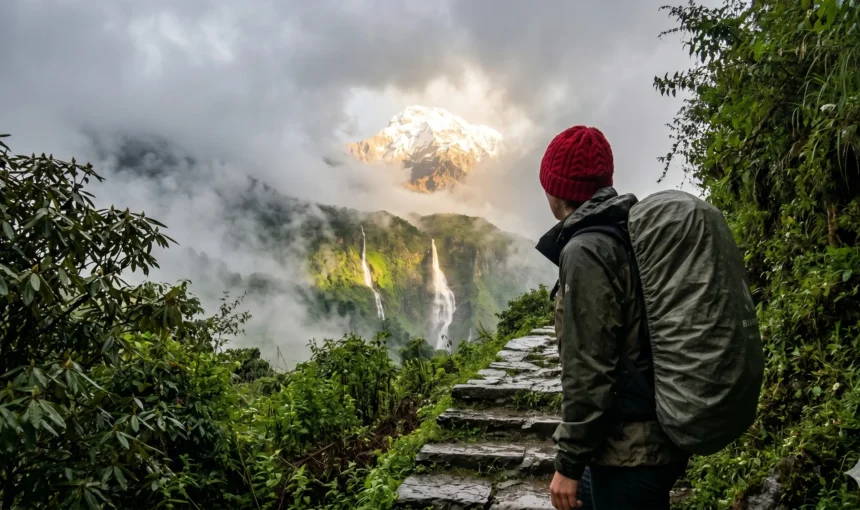
Every travel agency in Kathmandu will tell you the same thing: don’t trek in monsoon. They’ll cite landslides, leeches, poor visibility, and slippery trails. They’re not lying. But they’re not telling the whole story either.
The whole story is this: June and July are the most beautiful months on Nepal’s trails: if you know what you’re getting into.
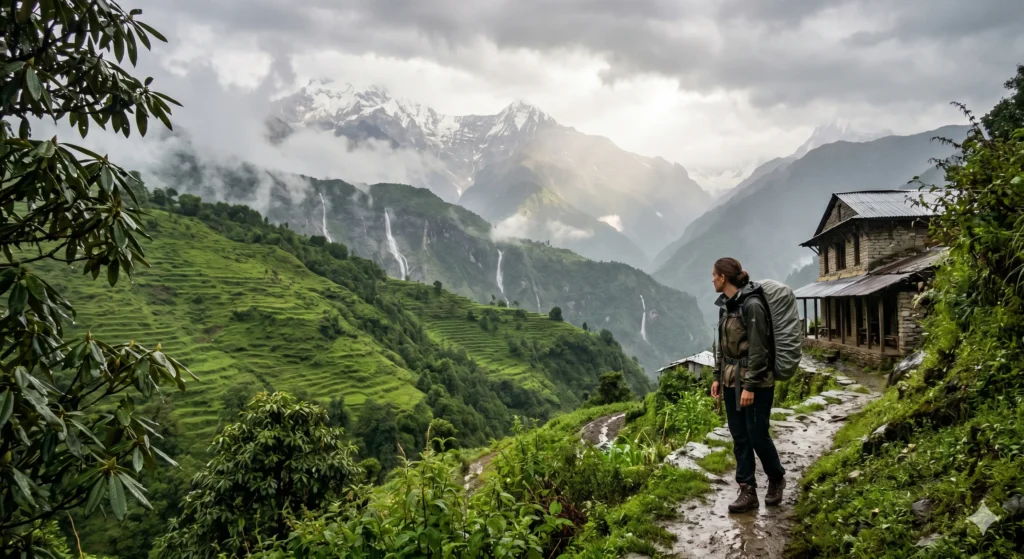
Waterfalls that don’t exist in October thunder down every ridge. Rhododendron forests drip silver. The terraced hillsides hit a green so saturated it looks unreal. Teahouses are half-empty and the owners have time to sit with you. The mountains are often hidden, but when the mist clears, even for ten minutes, the reveal is worth every wet boot.
This guide is for the traveller who’d rather earn their view than queue for it.
The Real Monsoon Trekking Conditions, What No One Tells You
Rain Pattern: It’s Not Raining Every Hour
Nepal’s monsoon is not a constant downpour. The typical pattern is clear or cloudy mornings, rain in the afternoon, and often clear again by evening. Most trekkers who time their walking to mornings and take shelter from 2–5 PM navigate the rain surprisingly well.
Higher altitude trails (above 3,500m) on routes like the Annapurna Circuit’s northern, rain-shadow sections (Mustang, Manang) receive far less precipitation, they remain accessible and beautiful all through monsoon.
Visibility, The Honest Truth
Yes, Everest will hide. Yes, Annapurna will disappear for days at a time. Cloud and mist are constant companions. But what most guides won’t say: the misty mountain aesthetic is its own reward. Trails through forests look like scenes from Japanese ink paintings. Suspension bridges disappear into low cloud. Prayer flags flutter into grey sky. If you’ve only ever seen Nepal in October’s harsh mountain sun, the monsoon version feels like a different country.
Trail Conditions and Landslide Risk
Landslides are real. They most commonly affect roads and lower valley routes, not high ridgeline trails. The trails themselves can be slippery on clay sections, and stream crossings become serious. Trekking with an experienced guide during monsoon is not just recommended, it’s genuinely important. Know the difference between a trail that’s wet and a trail that’s compromised.
Avoid: Lower Marsyangdi Valley in peak monsoon, Kali Gandaki Gorge river-level sections Generally safe: Mardi Himal, Poon Hill, Langtang Valley (mid-section), upper Annapurna Circuit
The Leech Question, Everything You Actually Need to Know
Let’s be honest. Leeches are the single biggest deterrent for monsoon trekking, and they’re almost entirely overstated as a danger.
Are Leeches Dangerous?
No. The leeches found on Nepal’s forest trails (primarily Haemadipsa zeylanica, the land leech) are medically harmless to healthy adults. They inject a mild anaesthetic, so you often don’t feel the bite. They leave a small wound that can bleed for a while due to the anticoagulant they inject, but this stops on its own.
They are not dangerous. They are not venomous. They do not transmit disease in the Himalayan context. They are annoying, categorically, reliably, consistently annoying, but they are not a reason to stay home.
Leech Activity by Trail Zone
| Trail Zone / Elevation | Leech Density (June–Aug) | Notes |
|---|---|---|
| Forest trails, 800–2,200m | Very High | Post-rain, humid paths, peak territory |
| Rhododendron forest, 2,200–3,200m | High | Especially early morning / after rain |
| Open ridge trails, 3,200m+ | Low | Leeches rare above this elevation |
| Rain shadow zones (Mustang, Manang) | Very Low | Dry terrain, minimal leech activity |
| Teahouse areas, cleared land | Low-Medium | Less vegetation cover = fewer leeches |
Salt vs. Dettol, The Leech Removal Debate
Ask five Nepali guides how to remove a leech and you’ll get five different answers, delivered with the confidence of someone who has done this a thousand times.
The two main schools:
Salt, The classic method. Pinch of salt directly on the leech causes it to contract and detach. Fast, effective, widely used by locals. Keep a small bag of salt in your hip pocket during monsoon.
Dettol or antiseptic spray, A quick spray makes the leech release without the “squeeze-and-burst” risk of using fingers. Many guides carry a small bottle. The advantage is the wound also gets cleaned in the same step.
What NOT to do: Don’t yank the leech off with your fingers, you risk leaving the mouthparts in the skin, which increases infection risk. Don’t burn them off, this causes the leech to regurgitate into the wound. Both are instinctive reactions. Both are wrong.
After removal: Clean the wound with antiseptic. It will bleed noticeably for 15–30 minutes (anticoagulant effect). Keep it clean. That’s it.
How to Wear Leech Socks, And Why They Actually Work
Leech socks (sometimes called “leech gaiters”) are tight, fine-weave fabric tubes worn over your trekking socks and under your trouser leg. Most leeches access via your ankles, leech socks break that path effectively.
How to wear them correctly:
- Pull them on over your trekking socks, all the way up to mid-shin
- Tuck your trouser hem inside or tape it down, gaps are an invitation
- Apply DEET-based repellent to the exterior of the sock and boot
- Check every 30–45 minutes on dense forest trails
Pro tip from local guides: Tuck your trouser cuffs into your socks first, then pull the leech sock over everything. The double layer significantly cuts access points.
You can buy leech socks in Thamel, Kathmandu (around NPR 150–300) or in trail towns. They’re cheap and genuinely effective. Buy them. Wear them.

June vs. July on the Trail, Which Month Wins?
| Factor | June | July |
|---|---|---|
| Crowd Level | Low | Very Low |
| Leech Activity | High | Peak |
| Rainfall Intensity | Building | Peak |
| Scenic Greenery | Excellent | Excellent |
| Teahouse Availability | Easy | Very Easy |
| Price (guides/lodges) | 10–20% lower | 20–30% lower |
| Trail Morale | Adventurous | Hardcore |
| Cultural Festivals | Rato Macchendranath ends | Naga Panchami (late July) |
Verdict: June is the sweet spot. Monsoon is fully arrived, greenery is at maximum, but leech density and rainfall haven’t quite hit their July peak. You get the “off-season” experience without the most intense conditions.
The Culture of Monsoon Trekking, did a leech bite? (Jukaa Lagyo?)
There’s a social ritual that defines monsoon trekking in Nepal that you won’t find in any guidebook.
Every 20–30 minutes on a forested trail, someone in your group, porter, guide, fellow trekker, will call out: “Jukaa lagyo?”
“Did a leech bite?”
It’s part greeting, part safety check, part collective dark humour. Everyone stops, everyone checks their ankles, their calves, the backs of their knees. Someone usually finds one. There are groans, laughter, a bit of salt or spray, and you move on.
This small ritual creates a strange camaraderie. It’s not something that happens in October when 400 trekkers are queuing at the same tea house. It’s intimate, slightly absurd, and very human.
The locals who work these trails have a matter-of-fact relationship with leeches that puts most visitors to shame. Your porter has probably removed more leeches from his ankles before breakfast than you’ll encounter in your whole trip. Watch how unbothered he is. It’s a good calibration.
Which Nepal Treks Work Best in Monsoon?
Not all trails are created equal in the wet season. Here are the best options for intrepid travellers:
Best Monsoon Treks in Nepal
1. Mardi Himal Trek (5–7 days) Lower crowds even in peak season. Good elevation gain to escape lower leech zones. Spectacular misty forest character in monsoon. Accessible from Pokhara.
2. Upper Mustang Trek Nepal’s rain shadow gem. Lies behind the Annapurna massif and receives a fraction of monsoon rainfall. An entirely different landscape, ochre canyons, ancient cave monasteries, Tibetan plateau vibes. A permit-required trek (approx. USD 500/10 days) that becomes comparatively crowded in October but remains peaceful in July.
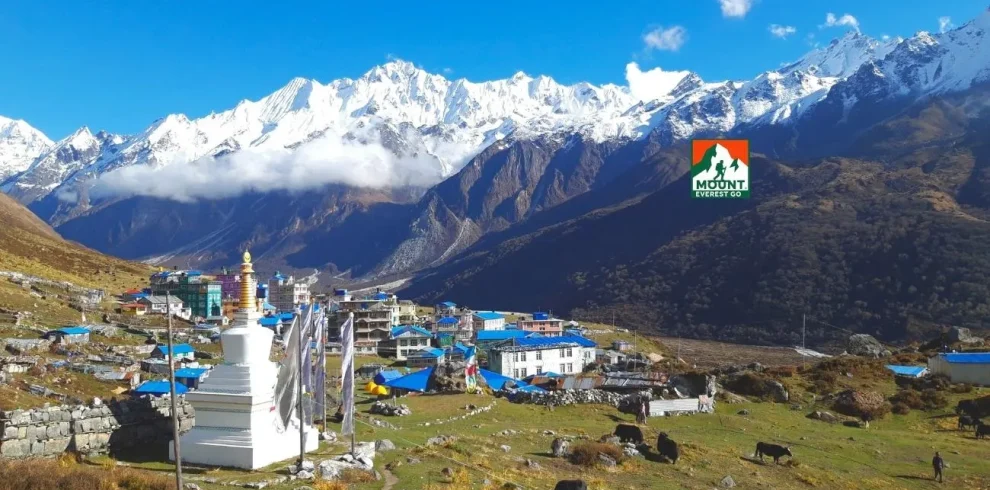
3. Langtang Valley Trek (7–10 days) Closer to Kathmandu. Mid-valley sections are doable in monsoon; the terrain opens up above 3,500m. Lower sections have significant leech activity, but the valley rewards patience with extraordinary landscape and yak pastures.
4. Poon Hill (Ghorepani-Poon Hill, 4–5 days) The accessible crowd favourite becomes genuinely quiet in monsoon. You may not get the famous sunrise mountain view, but you’ll have the entire ridge to yourself in mist and cloud, which is its own kind of magnificent.
Monsoon Trekking Packing Checklist
A standard packing list doesn’t cut it in June–July. Add these to whatever you’d normally bring:
| Item | Notes |
|---|---|
| Leech socks / gaiters | Buy in Thamel or Pokhara, NPR 150–300 |
| Small salt sachet | Hip pocket, accessible at all times |
| Dettol antiseptic spray / wipes | Dual-purpose: leech removal + wound care |
| DEET insect repellent (30%+) | Apply to boots, gaiters, lower trouser hem |
| Waterproof gaiters (full leg) | For serious forest routes |
| Dry bags (for electronics/docs) | Non-negotiable |
| Quick-dry trekking trousers | Avoid cotton; wet cotton is miserable |
| Waterproof trail runners or boots | GoreTex or equivalent, worth it |
| Poles with rubber tips | Slippery trails demand them |
| Ziplock bags (multiple sizes) | Phones, passports, snacks, everything |
The Bottom Line: Should You Trek Nepal in Monsoon?
If you’re the kind of traveller who chooses the trail less taken, who finds beauty in grey skies as much as blue, who’d rather share a meal with a porter in a quiet teahouse than navigate the selfie-stick traffic of October, yes, absolutely go.
The leeches are not dangerous. The landslides are avoidable with good route knowledge. The rain passes. The mountains appear. And for those brief moments when the cloud tears apart and you see a snow peak above a thousand shades of green, you’ll understand why the people who’ve done monsoon trekking tend to go quiet when asked about it.
Not because it’s hard to explain. Because they don’t want the secret getting out.
Jukaa lagyo? Check your ankles. You’ll be fine.
MONSOON TREKKING: CROWD DENSITY VS. TRAIL QUALITY (Data Points for Visual Chart)
| Month | Trail Crowd Level (1–10) | Leech Activity (1–10) | Scenic Green Score (1–10) | Landslide Risk (1–10) | Overall Intrepid Score |
|---|---|---|---|---|---|
| March | 7 | 1 | 4 | 2 | 6/10 |
| April | 9 | 1 | 5 | 2 | 5/10 |
| May | 8 | 2 | 6 | 3 | 6/10 |
| June | 3 | 7 | 10 | 6 | 8/10 |
| July | 2 | 9 | 10 | 7 | 8/10 |
| August | 2 | 8 | 9 | 7 | 7/10 |
| September | 4 | 5 | 8 | 5 | 7/10 |
| October | 10 | 1 | 6 | 1 | 4/10 |
| November | 9 | 1 | 5 | 1 | 5/10 |
FAQs, Monsoon Trekking Nepal
Q: Is it safe to trek Nepal in June and July? With proper preparation, a good guide, and sensible route selection, yes. Avoid compromised road sections and lower valley routes during heavy rain periods.
Q: Are leeches dangerous in Nepal? No. Himalayan land leeches are a nuisance, not a health hazard. Carry salt or antiseptic spray and wear leech socks.
Q: What is the cheapest time to trek Nepal? Monsoon (June–August) typically offers 10–30% lower costs on teahouse accommodation and guide/porter rates compared to peak October season.
Q: Can I see Everest in monsoon season? Not reliably. Cloud cover is consistent in monsoon. The Khumbu region in particular stays socked in. If seeing Everest is your primary goal, plan for October–November or March–April.
Q: Do I need a guide for monsoon trekking? More than in the dry season, yes. Trail conditions, stream crossings, and landslide route-finding are significantly more complex. A knowledgeable local guide is strongly recommended.


 English
 Deutsch
 Svenska
 Dansk
Dansk Русский
 Français
 Português
 Español
 Polski
 简体中文
简体中文 日本語
日本語 ไทย
ไทย العربية
 한국어
한국어