
snabbt svar
A higher-priced Ama Dablam climbing package at $6,500 to $9,500 is worth it for five upgrades that affect summit success and safety: an IFMGA lead guide, full bottled oxygen with pulse oximeter monitoring, a dedicated fixed line and sherpa crew, a 5 star base camp with heated dining and comms tent, and a satellite phone with daily forecasts. Budget packages at $4,500 to $5,500 cut most of these and run 45 to 55 percent summit rate versus 75 to 85 percent for premium.
Detaljerad uppdelning
Ama Dablam is a 6,812 m technical peak in the Khumbu, climbed over 28 to 32 days including trek to base camp, acclimatization, and a 5 to 7 day summit push. The Southwest Ridge route has sustained rock, ice, and mixed climbing through Camp 1, Camp 2, and Camp 3, with exposed pitches above 6,000 m requiring fixed lines, jumars, and confident rappel skills.
An IFMGA guide costs $200 to $350 per day versus $80 to $130 for a NIMS certified Nepali guide, but brings international rope work and rescue decision authority. Full oxygen at $1,200 to $1,800 per climber cuts altitude illness risk by 30 to 50 percent. A sherpa crew of 2 to 3 per climber fixes lines, carries high camp gear, and supports rappel descent.
Kostnad/komponentuppdelning
| beståndsdel | Budget (USD) | Premium (USD) |
|---|---|---|
| NMA expedition permit | $300 till $400 | $300 till $400 |
| Sagarmatha, Khumbu, TIMS, garbage deposit | $260 to $350 | $260 to $350 |
| Katmandu till Lukla flyg tur och retur | $360 till $420 | $360 till $420 |
| Lead guide, 30 days | $2,400 to $3,900, NIMS | $6,000 to $10,500, IFMGA |
| Sherpa crew, 2 to 3 per climber | $1 400 till $2 400 | $3 000 till $5 400 |
| Base camp full service | $600 till $1 000 | $2,500 to $4,500 |
| Oxygen and medical kit | $0 till $400 | $1 200 till $2 400 |
| Fixed line, high camp gear, sat phone, weather | $400 till $900 | $1,900 to $3,300 |
| Contingency and rescue deposit | $400 till $700 | $800 till $1 500 |
| Total, group of 4 | $4,500 to $7,000 | $8 500 till $14 000 |
Premium packages at $6,500 to $9,500 are the most common full-service bracket. The $9,500 to $14,000 tier adds helicopter return and private chef.
Vad påverkar svaret
Guide credentials matter most. An IFMGA guide brings rescue decision authority, while a NIMS guide brings local route knowledge. Summit rate correlates with guide quality, with IFMGA packages running 75 to 85 percent summit success and NIMS packages 50 to 65 percent. Sherpa crew ratio matters, because 2 to 3 sherpas per climber cuts descent fatigue and rappel accidents.
Oxygen support matters above 6,000 m, because Camp 3 sits at 6,400 m. Base camp infrastructure matters for recovery, with heated dining and comms tent cutting recovery time by 1 to 2 days. Weather forecast quality matters, because Ama Dablam has sudden wind events above 6,500 m. A daily subscription forecast at $400 to $800 per trip is worth it.
Bokningstips / Praktiska råd
Book 6 to 9 months ahead for an October to November expedition, because IFMGA guides and premium sherpa crews book early. Ask for the lead guide name, IFMGA number, and prior summits in 2024 and 2025. Request a written summit rate and two references. Confirm the operator includes a satellite phone, weather forecasts, full oxygen, and a 2 to 1 sherpa ratio.
Verify the package includes NMA permit, Sagarmatha and Khumbu permits, garbage deposit, and TIMS. Carry $500 to $800 USD equivalent in rupees for crew tips, which run $400 to $700 per climber for sherpas. Add five Kathmandu buffer days before departure, because Lukla flights often delay 2 to 3 days in shoulder seasons.
Jämförelse med alternativ
Island Peak at 6,189 m runs $2,200 to $3,800 for 14 to 16 days and is the entry level 6,000 m peak. Mera Peak at 6,476 m runs $2,800 to $4,500 for 16 to 18 days and is non-technical. Ama Dablam at 6,812 m runs $6,500 to $9,500 for 28 to 32 days and is sustained technical. Lobuche East at 6,119 m runs $2,500 to $4,200 for 14 to 16 days and is moderate technical. Ama Dablam wins on technical prestige but loses on cost.
Vanliga misstag att undvika
Do not accept a quote below $5,000 per person, because it usually means NIMS guide, no oxygen, and 1 to 1 sherpa ratio. Avoid operators that refuse to share prior summit rates. Skip late November, because wind events pick up by mid-November. Do not skip the garbage deposit, because the NMA withholds permits without it. Confirm the IFMGA guide name before paying a deposit.
Vanliga frågor
What summit rate should I expect from a premium package? 75 to 85 percent for fit climbers with prior 6,000 m experience, versus 50 to 65 percent for budget.
Is oxygen included in premium packages? Yes, premium packages include 2 to 4 bottles per climber plus pulse oximeter monitoring. Budget packages rarely do.
How many sherpas should I have? 2 to 3 sherpas per climber. The exposed pitches above Camp 2 require fixed line work that demands sherpas.
Vilken är den bästa månaden? October and early November for stable weather. April is the spring alternative with colder nights.
Can I hire a private IFMGA guide? Yes, at $350 to $500 per day. A 30-day private expedition runs $12,000 to $18,000 per climber.
sammanfattning
A higher-priced Ama Dablam climbing package at $6,500 to $9,500 is worth it for an IFMGA lead guide, full oxygen, dedicated sherpa crew at 2 to 3 per climber, 5 star base camp, and satellite phone with weather forecasts. Premium packages run 75 to 85 percent summit rate versus 50 to 65 percent for budget. Guide credentials and crew ratio drive most of the value.
slutsats
For a 2027 to 2030 Ama Dablam expedition, the premium package is the right choice for climbers serious about summit success. The $2,000 to $4,000 premium over budget buys IFMGA decision authority, full oxygen, sherpa ratio, base camp recovery, and weather forecasts. Cut the premium only with prior Ama Dablam experience.
Rekommenderade Trek-paket
Vandringsplatser att utforska
Explore Trips in Nepal
Hand-picked guided trips to this destination
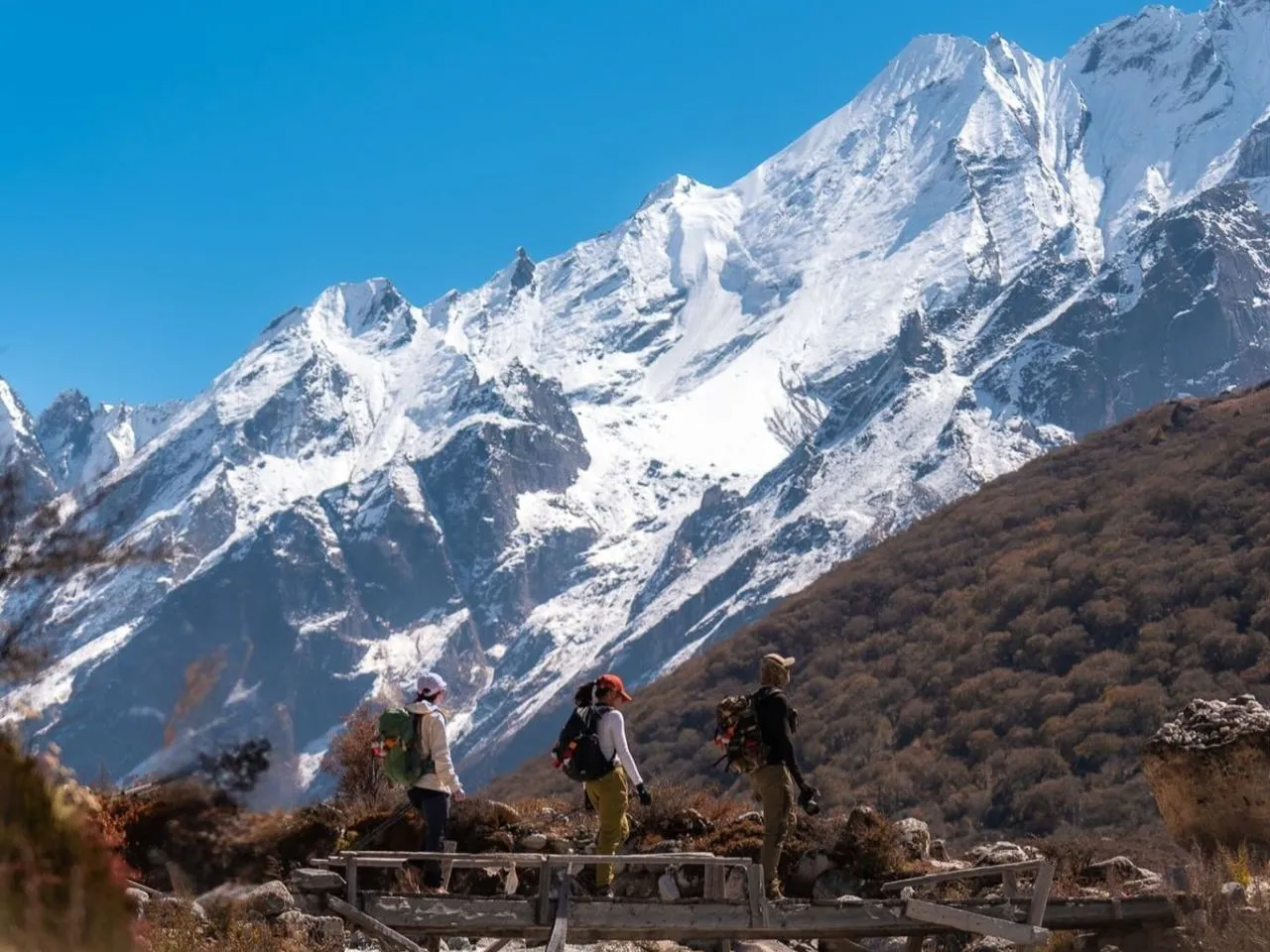
Langtang Luxury Trek – 10 dagar
Langtang Luxury Trek – 10 dagar
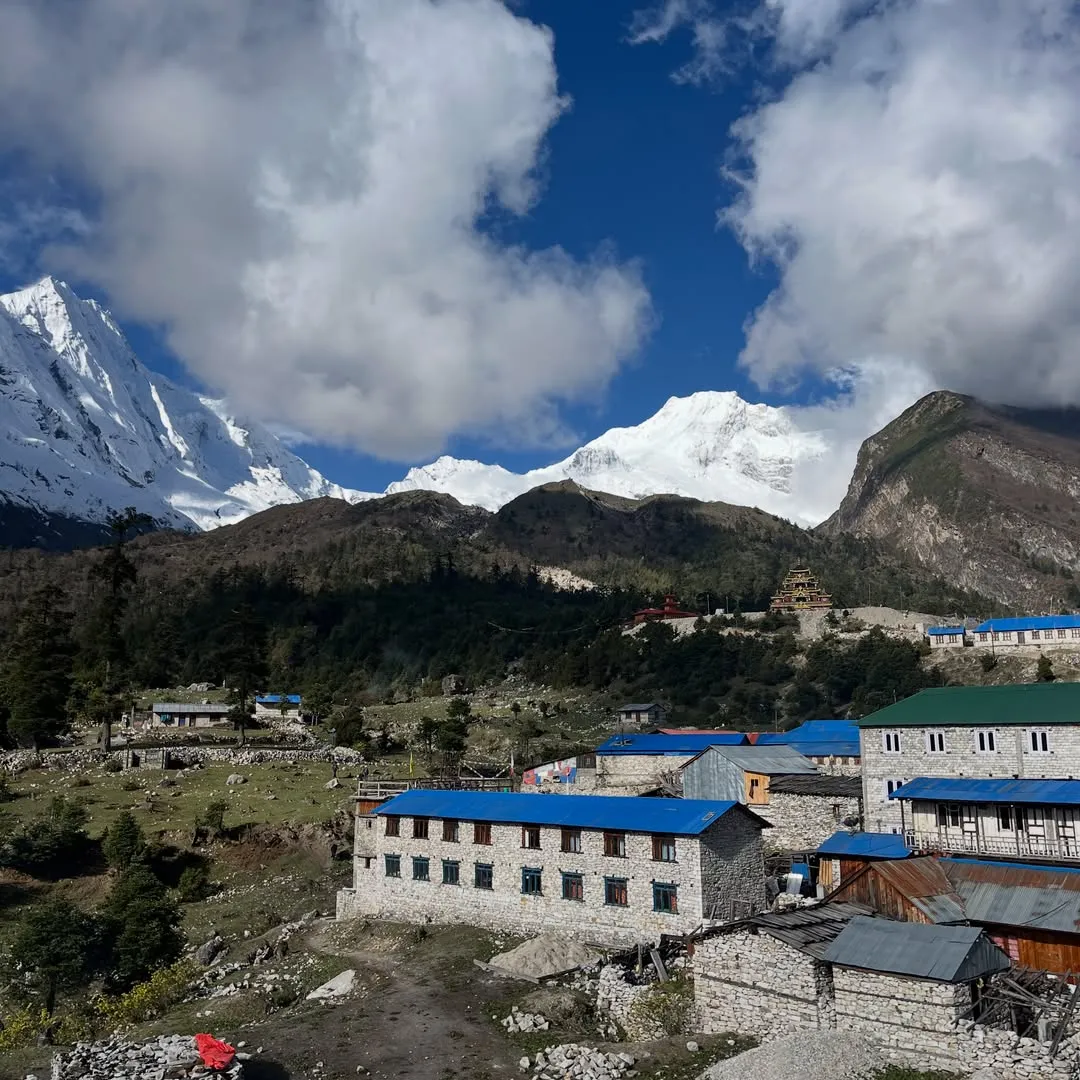
Manaslu Family Trek – 12 dagar
Manaslu Family Trek – 12 dagar
Manaslu Luxury Trek – 14 dagar
Manaslu Luxury Trek – 14 dagar

Manaslu Photography Trek – 17 dagar
Manaslu Photography Trek – 17 dagar
 English
 Deutsch
 Svenska
 Dansk
Dansk Русский
 Français
 Português
 Español
 Polski
 简体中文
简体中文 日本語
日本語 ไทย
ไทย العربية
 한국어
한국어