
resposta rápida
To judge a shorter helicopter-supported Kailash itinerary for 2027 to 2030, check that the plan includes one full acclimatization night at Mansarovar Lake at 4,590 m, a second acclimatization night at Darchen at 4,575 m before the parikrama, and a clear helicopter backup if the Simikot to Hilsa flight cancels. A 9 to 11 day helicopter itinerary costs $5,800 to $8,400 USD per person, compared with $3,800 to $5,200 USD for a 14 to 16 day overland version.
Detalhamento detalhado
The Simikot to Hilsa route is the standard Nepal approach to Mount Kailash in Tibet, used by pilgrims and trekkers who want to combine a Far West Nepal trek with the Kailash Mansarovar pilgrimage. The classic overland route takes 14 to 16 days from Kathmandu, including a 5 to 7 day trek from Simikot to Hilsa, a border crossing at Purang, and a 3 day Kailash parikrama. The helicopter version skips the Simikot to Hilsa trek by flying the 50 km route in 25 minutes.
The helicopter saves 5 to 7 trekking days but removes the gradual altitude gain that the trek provides. Simikot sits at 2,950 m, the Hilsa landing pad at 3,650 m, and Purang at 3,900 m. Going directly from Simikot to Hilsa by helicopter drops you at 3,650 m with no acclimatization in between, then a same day drive to Mansarovar at 4,590 m. This is a 1,940 m altitude gain in a single day, which is well above the recommended 500 m per night.
Desdobramento de custos/componentes
For a 10 day helicopter-supported Kailash itinerary for 2027 to 2030, expect the following cost breakdown per person.
| componente | custo típico USD | notas |
|---|---|---|
| Kathmandu to Nepalgunj to Simikot flights | $450 to $580 | Duas pernas em cada sentido |
| Simikot to Hilsa helicopter one way | $2,200 to $3,000 | Per person on shared helicopter |
| Tibet visa and Kailash permit | $230 to $320 | Arranged by operator |
| Mansarovar and Darchen lodging | $280 a $420 | Basic guesthouse full board |
| Parikrama support and yaks | $340 to $480 | 3 day parikrama with yaks and crew |
| Guia e equipe | $420 a $580 | Nepali and Tibetan guide share |
| margem da agência | $1,460 to $2,020 | 20 to 25 percent of total |
| Total por pessoa | $5,800 to $8,400 | Exclui voos internacionais |
O que afeta a resposta
Four factors shift the acclimatization judgment. First, your prior altitude experience. If you have trekked to 4,500 m without altitude sickness in the last two years, you can manage a tighter helicopter itinerary. If you have never been above 3,500 m, add two extra acclimatization nights.
Second, the Simikot to Hilsa helicopter schedule. Flights run only in the morning when weather permits, and cancellations are common in October. A 9 day itinerary with no buffer day risks missing the Tibet border crossing window and adding two extra days at Hilsa waiting for weather.
Third, the parikrama pace. The standard 3 day parikrama crosses the Drolma La pass at 5,630 m on day 2, which is the highest point of the trip. A shorter 2 day parikrama skips the second night at Zutulpuk but raises the day 1 altitude gain. Stick with the 3 day version.
Dicas de reserva
Book six to nine months ahead for May and September departures. Confirm the operator holds a valid Kailash Mansarovar Yatra operator license and has run the helicopter version within the last two seasons. The helicopter logistics are complex and require partnership with a Tibetan operator on the other side of the border.
Ask for a day by day itinerary with elevation profile and the names of the hotels at Mansarovar and Darchen. Confirm the helicopter operator is a registered Nepali company with a valid Air Operator Certificate. Reputable agencies will share the operator name and helicopter registration within 48 hours.
Comparação com alternativas
The helicopter-supported Kailash itinerary compares with two alternatives. The overland Simikot to Hilsa trek version is 14 to 16 days and costs $3,800 to $5,200 USD per person, with proper gradual acclimatization but 5 to 7 extra days of walking. The Lhasa to Kailash overland version is 14 to 18 days and costs $4,200 to $6,400 USD, with the best acclimatization and the most Tibetan culture but a much longer total trip.
Erros comuns a evitar
Avoid a 7 day helicopter itinerary. The 1,940 m altitude gain from Simikot to Mansarovar in a single day is dangerous for travelers without prior high altitude experience. Add at least one acclimatization night at Hilsa or Purang.
Avoid operators that do not include a helicopter backup. If the morning Simikot to Hilsa flight cancels, the only alternative is a 5 day trek or a 2 day wait. A backup helicopter for the next morning costs $300 to $500 USD per person but prevents losing the Tibet permit window.
FAQ
Is the helicopter Kailash itinerary safe? Yes, with proper acclimatization nights at Hilsa, Mansarovar, and Darchen. Avoid itineraries that skip any of these stops.
What is the best month for the helicopter Kailash trip? May and September. Avoid July and August for weather, and avoid November to April when the Tibet border is closed.
How reliable is the Simikot to Hilsa helicopter? Morning flights run roughly 70 to 80 percent of the time in May and September. Cancellations are common in October due to cloud.
Can I do the parikrama in 2 days instead of 3? Possible but not recommended. The 3 day version allows proper rest and reduces altitude risk on the Drolma La pass.
resumo
To judge a shorter helicopter Kailash itinerary for 2027 to 2030, verify one acclimatization night at Mansarovar, a second at Darchen, a clear helicopter backup if Simikot to Hilsa cancels, and a 3 day parikrama.
conclusão
A helicopter-supported Kailash itinerary saves time but demands careful acclimatization planning.
Pacotes de Trek recomendados
Trekking Places para explorar
Explore Trips in Nepal
Hand-picked guided trips to this destination
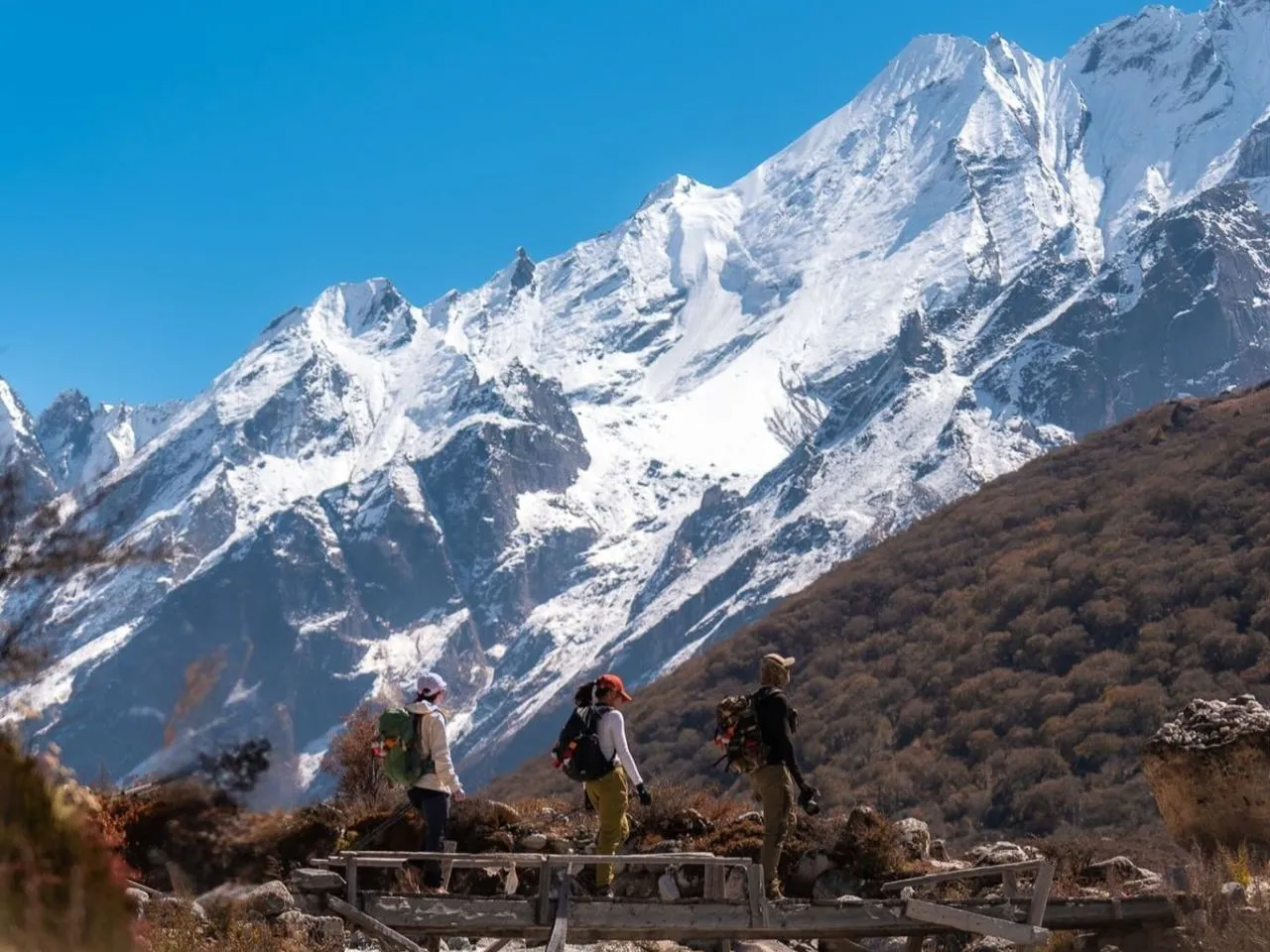
Trek de luxo Langtang – 10 dias
Trek de luxo Langtang – 10 dias
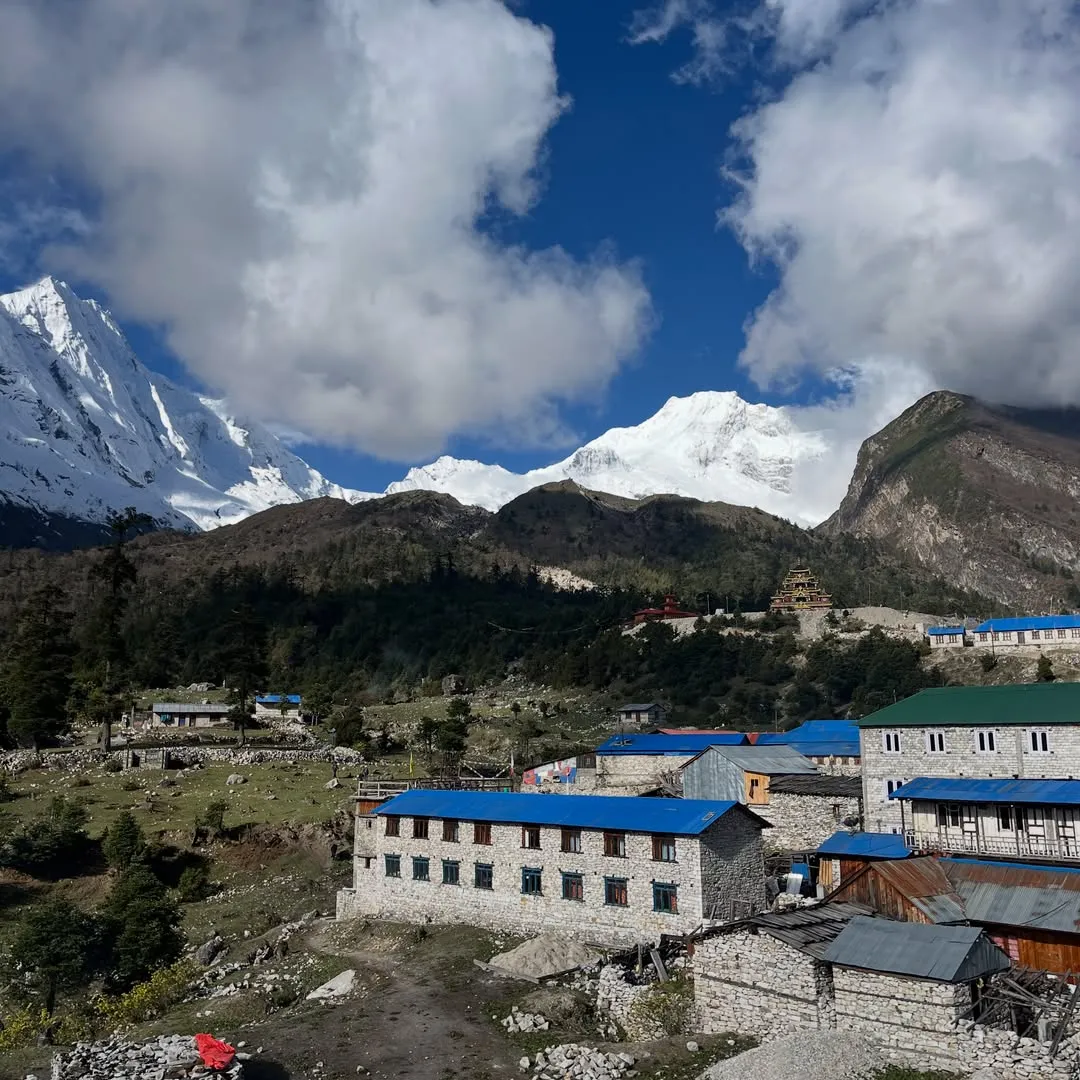
Trek em família Manaslu – 12 dias
Trek em família Manaslu – 12 dias
Trek de luxo em Manaslu – 14 dias
Trek de luxo em Manaslu – 14 dias

Trek de fotografia de Manaslu – 17 dias
Trek de fotografia de Manaslu – 17 dias
 English
 Deutsch
 Svenska
 Dansk
Dansk Русский
 Français
 Português
 Español
 Polski
 简体中文
简体中文 日本語
日本語 ไทย
ไทย العربية
 한국어
한국어