
Nepal's trekking peaks are the bridge between high-altitude trekking and full mountaineering, and the Nepal Mountaineering Association has designated 28 of them for climbers who want a real summit without the cost and bureaucracy of an 8,000-metre expedition. Nepal peak climbing covers everything from straightforward snow walks like Mera Peak to serious technical routes like Ama Dablam, all accessible with a single NMA permit. This guide covers what you need to know to choose, plan, and execute your first or next Nepal peak climb in 2027, 2028, or beyond.
Trek Overview
Nepal peak climbing refers to ascents of the 28 peaks designated as "trekking peaks" by the Nepal Mountaineering Association (NMA). These peaks range from 5,587 m (Mardi Himal) to 6,812 m (Ama Dablam), and they sit across the country from the Khumbu to the Annapurna and Manaslu regions. The NMA permit system allows climbers to attempt these peaks with a relatively simple permit process, avoiding the full expedition permit required for 7,000 m and 8,000 m peaks. The category was created in 1978 to encourage mountaineering tourism and to give trekkers a step into real climbing. Most peaks are climbed in spring and autumn, with a few winter options.
Why Visit
Nepal's trekking peaks offer a genuine mountaineering experience at a fraction of the cost and commitment of an 8,000-metre expedition. They are the standard progression for trekkers who have done routes like the Everest Base Camp Trek and want to take the next step into climbing. The peaks are diverse enough to suit every level: Mera Peak is a long snow walk suitable for fit first-timers, Island Peak introduces fixed-rope climbing, and Ama Dablam is a serious technical objective. The permits are affordable ($70-400 per season) and can be arranged in a few days. For most climbers, an NMA peak is the first time they stand on a real summit, and the experience often leads to bigger objectives.
Best Time to Trek
The two main seasons are pre-monsoon spring (March to May) and post-monsoon autumn (September to November). Spring has slightly warmer nights and longer daylight, with the best climbing in April and early May. Autumn has the most stable weather, with crisp clear conditions and well-frozen snow, making October the single best month for most peaks. Winter (December to February) is possible on lower and easier peaks like Mera, but high-camp temperatures on technical peaks become dangerously cold. The monsoon (June to September) brings cloud and snow that obscures routes and increases avalanche hazard. Book spring 2027 permits by January, and autumn 2027 permits by July, as quotas fill early.
Difficulty Level
Nepal trekking peaks span the full range from easy (F) to very difficult (TD) on the Alpine scale. The easiest, Mera Peak (PD) and Lobuche East (PD+), require only basic crampon and fixed-rope skills. The middle tier, Island Peak (PD+) and Pisang Peak (PD+), have glacier crossings and fixed-rope headwalls. The harder peaks, including Chulu East (AD), Himlung Himal (AD), and Ama Dablam (TD), require real alpine climbing experience with rock, ice, and mixed terrain. Before choosing a peak, assess your own experience honestly and pick a peak one grade harder than your previous hardest climb. Most operators require a climbing CV before confirming Ama Dablam permits.
Duration
Nepal peak climbing expeditions range from 14 to 32 days depending on the peak and the approach. The shortest, like Island Peak or Lobuche East combined with EBC, run 14-18 days. The longer ones, like Mera Peak (16-20 days) and Ama Dablam (28-32 days), need more acclimatisation and rotation time. Add 2 to 3 days on each end for Kathmandu logistics and weather buffer. For 2027 and 2028 trips, plan 18 to 22 days for a first 6,000 m peak and 30 days for Ama Dablam. Always build in a contingency day for summit weather windows, as tight schedules are the main reason for failed summits.
Route Details
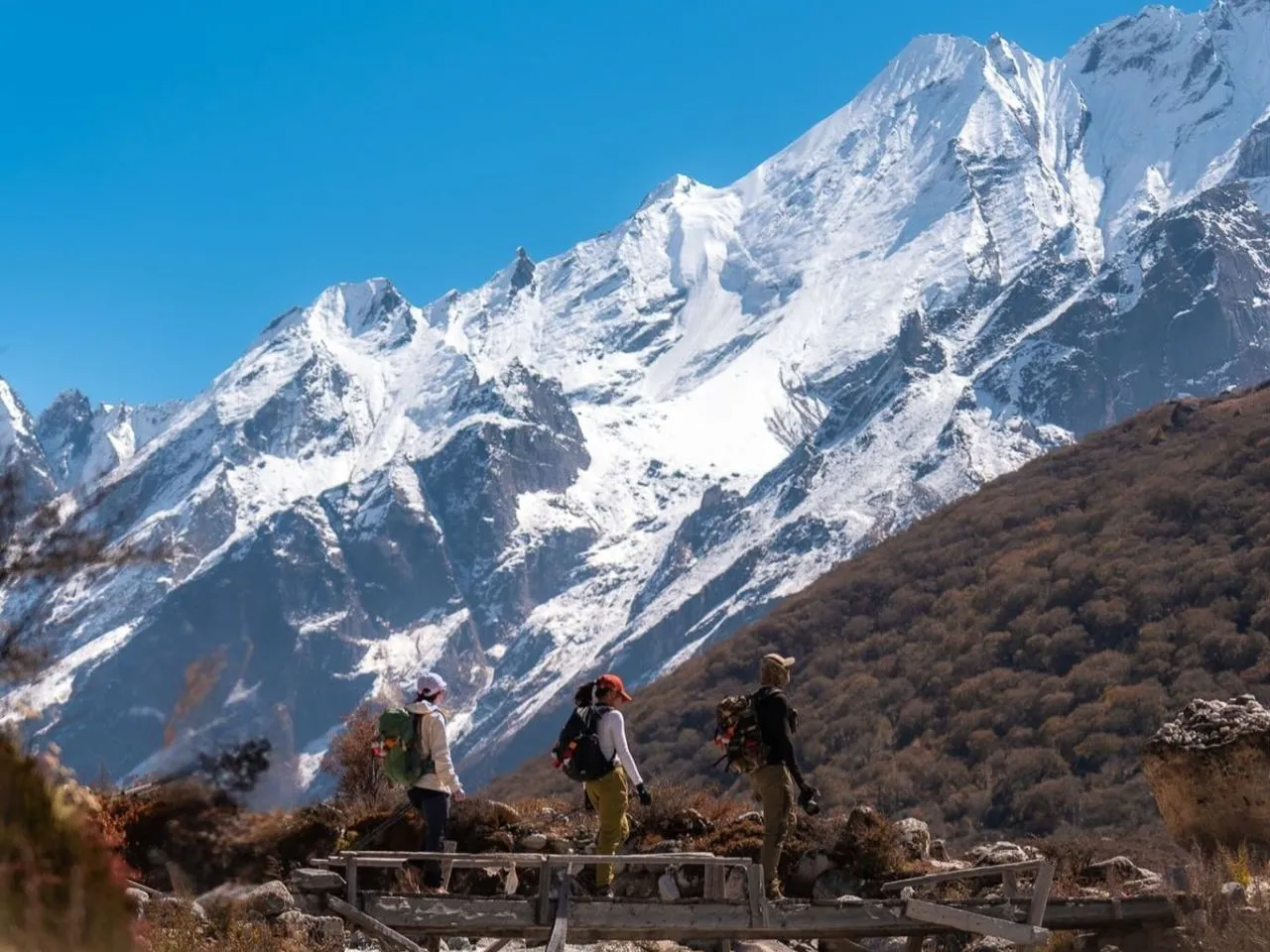
Routes vary widely by peak. Mera Peak follows a remote Hinku valley approach to a high camp at 5,780 m, then a long snow dome to the summit. Island Peak follows the standard Everest trail to Chhukung, then a base camp and high camp with a fixed-rope headwall. Lobuche East is approached from the EBC trail with a base camp near Dzongla and a technical summit ridge. Ama Dablam has a south-west ridge route with three high camps and sustained technical climbing. Pisang Peak and Chulu East are approached from the Annapurna Circuit. All routes require some trekking approach for acclimatisation, typically 7 to 12 days of walking before reaching base camp.
Itinerary Overview
A typical Nepal peak climbing expedition has four phases. Phase 1 (days 1-2) is Kathmandu arrival, permit processing, gear check, and briefing. Phase 2 (days 3-10) is the trekking approach for acclimatisation, reaching base camp. Phase 3 (days 11-20) is the climbing phase, with rotations to high camps, skills training, and the summit push. Phase 4 (days 21-25) is the return trek and flights back to Kathmandu. Add 2 to 3 contingency days for weather. The acclimatisation trek in phase 2 is critical for summit success; skipping it is the single biggest predictor of failure.
최대 고도
Nepal trekking peaks range from 5,587 m (Mardi Himal) to 6,812 m (Ama Dablam). The most popular objectives sit between 6,000 and 6,500 m, where oxygen levels are roughly 50 to 55 percent of sea level. At these altitudes, acclimatisation is essential and altitude sickness is the main risk. The acclimatisation trek before the climb should reach at least 5,000 m, and ideally 5,500 m, to prepare for the summit. Most NMA peaks require a high camp between 5,300 and 5,800 m, with the summit push covering 500 to 1,000 m of gain. Plan acclimatisation days at each new altitude threshold.
Weather
Spring days on the approach treks are typically 10 to 15 degrees Celsius at lower elevations and minus 5 to minus 10 at night at base camp. Autumn is colder, with base-camp nights regularly dropping to minus 15. Summit day temperatures on 6,000 m peaks are typically minus 15 to minus 25 degrees, with wind chill making it feel colder. Storms can move in quickly, particularly in spring when afternoon cloud build-up is common. The best summit windows are typically early morning, before cloud builds. Pack for minus 25 to minus 30 degrees at high camp on technical peaks like Ama Dablam.
Accommodation
Accommodation on Nepal peak climbing expeditions combines tea-house trekking and expedition camping. On the trekking approach, you stay in tea houses with shared dining rooms and basic rooms. At base camp and high camps, the expedition sets up full camping with two-person mountain tents, a dining tent, kitchen tent, and toilet tent. High camps are stripped down to just mountain tents and a small cooking tent. The most popular peaks (Mera, Island, Lobuche) have established base camps that are reused by multiple expeditions. The camping setup is similar to that on full 8,000 m expeditions, scaled down.
Tea Houses
Tea houses on the trekking approach are basic but comfortable in popular regions like the Khumbu, with heated dining rooms and varied menus. In remoter regions like the Hinku valley or Manaslu, lodges are simpler. Most tea houses have solar electricity or small hydro systems, with charging for 200-400 rupees per item. WiFi is increasingly available through local networks like Everest Link in the Khumbu. Standards have improved steadily since 2015, and the best lodges in Namche and Dingboche now offer en-suite rooms. Use tea houses well during the trekking phase, as base camp comfort is much simpler.
캠핑
Nepal peak climbing uses full expedition camping at base camp and high camps. The standard setup is two-person mountain tents, a dining tent with table and chairs, a kitchen tent, and a toilet tent. The crew includes a climbing Sherpa ratio of one Sherpa per two climbers, a cook, kitchen staff, and porters or yaks for load carrying. High camp is stripped down with mountain tents only and a small cooking tent. Bring a four-season sleeping bag rated to at least minus 20 degrees Celsius, and minus 30 for Ama Dablam. The expedition provides group gear including tents, stoves, fuel, ropes, and food.
Food
On the trekking approach, meals are taken in tea-house lodges and follow the standard Nepali trekking menu: dal bhat, momos, chowmein, fried rice, and porridge. During the camping phase, the expedition cook prepares a high-calorie menu with soup, rice, pasta, potatoes, eggs, and canned protein. Summit-day breakfast is typically porridge, eggs, and tea at 1 to 2 am. Bring your own summit-day snacks: chocolate bars, energy gels, nuts, and a thermos of hot drink. Hydration is critical at altitude, so plan for three to four litres of fluid per day. Vegetarian and vegan diets are easily accommodated.
Drinking Water
On the trekking approach, boiled water is available at all tea houses for 100-200 rupees per litre. At base camp and high camps, the kitchen crew melts snow and boils water for drinking. Treat all water with purification tablets or a SteriPen as a backup. Carry two one-litre bottles and an insulated thermos for summit day. Hydration directly affects acclimatisation and summit success, so drink even when you do not feel thirsty. Avoid alcohol above 4,500 m, as it worsens dehydration and altitude symptoms.
전기
Tea houses on the trekking approach have solar or hydro power, with charging at 200-400 rupees per item. Base camps have solar-and-battery setups for charging radios and essential devices. High camps have no electricity. Carry a 10,000-20,000 mAh power bank and a small solar panel for camera and phone at base camp. Headlamps should be LED with cold-rated batteries kept inside your jacket. Carry two backup headlamps for summit day, as a failure at high camp is a serious problem.
Internet & Mobile Network
Mobile coverage on the trekking approach varies by region: good in the Khumbu through Dingboche, patchy in the Hinku valley, and absent in the Annapurna high camps. WiFi is increasingly available through local networks at tea houses. Most expeditions carry a satellite phone or Garmin inReach for base-camp communication and summit-day logistics. There is no signal at any of the high camps. Inform family that you will be out of contact for the climbing phase, and schedule a check-in protocol with your trekking company's Kathmandu office.
수송
Most Nepal peak climbing expeditions start with a domestic flight from Kathmandu to a mountain airstrip: Lukla for Khumbu peaks, Juphal for Dolpo, Pokhara for Annapurna, or Tumlingtar for Makalu. The Lukla flight is the most famous, a 35-minute weather-dependent flight that frequently gets delayed in spring. For 2027 and 2028 trips, build in a buffer day at each end. Helicopter return is an option if fixed-wing flights are cancelled, costing $500-2,500 depending on distance and group size. Some peaks, like those in the Annapurna region, are approached by road from Pokhara.
Required Permits
The core permit for any NMA peak is the NMA Climbing Permit, which costs $70-400 per climber depending on the peak and season. Spring (March-May) is the most expensive, autumn (September-November) is mid-range, and winter (December-February) is the cheapest. You also need a National Park or Conservation Area entry permit ($30), a TIMS Card ($10-20), and for the most popular regions, a local municipality permit. Ama Dablam and other expedition peaks also require a garbage deposit ($500, refundable) and a government liaison officer. Your trekking company arranges all permits in Kathmandu. Bring six to eight passport photos, a copy of your passport, and proof of insurance.
포장 목록
Mountaineering gear: double plastic or waterproof mountaineering boots, crampons, ice axe, harness, helmet, jumar, two locking carabiners, abseil device, prussik cords, headlamp with spare batteries, and a fixed-rope ascender. A 50-metre dynamic rope is usually provided. Technical peaks like Ama Dablam also require ice screws, snow stakes, and a climbing rack. Clothing: base layers, mid layers, an insulated down jacket, down pants or a down suit for Ama Dablam, hard shell, four-season sleeping bag rated to minus 20-30 C, and expedition mitts. Trekking gear for the approach: standard trekking boots, daypack, trekking poles, and the usual trekking clothing. The expedition provides group gear including tents, stoves, fuel, and rope.
Budget Guide
Nepal peak climbing is one of the most affordable ways to climb a 6,000-metre peak in the world.
| 항목 | Cost (USD) |
|---|---|
| NMA climbing permit (spring, 6,000 m peak) | $250 |
| National park and TIMS permits | $60 |
| Domestic flights (Kathmandu-Lukla-Kathmandu) | $350-450 |
| Guide and climbing Sherpa | $700-1,000 |
| Cook and kitchen crew | $300-500 |
| Porters and yaks | $300-500 |
| Food and lodging (16-20 days) | $400-600 |
| Equipment rental (if needed) | $150-300 |
| Total (mid-range 6,000 m peak) | $2,500-4,000 |
A full-service 18-day expedition on a mid-range 6,000 m peak like Mera or Island costs $2,800-4,500. Ama Dablam, with its longer duration and full expedition format, runs $6,500-10,000. For 2027 trips, budget 5-10 percent more due to inflation. Insurance with helicopter rescue to 7,000 m is mandatory and costs $150-500.
Photography Tips
Summit day photography is hard because of cold, wind, and bulky gloves. Keep your camera inside your down jacket until you reach the summit, and use a thin liner glove for operation. A small mirrorless camera works better than a DSLR because of weight and ease of operation. Carry two or three batteries, all kept inside your jacket, and a wide-angle 16-35mm for panoramas. Shoot early on summit day; cloud typically builds by 9 am. Bring lens cloths, as breath freezes on the glass at minus 20 degrees. A small action camera (GoPro) on a chest mount is useful for fixed-rope sections.
Wildlife
Wildlife varies by region but most peaks are high enough that wildlife sightings are limited to the trekking approach. Himalayan tahr, musk deer, and blue sheep are common in the Khumbu and Annapurna. Snow leopard is present in all the high ranges but very rarely seen. Himalayan monal and blood pheasant are commonly spotted on the lower approach. The Hinku valley and Manaslu region are quieter than the main Khumbu, so wildlife sightings are more common there. Keep your distance from grazing tahr and blue sheep, which can be aggressive during the autumn rut.
Flora
The trekking approaches pass through forested valleys with birch, fir, and rhododendron up to about 4,000 m. Spring brings rhododendron blooms in the lower valleys. Above 5,000 m, vegetation is limited to lichen, moss, and a few hardy alpine plants. The transition from forest to high-altitude desert is one of the scenic highlights of any peak approach. Do not pick alpine flowers, which are slow-growing and protected inside national parks and conservation areas. Some approaches, like the Annapurna region, pass through agricultural zones with terraced fields and traditional farming.
Local Culture
Nepal's peak climbing regions are home to Sherpa, Gurung, Tamang, and other mountain communities. The Khumbu is Sherpa country with a strong Buddhist culture; the Annapurna region is Gurung; Manaslu has Tibetan-influenced villages. You will see Buddhist mani walls, chorten, prayer flags, and gompas throughout the approaches. Most expeditions include a pre-climb puja (blessing ceremony) at base camp, where the climbing Sherpa team and a local lama bless the route and equipment. Always walk clockwise around religious structures and ask before photographing people. Respect local beliefs that mountains are sacred.
Local Villages
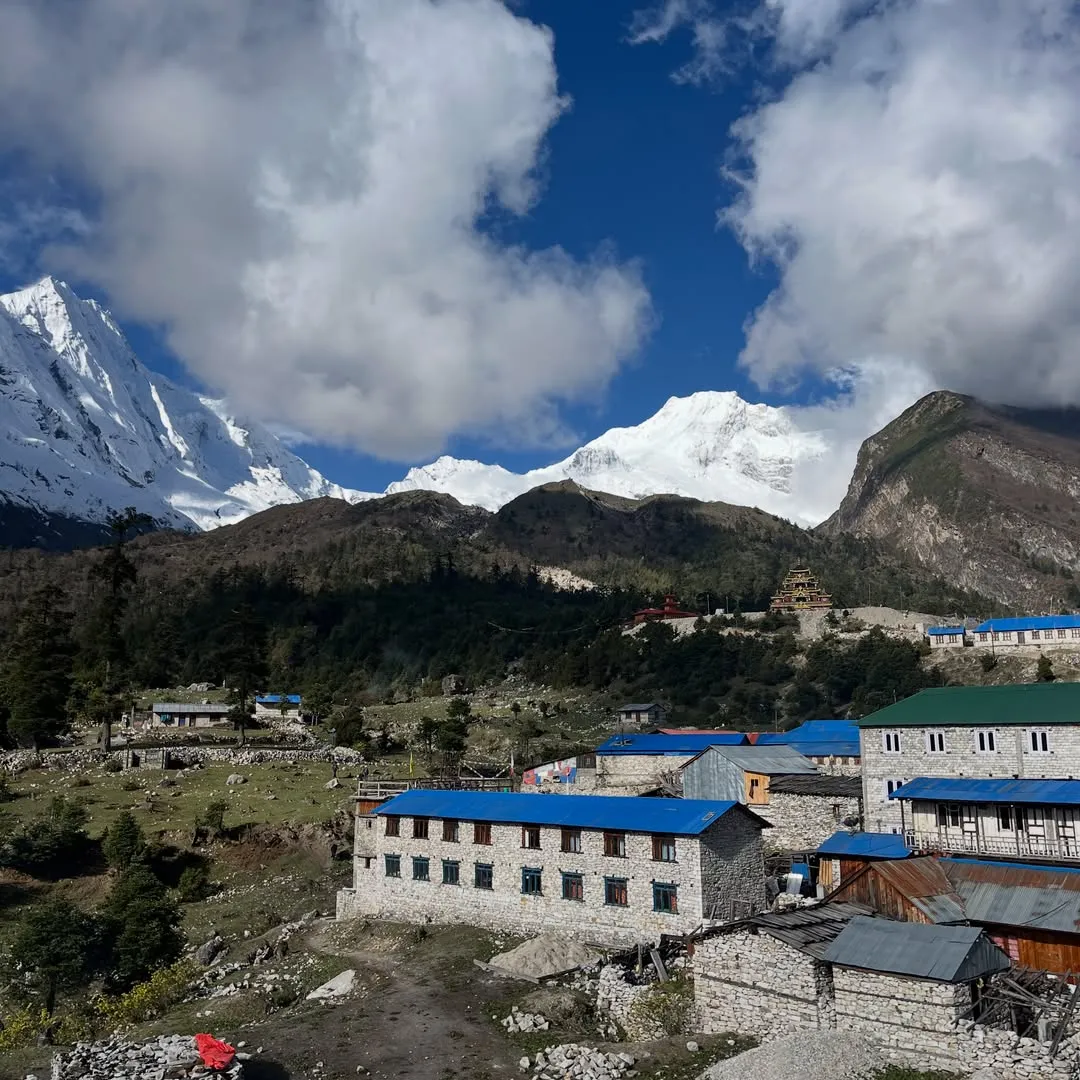
The main villages on peak climbing approaches include Lukla and Namche Bazaar in the Khumbu, Chame and Manang in the Annapurna region, and Dharapani and Samagaon in the Manaslu region. These villages are the acclimatisation stops where you spend rest days, eat well, and prepare for the climb. Most have a mix of traditional houses and lodges, with growing infrastructure for trekkers and climbers. The villages above 4,000 m are often seasonal, used only in spring and autumn. Each region has its own character, food, and festivals, worth exploring during rest days.
Safety Tips
The biggest risks on Nepal peak climbing are altitude sickness, weather changes on summit day, and crevasse falls on glaciers. Acclimatise slowly with a proper trekking approach. Carry a personal first-aid kit including Diamox, dexamethasone, and nifedipine for altitude emergencies. Always tie into a fixed rope on technical sections and travel roped up on glaciers. Never summit in deteriorating weather; turn back at the first sign of a storm. Your climbing Sherpa has the final say on whether to attempt the summit. Practice self-arrest, abseiling, and fixed-rope ascension before you arrive.
Altitude Sickness Guide
All Nepal trekking peaks are high enough to cause severe altitude illness if you ascend too quickly. Common mild symptoms at 5,000 m include headache, poor sleep, and reduced appetite. More serious signs include breathlessness at rest, vomiting, confusion, and a wet cough, all of which require immediate descent. The acclimatisation schedule built into each expedition is the most important factor in summit success. Take Diamox (125 mg twice daily) from base camp upward as a preventive measure. If symptoms worsen at any camp, descend immediately. The summit is not worth your life, and the mountain will still be there next year.
Emergency Contacts
The Himalayan Rescue Association clinics in Pheriche (Khumbu) and Manang (Annapurna) are the nearest medical help on most approaches. Both operate in spring and autumn and treat altitude cases. For serious emergencies, helicopter evacuation to Kathmandu is standard. Carry a satellite phone or Garmin inReach, as mobile signal disappears above the main villages. Your insurance must cover helicopter rescue to at least 6,500 m and emergency medical evacuation. Program your insurance assistance number and your trekking company's 24-hour line into your phone and carry them in print.
Responsible Tourism
Carry out all waste from base camp and high camp, including toilet paper and food wrappers. Most peak permits include a garbage deposit refunded only if you bring waste back to Kathmandu. Use the toilet tent at base camp and wag bags at high camps. Tip your crew fairly: about $20-30 per day for the climbing Sherpa, $15 per day for the cook, and $10 per day for porters. Stay on established trails to protect alpine vegetation. Respect the cultural significance of peaks to local communities, and do not climb on days considered inauspicious by local lamas.
자주 묻는 질문
These are the questions we hear most often about Nepal peak climbing, with answers reflecting 2027 permit costs and conditions.
요약
Nepal peak climbing is the standard pathway from high-altitude trekking to real mountaineering. The 28 NMA trekking peaks range from easy snow walks like Mera Peak to serious technical routes like Ama Dablam, all accessible with a single NMA permit. The two main climbing seasons are spring and autumn, with October and April as the best single months. Plan 16-22 days for most 6,000 m peaks and 28-32 days for Ama Dablam. Budget $2,500-4,500 for a mid-range peak and $6,500-10,000 for Ama Dablam. Build in a weather buffer and acclimatise properly for the best chance of summit success.
결론
If you have done the Everest Base Camp Trek or Annapurna Circuit and want to take the next step, Nepal peak climbing is the answer. Start with Mera Peak if you want a long snow walk, Island Peak if you want to learn fixed-rope skills, and Ama Dablam if you are ready for serious technical climbing. Book 2027 permits early, train on rock and ice before you arrive, and listen to your climbing Sherpa on the mountain. The summit of a 6,000 m peak in Nepal is the kind of achievement that opens the door to a lifetime of mountaineering.
추천 트레킹 패키지
탐험할 트레킹 장소
Explore Trips in Nepal
Hand-picked guided trips to this destination

 English
 Deutsch
 Svenska
 Dansk
Dansk Русский
 Français
 Português
 Español
 Polski
 简体中文
简体中文 日本語
日本語 ไทย
ไทย العربية
 한국어
한국어