
schnelle Antwort
No, 15 days is not enough for the Three Passes trek with safe acclimatization. The standard Renjo La, Cho La, and Kongma La circuit covers 165 km and crosses three passes above 5,000 m, which requires 18 to 21 days including two acclimatisation days. A 15-day version skips one acclimatisation day and reduces safety margins on the Cho La crossing, where AMS rates double. Short breakers should plan 18 days minimum, or accept a 12-day abbreviated version that drops Kongma La.
Detaillierte Aufschlüsselung
The Three Passes trek is the most ambitious Khumbu circuit, starting and ending at Lukla 2,860 m. The standard itinerary goes Lukla, Namche 3,440 m, Thame 3,820 m, crosses Renjo La 5,360 m to Gokyo 4,790 m, crosses Cho La 5,420 m to Lobuche 4,940 m, crosses Kongma La 5,535 m to Chhukung 4,730 m, and returns via Tengboche to Lukla. The total distance is 165 km.
The altitude profile shows three pass days above 5,000 m, with sleeping altitudes between 4,730 m and 4,940 m for five consecutive nights. This is at the edge of safe acclimatisation. The Lake Louise consensus is that sleeping altitude gains should not exceed 500 m per night above 3,000 m, with a rest day every 1,000 m. The standard 18-day itinerary has two rest days, one at Namche 3,440 m and one at Gokyo 4,790 m.
A 15-day itinerary removes the Gokyo rest day and one buffer day, which means the Cho La crossing at 5,420 m happens on day 9 with a single acclimatisation day at Namche. Statistics from Himalayan Rescue Association show Cho La pass days have a 6 percent AMS rate with two acclimatisation days and a 14 percent rate with one.
Kosten-/Komponentenaufschlüsselung
| Posten | Detail | Kosten (USD) |
|---|---|---|
| Genehmigung des Nationalparks Sagarmatha | pro Person | $30 |
| Khumbu Pasang Lhamu Landgemeinde | pro Person | $20 |
| TIMS-Karte | pro Person | $10 |
| Hin- und Rückflug Lukla | beides | $180 bis $320 |
| Lodge with full board | pro Tag | $30 bis $45 |
| Helicopter evacuation from Lobuche | Emergency | $3,000 bis $5,000 |
| Travel insurance with 6,000 m cover | pro Person | $130 bis $200 |
Was beeinflusst die Antwort
Three factors decide whether 15 days is workable. The first is prior acclimatisation. Trekkers who have spent 7 days above 4,000 m in the last month can compress the itinerary safely. The second is season. In October the weather windows are longer and pass crossings are more predictable. In December the days are shorter and pass days take 12 hours. The third is fitness. Trekkers who cannot sustain 600 m per hour on a stair climber should not compress the itinerary.
Buchungstipps
Book your Lukla flight 90 days in advance for October, since flights fill with EBC trekkers. Pre-book lodges in Gokyo and Lobuche for October, since both villages have fewer than 10 lodges. Carry a satellite phone or Garmin inReach, since mobile signal is unreliable at the passes. Buy helicopter evacuation insurance that explicitly covers 6,000 m, since standard EBC policies cap at 5,500 m.
Vergleich mit Alternativen
The standard Everest Base Camp trek is a 12 to 14 day option that reaches 5,364 m at base camp but crosses no passes. The Gokyo Lakes trek with Renjo La is a 14-day option that crosses one pass at 5,360 m and is safer for short breakers. The Three Passes trek is the right choice only if you have 18 to 21 days. Compressing to 15 days removes the safety margin.
Häufige Fehler zu vermeiden
The first mistake is removing the Gokyo rest day. The Cho La pass day starts at 4,790 m and crosses 5,420 m. Without acclimatisation at Gokyo, the AMS rate is 14 percent. The second mistake is crossing Cho La in fresh snow. The glacier section becomes impassable. Wait 24 hours. The third mistake is sleeping at high altitude with mild AMS. The rule is never sleep higher with symptoms. Descend to Gokyo or Lobuche. The fourth mistake is underestimating Kongma La. The pass is the highest at 5,535 m and the descent to Chhukung is 800 m on loose scree.
FAQ
What is the minimum safe duration for Three Passes? 18 days, with two acclimatisation days.
Can I skip Kongma La to fit 15 days? Yes. A 15-day Renjo La and Cho La only itinerary is safer.
Which pass is most dangerous? Kongma La at 5,535 m, because of the loose scree descent and the high starting altitude.
Is helicopter rescue possible from the passes? No. The passes have no landing sites. Helicopters rescue from Gokyo, Lobuche, or Chhukung.
Zusammenfassung
15 days is not enough for the Three Passes trek with safe acclimatization. The standard 18 to 21 day itinerary includes two acclimatisation days. A 15-day version doubles the AMS risk on Cho La. Short breakers should plan 18 days minimum, drop Kongma La for a 15-day option, or take the Gokyo Lakes trek with Renjo La instead. Insurance with 6,000 m cover is mandatory.
Schluss
For 2027 to 2030 Three Passes trips the rule is to give the route the days it asks for. The 18-day itinerary is the minimum safe duration. Short breakers who cannot commit to 18 days should choose a different trek. The Three Passes is the most rewarding Khumbu circuit, but it punishes compression. Two acclimatisation days and a satellite phone are the difference between a great trek and an evacuation.
Empfohlene Trek-Pakete
Trekking-Orte zum Erkunden
Explore Trips in Nepal
Hand-picked guided trips to this destination
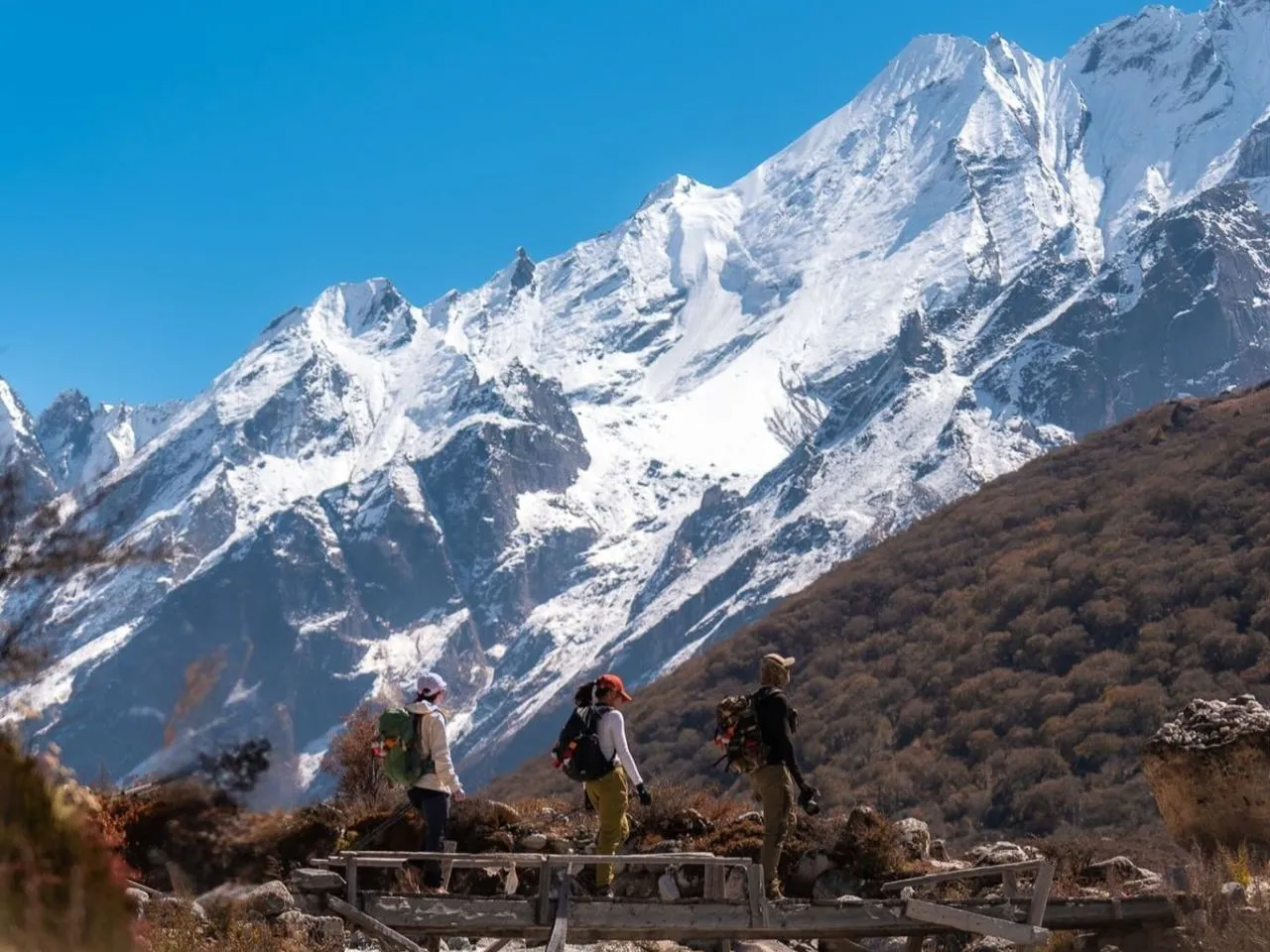
Langtang Luxus-Trek – 10 Tage
Langtang Luxus-Trek – 10 Tage
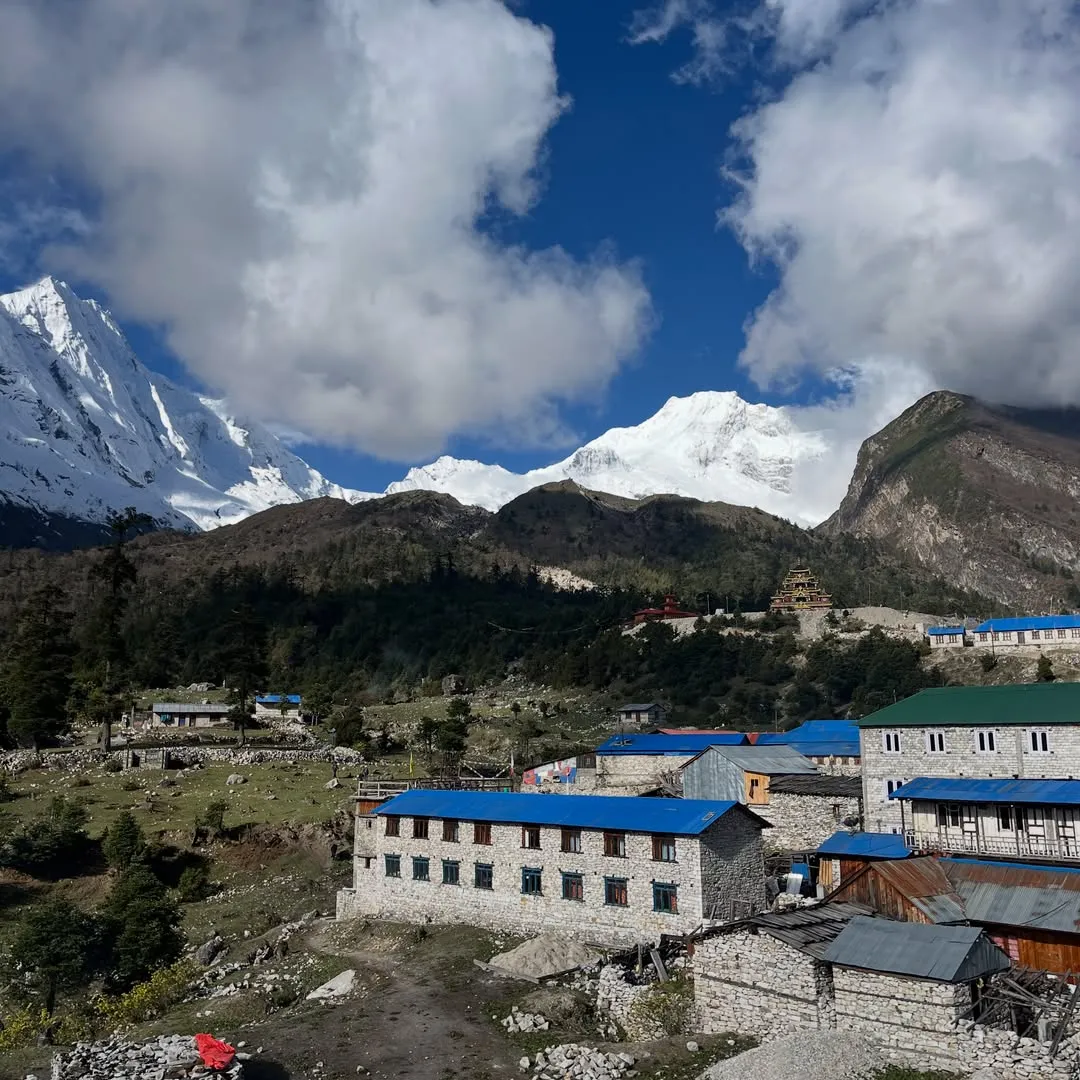
Manaslu-Familienwanderung – 12 Tage
Manaslu-Familienwanderung – 12 Tage
Manaslu-Luxus-Trek – 14 Tage
Manaslu-Luxus-Trek – 14 Tage

Manaslu-Fotografie-Trek – 17 Tage
Manaslu-Fotografie-Trek – 17 Tage
 English
 Deutsch
 Svenska
 Dansk
Dansk Русский
 Français
 Português
 Español
 Polski
 简体中文
简体中文 日本語
日本語 ไทย
ไทย العربية
 한국어
한국어