
schnelle Antwort
Evaluate Mera Peak operators in 2027 to 2030 on seven markers: a named NMA licensed climbing guide with 10 plus Mera summits, a defined summit weather window of 3 to 5 days, oxygen backup at high camp at 5,800 m, $7,000 helicopter evacuation cover per climber, an 18 to 20 day itinerary with two acclimatization days above 5,000 m, three private group references in 24 months, and a transparent cost breakdown. Private group climbs cost $3,200 to $4,800 per person for 18 to 20 days.
Detaillierte Aufschlüsselung
Mera Peak at 6,476 m is the highest trekking peak in Nepal. The climb starts from Lukla, walks 9 days through the Hinku Valley via Tangnag and Khare to Mera Base Camp at 5,300 m and Mera High Camp at 5,800 m. The summit day involves a 2 am start, a 6 to 8 hour climb on a 30 to 40 degree snow slope, and a 4 to 6 hour descent back to Khare.
Private group climbs need a different operator evaluation than open group departures. The operator must dedicate one climbing guide per four climbers plus one assistant guide, carry a fixed rope for the summit slope, stock oxygen at high camp for emergency use, and run a daily weather briefing from the Nepal Meteorological Forecasting Division.
The 2026 NMA regulation update requires all Mera climbers to carry an avalanche transceiver and a sat phone. Operators that skip these are noncompliant and put climbers at risk on the upper glacier.
Kosten-/Komponentenaufschlüsselung
| Komponente | Standardbetreiber | Premium-Betreiber |
|---|---|---|
| Mera Peak climbing permit (NMA) | $250 | $250 |
| Genehmigung des Nationalparks Sagarmatha | $30 | $30 |
| Eingang Khumbu Pasang Lhamu | $20 | $20 |
| TIMS-Karte | $17 | $17 |
| Lukla Hin- und Rückflug | $180 to $200 | $180 to $200 |
| NMA climbing guide (18 to 20 days) | $1.080 bis $1.400 | $1,400 bis $1,800 |
| Assistant guide and porter team | $540 bis $720 | $720 bis $960 |
| Camping gear and crew | $360 bis $540 | $540 bis $720 |
| Fixed rope, oxygen, sat phone | $180 bis $260 | $360 bis $540 |
| Crew insurance with $7,000 evacuation cover | $120 bis $180 | $180 bis $260 |
| Food and lodging on trek | $540 bis $720 | $720 bis $960 |
| Total per climber (private group of 4) | $3,200 to $3,800 | $4,000 to $4,800 |
Was beeinflusst die Antwort
Three factors shape operator selection. First, guide ratio: a 1 to 4 climbing guide ratio is the NMA minimum for Mera. Premium operators run 1 to 2 or 1 to 3 for private groups, which raises summit success rates from 78 percent to 92 percent per 2026 NMA data.
Second, weather protocol: top operators run a daily 6 am weather briefing from the Nepal Meteorological Forecasting Division and hold the summit bid for a 3 to 5 day window. Operators that push summit bids regardless of weather have a 28 percent summit failure rate and a 6 percent rescue rate.
Third, gear quality: premium operators supply La Sportiva or Scarpa mountaineering boots, Black Diamond crampons, and a fixed 8 mm rope on the summit slope. Standard operators rent older gear that fails at minus 25 C high camp temperatures.
Buchungstipps
Book 12 weeks ahead for the October and April summit windows. Ask the operator for the named climbing guide profile, including NMA license number, prior Mera summits, and first aid certification. Request three private group references from the past 24 months with contact emails.
Confirm the operator includes a high camp oxygen canister, sat phone rental, and avalanche transceiver for each climber. Carry 40,000 to 60,000 Nepali rupees cash for emergency helicopter deposit if the operator insurance does not pay upfront.
Vergleich mit Alternativen
Island Peak at 6,189 m costs $2,800 to $4,200 for 16 to 20 days and involves more technical rock and ice climbing. Lobuche East at 6,119 m costs $2,600 to $3,900 for 14 to 18 days and offers a shorter acclimatization profile. Mera Peak costs more but offers a higher summit and a less technical snow slope.
Pick Mera for the highest trekking peak summit with a moderate technical grade. Pick Island Peak for technical climbing practice. Pick Lobuche East for a shorter combined EBC plus climb itinerary.
Häufige Fehler zu vermeiden
Do not book a Mera climb under 16 days. The 1,600 m gain from Khare at 4,900 m to the summit at 6,476 m needs at least two acclimatization days above 5,000 m to keep altitude sickness risk under 15 percent.
Avoid operators that quote under $3,000 per climber for a private group. These typically skip the high camp oxygen, use a porter guide in place of a climbing guide, and run a 1 to 6 ratio that raises rescue risk. Avoid October departures without a 4 day buffer in Kathmandu, since Lukla flight cancellations run 22 percent in October.
FAQ
Welches Leitfadenverhältnis sollte ich für eine private Mera-Gruppe benötigen?1 bis 4 Minimum pro NMA-Regeln. Die Premium-Betreiber laufen 1 bis 2 oder 1 bis 3, was den Gipfelerfolg von 78 Prozent auf 92 Prozent erhöht.
Wie viel Rettungsdeckel sollte der Betreiber tragen?$7,000 pro Kletterer für die Evakuierung des Hubschraubers vom Hochlager nach Kathmandu. Bestätigen Sie die Police zahlt sich im Voraus aus, nicht als Erstattung.
Zusammenfassung
Evaluate Mera Peak operators on NMA licensed climbing guide ratio, summit weather protocol, oxygen backup, $7,000 rescue cover, 18 to 20 day itinerary, three private group references, and transparent cost breakdown. Private group climbs cost $3,200 to $4,800 per person.
Schluss
Pick a premium operator with a 1 to 2 guide ratio, a 3 to 5 day summit weather window, and $7,000 rescue cover. Book 12 weeks ahead for October or April windows, carry 40,000 plus Nepali rupees cash, and demand named NMA climbing guide credentials. The right operator turns the 6,476 m Mera summit into a controlled climb instead of a risk event.
Empfohlene Trek-Pakete
Trekking-Orte zum Erkunden
Explore Trips in Nepal
Hand-picked guided trips to this destination
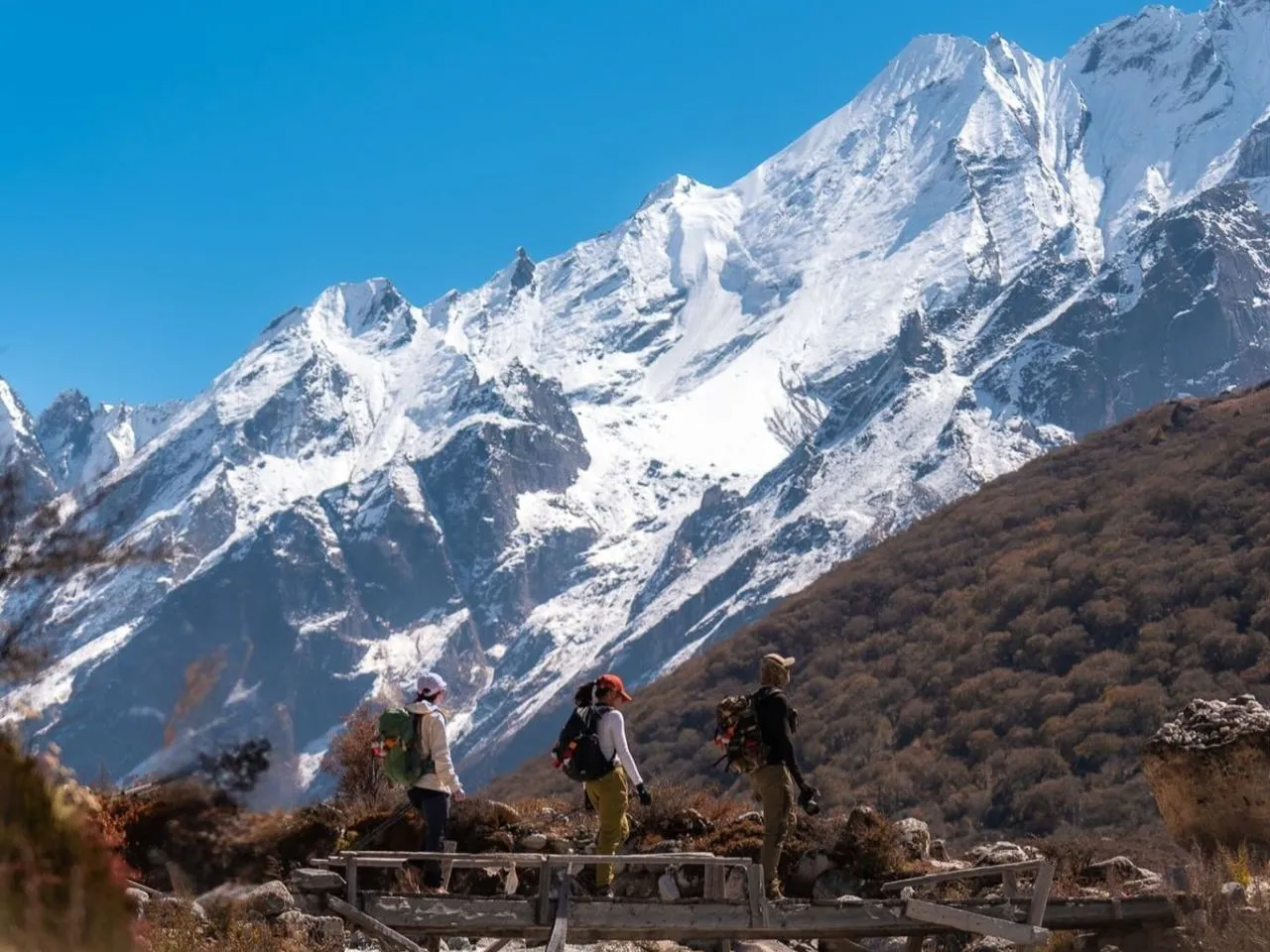
Langtang Luxus-Trek – 10 Tage
Langtang Luxus-Trek – 10 Tage
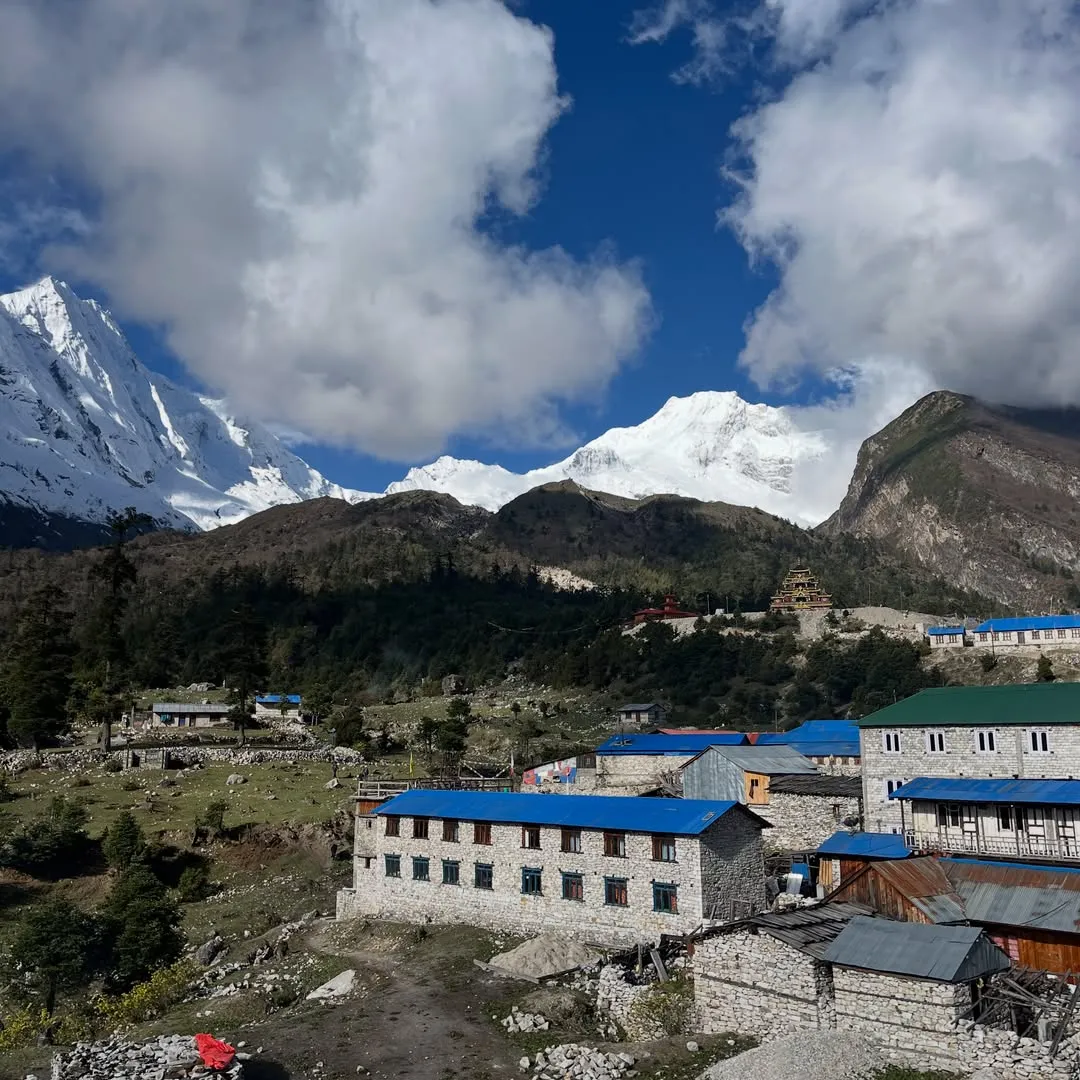
Manaslu-Familienwanderung – 12 Tage
Manaslu-Familienwanderung – 12 Tage
Manaslu-Luxus-Trek – 14 Tage
Manaslu-Luxus-Trek – 14 Tage

Manaslu-Fotografie-Trek – 17 Tage
Manaslu-Fotografie-Trek – 17 Tage
 English
 Deutsch
 Svenska
 Dansk
Dansk Русский
 Français
 Português
 Español
 Polski
 简体中文
简体中文 日本語
日本語 ไทย
ไทย العربية
 한국어
한국어