
schnelle Antwort
Turn back from the Everest Base Camp trek the moment you show severe altitude sickness signs: repeated vomiting, inability to walk a straight line, breathlessness at rest, or confusion. The correct action is an immediate descent of 500 to 1,000 m, not another rest day at the same altitude. If symptoms persist after 500 m of descent, continue to Lukla at 2,860 m and consider a helicopter evacuation to Kathmandu.
Detaillierte Aufschlüsselung
Acute mountain sickness on the EBC route is graded mild, moderate, and severe. Mild AMS is a headache plus nausea, fatigue, dizziness, or poor sleep, and is common above Namche Bazaar at 3,440 m. Moderate AMS adds a worse headache that does not respond to painkillers, repeated vomiting, and reduced urine output. Severe AMS is the trigger to turn back, and it splits into two life-threatening forms: high altitude cerebral edema (HACE) and high altitude pulmonary edema (HAPE).
HACE signs are ataxia, which is the inability to walk heel to toe in a straight line, confusion, and severe drowsiness. HAPE signs are breathlessness at rest, a dry cough that turns pink and frothy, and blue lips. Either form can kill within hours. The Lake Louise scoring system flags ataxia or breathlessness at rest as an automatic descent trigger.
The risk zones on the EBC route are Dingboche at 4,410 m, Lobuche at 4,940 m, Gorak Shep at 5,164 m, and base camp at 5,364 m. Most evacuations happen between Lobuche and Gorak Shep because the altitude gain is steep and the last acclimatisation day is far behind.
Kosten-/Komponentenaufschlüsselung
| Action | When to Use | Kosten (USD) |
|---|---|---|
| Rest and hydration day | Mild AMS, headache only | $0 |
| Diamox (acetazolamide) 125 mg twice daily | Mild to moderate AMS | $5 to $10 per trek |
| Descent of 500 to 1,000 m | Moderate AMS or any HACE or HAPE sign | $0, plus lost days |
| Portable oxygen cylinder, 3 L | HAPE or HACE, while descending | $80 to $120 rental |
| Hyperbaric chamber at Pheriche | Severe HACE or HAPE | $0, donation only |
| Helicopter evacuation to Kathmandu | Persistent severe symptoms | $2,500 bis $5.000 |
| Travel insurance with rescue | Always, before trek start | $80 to $180 per person |
Was beeinflusst die Antwort
Altitude gained per night is the biggest factor. The EBC itinerary that sleeps at Dingboche, Lobuche, then Gorak Shep gains 750 m of sleeping altitude in two nights, which sits at the edge of safe ascent. Trekkers who skip the second acclimatisation day at Dingboche are three times more likely to need evacuation. Ascent profile matters more than maximum altitude reached.
Personal factors include age above 50, prior AMS history, and poor fitness that forces hard breathing on climbs. A recent respiratory infection triples HAPE risk for two weeks after symptoms clear, so trekkers with a chest cold should delay or fly out.
Buchungstipps
Buy helicopter rescue insurance before leaving home and carry the policy number and 24-hour assistance phone number on paper in your daypack. Register your insurance with your trekking agency in Kathmandu so they can call the rescue directly. Carry your own Diamox supply of 60 tablets at 125 mg. Pre-book an itinerary with two acclimatisation days, one at Namche and one at Dingboche.
Use a guide trained in wilderness first aid. Guides from established Khumbu agencies carry pulse oximeters and check oxygen saturation every morning above 4,000 m. A reading below 80 percent at rest is a descent trigger.
Vergleich mit Alternativen
Staying put and waiting is the wrong alternative. Himalayan Rescue Association data shows moderate AMS at 4,500 m resolves in roughly 70 percent of cases with descent, but only 30 percent with rest at the same altitude. The Gokyo Lakes trek offers a similar altitude profile with a faster descent path to lower villages, making it marginally safer for trekkers with prior AMS. The Three Passes trek is more dangerous because it crosses three passes above 5,000 m with no real descent between them.
Häufige Fehler zu vermeiden
The first mistake is ignoring ataxia. Trekkers often attribute a stumbling gait to fatigue, but ataxia is the most reliable HACE sign and it requires immediate descent. The second mistake is relying on Diamox to fix moderate AMS. Diamox speeds acclimatisation but it does not reverse HACE or HAPE. Only descent does. The third mistake is delaying evacuation to avoid the helicopter cost. Insurance covers it, and delayed evacuation is the leading cause of death on the EBC route. The fourth mistake is sleeping high with symptoms. The rule is never sleep higher with symptoms. Descend first, recover, then re-ascend slowly.
FAQ
What is the single most reliable sign that I must turn back? Ataxia, the inability to walk a straight line heel to toe. It is the most specific HACE sign and demands immediate descent.
Can Diamox prevent the need to descend? No. Diamox aids acclimatisation for mild AMS but cannot reverse HACE or HAPE. If symptoms progress, descend.
How far down do I need to go? At least 500 m, ideally to the last altitude where you felt well. For most EBC cases that means Pheriche at 4,240 m or Namche at 3,440 m.
Is a helicopter rescue always required? No. Most cases resolve with descent to Namche or Lukla. Helicopter is reserved for persistent severe symptoms after descent.
Zusammenfassung
Turn back from the Everest Base Camp trek the moment you show severe AMS signs: ataxia, repeated vomiting, breathlessness at rest, or confusion. The correct response is an immediate descent of 500 to 1,000 m, with Diamox and oxygen if available. Buy helicopter rescue insurance and travel with a guide trained in Lake Louise scoring.
Schluss
For 2027 to 2030 EBC treks the rule is simple. Mild AMS means a rest day at the same altitude. Moderate AMS means stay put, take Diamox, and reassess in 12 hours. Severe AMS means descend now. Insurance is cheap and evacuation is fast. Trekkers who die on the EBC route are almost always the ones who delayed descent by a single night.
Empfohlene Trek-Pakete
Trekking-Orte zum Erkunden
Explore Trips in Nepal
Hand-picked guided trips to this destination
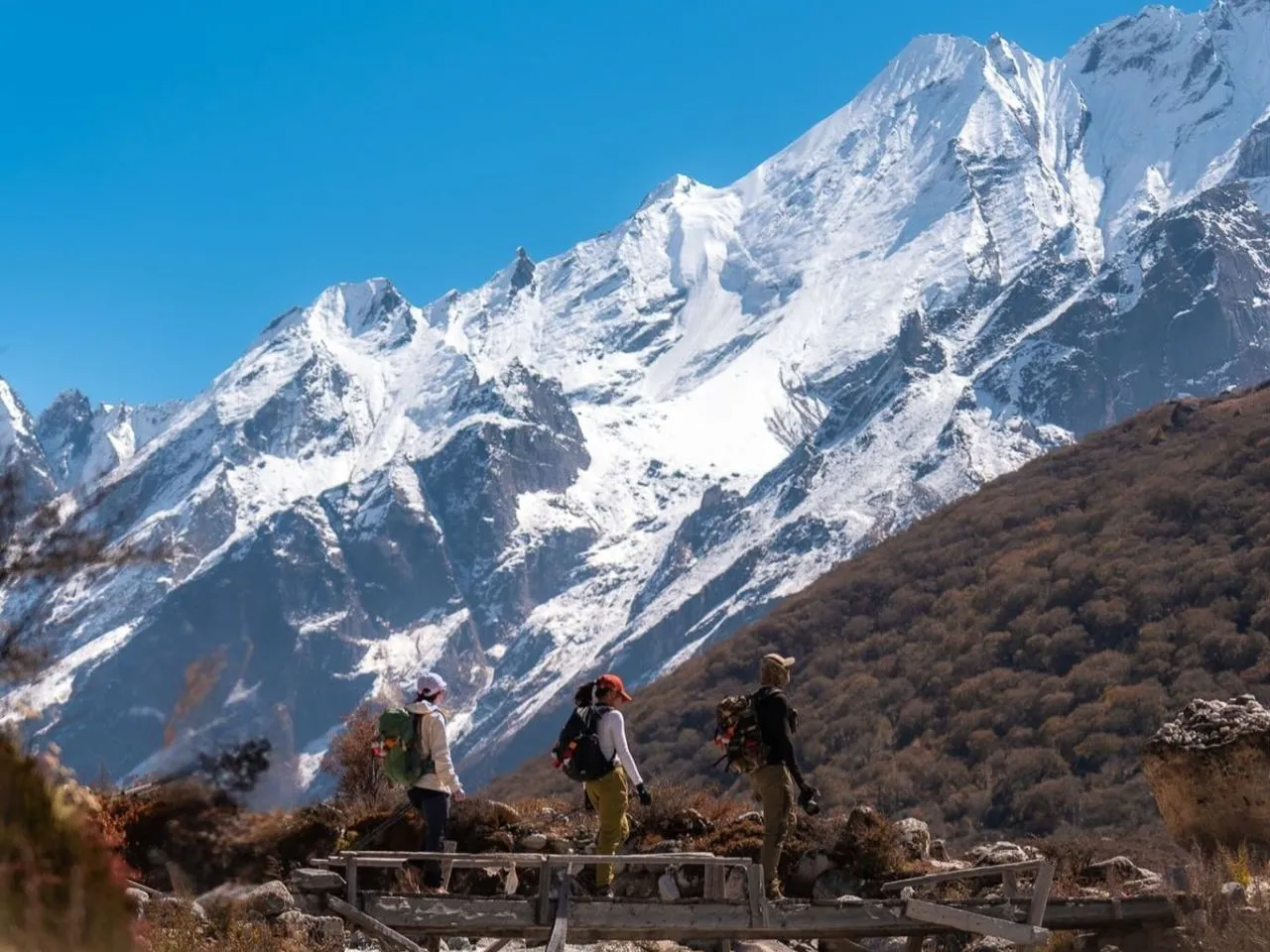
Langtang Luxus-Trek – 10 Tage
Langtang Luxus-Trek – 10 Tage
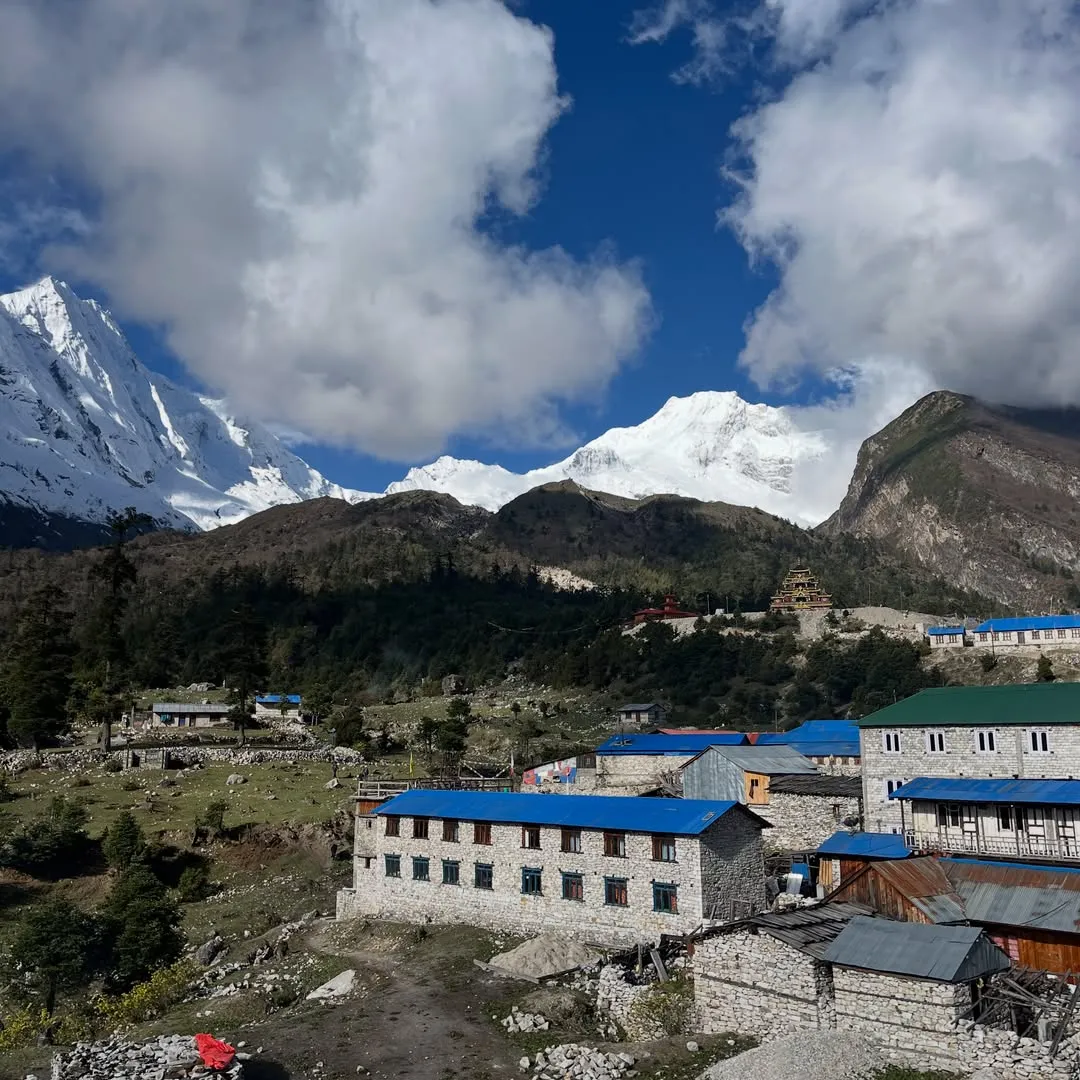
Manaslu-Familienwanderung – 12 Tage
Manaslu-Familienwanderung – 12 Tage
Manaslu-Luxus-Trek – 14 Tage
Manaslu-Luxus-Trek – 14 Tage

Manaslu-Fotografie-Trek – 17 Tage
Manaslu-Fotografie-Trek – 17 Tage
 English
 Deutsch
 Svenska
 Dansk
Dansk Русский
 Français
 Português
 Español
 Polski
 简体中文
简体中文 日本語
日本語 ไทย
ไทย العربية
 한국어
한국어