
snabbt svar
Prepare for the Ruby Valley Trek by training for 6 to 8 weeks. Build up to 5 to 7 hours of walking with a 5 kg pack, add stair climbing twice a week, and complete at least one 8 hour test hike. Daily stages on the Ruby Valley Trek run 12 to 18 km with 500 to 800 m of ascent, and the highest point is Pangsang La at 4,600 m.
Detaljerad uppdelning
The Ruby Valley Trek runs 8 to 12 days from Syabrubesi or Dhading Besi, covering 70 km through Ganesh Himal. Stages average 12 to 18 km a day with 500 to 800 m of climbing. The high point is Pangsang La at 4,600 m, with two pass days at 3,800 to 4,600 m. Trails are a mix of dirt road, forest path, and stone steps, with several steep descents on the Langtang side.
Walking hours vary by stage. The first two days are 5 to 6 hours on dirt road at 1,500 to 2,500 m. The middle stages on the Ganesh Himal side are 6 to 7 hours with one pass crossing daily. The final two days are 4 to 5 hours of downhill on stone steps to Syabrubesi. Trekkers who arrive with no training are exhausted by day 4 and risk knee pain on the descents.
Kostnad/komponentuppdelning
| beståndsdel | detalj | Kostnad USD |
|---|---|---|
| Trekking boots | B1 category, broken in | $140 till $260 |
| 30 L daypack | For porter carried trek | $60 till $120 |
| Trekking poles pair | Carbon shaft, adjustable | $70 to $150 |
| Gym membership 2 months | Stair climber access | $50 till $100 |
| Personal trainer 4 sessions | Trek specific strength | $160 till $280 |
| Heart rate monitor | For zone 2 training | $50 till $120 |
| Full board trek package | 10 days, guide and porter | $880 to $1,250 |
Vad påverkar svaret
Baseline fitness matters most. Trekkers who already walk 10,000 steps daily and hike once a month need 4 weeks of prep. Sedentary trekkers need 8 to 12 weeks. Age over 55, prior knee injuries, and BMI over 28 all add 2 to 4 weeks to the timeline. Trekking poles reduce knee load by 25 percent on descent and are essential for anyone with prior knee issues.
Acclimatisation affects how the daily hours feel. The Ruby Valley profile gains altitude slowly from 1,500 m at the start to 4,600 m at Pangsang La, with rest days built in. Trekkers who fly in from sea level should add 2 days in Kathmandu at 1,400 m before starting, and consider acetazolamide 125 mg twice daily above 3,500 m.
Bokningstips
Book a porter for the full trek even if you normally carry your own pack, because the 4,600 m pass day is exhausting with a heavy load. Confirm boot break in 4 weeks ahead by wearing them on three 4 hour walks. Carry trekking poles on the plane as checked luggage. Pack 2 pairs of broken in socks and 1 pair of light camp shoes for evenings.
Jämförelse med alternativ
Compared with the Langtang Valley Trek, Ruby Valley has 2 extra pass days and 600 m more maximum altitude, so daily walking hours are 1 to 2 hours longer. Compared with the Manaslu Circuit Trek, Ruby Valley has shorter stages but more elevation change per day. Compared with the Annapurna Base Camp Trek, Ruby Valley has no road head and longer approach walks, so the daily average is 6 hours versus 5.
Vanliga misstag att undvika
Trekkers often buy new boots a week before departure and end up with blisters by day 3. A second mistake is skipping strength training for legs, which leads to knee pain on the 1,000 m descent from Pangsang La. A third mistake is overpacking the daypack, with trekkers carrying 8 kg when 4 to 5 kg is enough. A fourth is underestimating cold at 4,600 m, where night temperatures drop to minus 5 Celsius even in October.
fami
How many hours a day will I walk on the Ruby Valley Trek? 5 to 7 hours, with one or two longer pass days of 7 to 8 hours. Daily distance is 12 to 18 km, with 500 to 800 m of ascent.
How should I train if I work in an office? Walk 10,000 steps daily, do stair climbing for 30 minutes twice a week, and add one 6 hour weekend hike with a 5 kg pack. Repeat for 6 to 8 weeks.
Do I need trekking poles? Yes. Poles reduce knee load by 25 percent on descent and improve balance on the stone step sections near Syabrubesi. Adjust them to elbow height for flats and shorter for descents.
How heavy should my daypack be? 4 to 5 kg maximum. Carry water, snacks, rain shell, warm layer, sunscreen, and camera. Let the porter carry the rest.
What heart rate should I expect on the pass day? 110 to 140 bpm at 4,000 to 4,600 m for a fit trekker aged 40. If your heart rate exceeds 150 bpm, slow down or stop.
sammanfattning
Ruby Valley Trek daily walking is 5 to 7 hours over 12 to 18 km with 500 to 800 m of ascent. Train for 6 to 8 weeks with stair climbing, a 5 kg pack, and one 8 hour test hike. Use trekking poles and keep the daypack under 5 kg to manage the descents.
slutsats
Arrive fit, break in boots early, and book a porter for the full trek. With 6 to 8 weeks of focused training and the right gear, the 5 to 7 hour daily stages of the Ruby Valley Trek are well within reach in 2027 to 2030. Trekkers who skip prep pay for it on the pass day and the stone step descent to Syabrubesi.
Rekommenderade Trek-paket
Vandringsplatser att utforska
Explore Trips in Nepal
Hand-picked guided trips to this destination
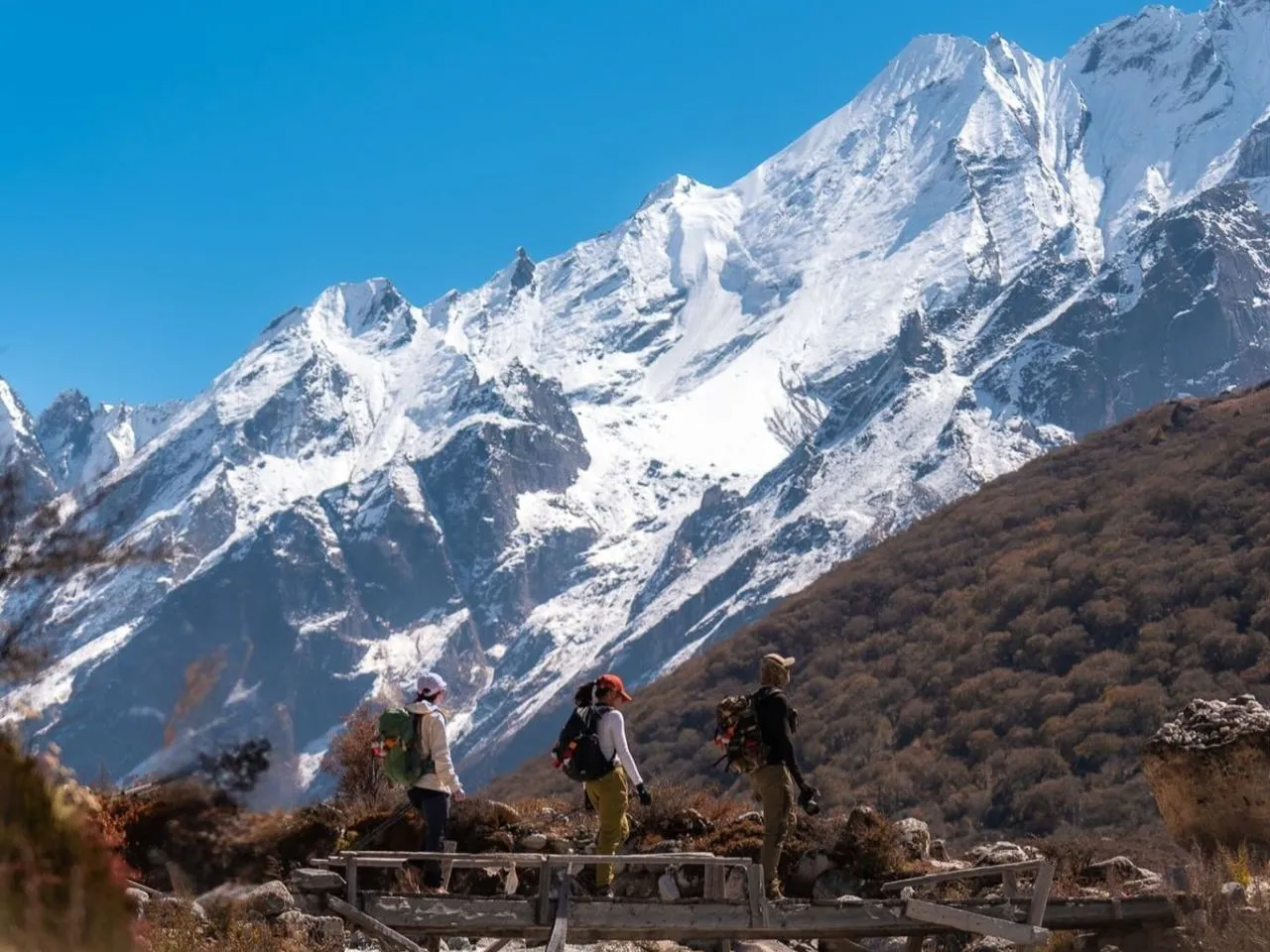
Langtang Luxury Trek – 10 dagar
Langtang Luxury Trek – 10 dagar
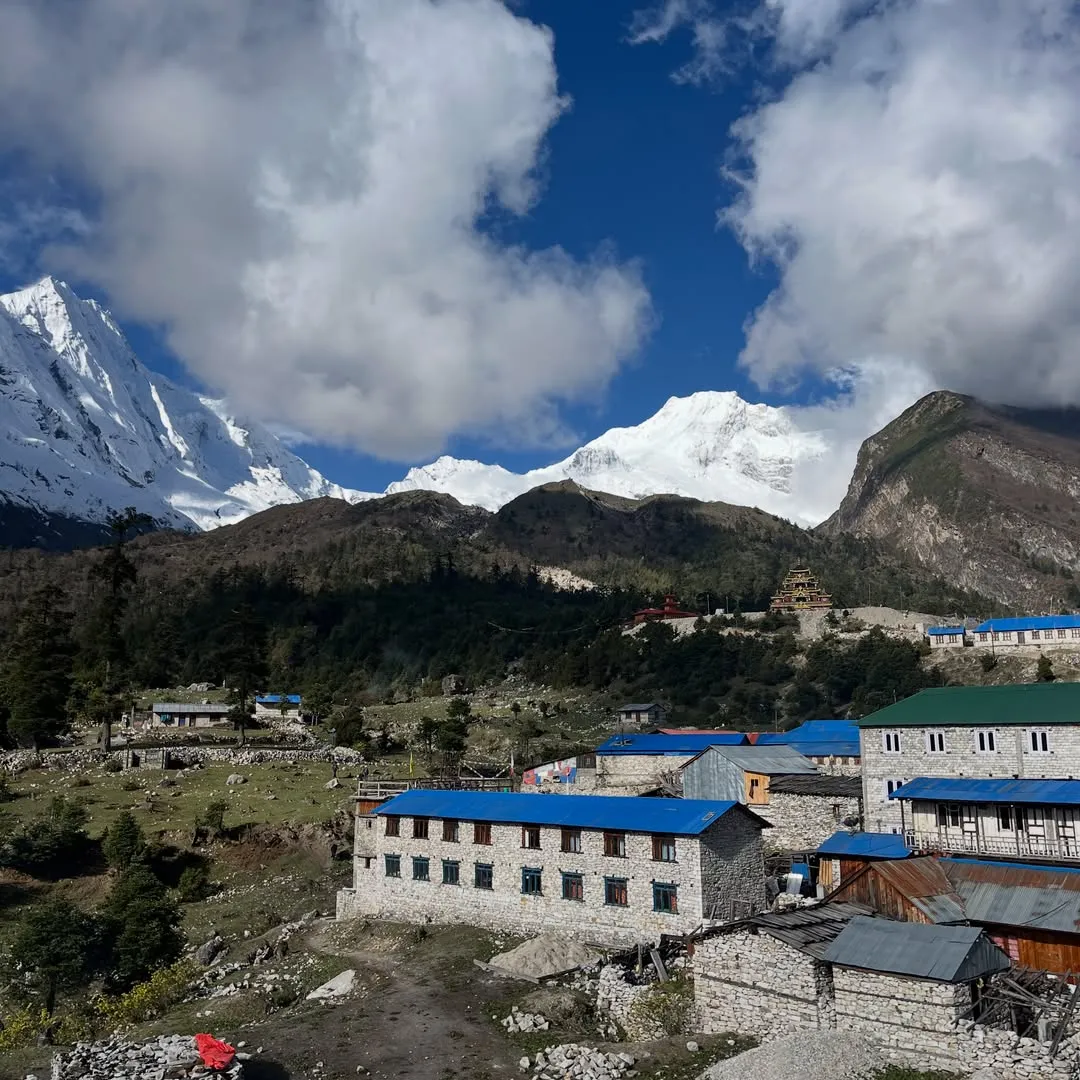
Manaslu Family Trek – 12 dagar
Manaslu Family Trek – 12 dagar
Manaslu Luxury Trek – 14 dagar
Manaslu Luxury Trek – 14 dagar

Manaslu Photography Trek – 17 dagar
Manaslu Photography Trek – 17 dagar
 English
 Deutsch
 Svenska
 Dansk
Dansk Русский
 Français
 Português
 Español
 Polski
 简体中文
简体中文 日本語
日本語 ไทย
ไทย العربية
 한국어
한국어