
réponse rapide
A beginner 6,000 m climbing trip in Nepal costs USD 2,800 to USD 5,200, lasts 16 to 22 days, and reaches 6,000 to 6,500 m on peaks like Mera, Island and Lobuche East. A trek-only holiday costs USD 1,200 to USD 2,800, lasts 10 to 18 days, and stays below 5,600 m. The climbing trip requires basic mountaineering training, fixed-rope skills and a 6,000 m summit push, while the trek-only holiday is a walk-up route requiring only fitness.
Répartition détaillée
Nepal Mountaineering Association classifies 28 peaks as trekking peaks, of which Mera Peak at 6,476 m, Island Peak at 6,189 m and Lobuche East at 6,119 m are the most popular beginner 6,000 m objectives. All three require a climbing permit, an NMA-licensed climbing guide and a base camp team.
A trek-only holiday typically targets Everest Base Camp at 5,364 m, Annapurna Base Camp at 4,130 m, Annapurna Circuit at 5,416 m or Langtang Valley at 4,984 m. These routes need only trekking permits, a standard TIMS Card and a trekking guide.
The climbing trip adds 4 to 7 days over a trek-only trip for acclimatisation, base camp setup, skills training, summit push and descent. The summit day itself runs 12 to 16 hours from high camp.
Répartition des coûts/composants
| composante | 6,000 m Climb | Trek-Only |
|---|---|---|
| durée | 16 à 22 jours | 10 à 18 jours |
| Permis d'escalade NMA | 250 USD à 400 USD | Non obligatoire |
| National park or ACAP permit | 30 USD | 30 USD |
| Carte TIM | 20 USD | 20 USD |
| dépôt d'ordures | USD 250 refundable | nul |
| Climbing guide | USD 40 to USD 60 per day | Non obligatoire |
| guide de randonnée | 25 USD à 35 USD par jour | 25 USD à 35 USD par jour |
| Hébergement et repas | USD 35 to USD 45 per day | 25 USD à 35 USD par jour |
| Domestic flights (Lukla or Juphal) | 360 USD à 480 USD | USD 0 to USD 480 |
| Coût total 2027 | USD 2,800 to USD 5,200 | USD 1,200 to USD 2,800 |
Qu'est-ce qui affecte la réponse
Prior altitude experience. Climbers who have trekked to 5,000 m without Acute Mountain Sickness symptoms can attempt a 6,000 m peak. Trekkers with no altitude experience should choose trek-only first.
Technical comfort. Mera Peak is non-technical on the standard route, requiring fixed-rope jumar ascent for the final 50 m. Island Peak has a 100 m ice headwall requiring crampons, ice axe and prussiking. Lobuche East has exposed ridge climbing at 6,100 m.
Time available. Trekkers with 10 to 14 days cannot fit a 6,000 m climb safely. The minimum for Mera Peak from Lukla is 16 days, Island Peak from Lukla is 17 days, and Lobuche East from Lukla is 16 days.
Conseils pour la réservation
Book with an NMA-licensed climbing agency. Confirm the guide holds a valid NMA Climbing Guide license, not just a trekking guide license.
Reserve 6 months ahead for spring (March to May) and autumn (October to November) climbs. Mera and Island base camps fill by January for spring departures.
Request a 1 day pre-climb skills session at base camp. Reputable agencies include this in the package. Confirm crampon, harness and ice axe rentals in writing.
Comparaison avec les alternatives
Compared with a 7,000 m expedition such as Himlung or Baruntse, a 6,000 m beginner peak costs 50 percent less and runs in 16 to 22 days versus 28 to 40 days. No fixed ropes above Camp 1 are required.
Compared with a trekking peak under 6,000 m such as Yala Peak at 5,520 m, the 6,000 m peaks add 500 to 1,000 m of vertical gain and require fixed-rope skills, doubling the cost.
Erreurs courantes à éviter
Choosing Island Peak without fixed-rope experience. The 100 m ice headwall at 6,100 m stops 20 percent of booked climbers. Train on a 5 day alpine course in Europe or North America before booking.
Underestimating acclimatisation. Mera Peak high camp sits at 5,800 m. Climbers ascending from base camp at 5,300 m in one day risk severe altitude sickness. Schedule a rest day at Khare.
Booking through a trekking-only agency. They subcontract the climbing portion, adding 15 to 25 percent and reducing safety oversight. Verify NMA climbing license directly.
Skipping rescue insurance. Heli evacuation from Mera La or Island Peak base camp costs USD 3,500 to USD 5,500. Standard travel insurance excludes peaks above 5,500 m.
FAQ
Can a true beginner climb a 6,000 m peak in Nepal?
Yes, with prior trekking experience to 4,500 m and a 1 day base camp skills session. Mera Peak on the standard route is the most beginner-friendly. Island and Lobuche East need more technical comfort.
Is a climbing permit included in agency quotes?
Reputable agencies include NMA permit, garbage deposit, liaison officer fees and climbing guide costs. Ask for an itemised quote to confirm.
Which 6,000 m peak is closest to Lukla?
Lobuche East. It is reached in 8 days of trekking from Lukla via Everest Base Camp approach. Island Peak is 9 days, Mera Peak is 9 days via Zatrwa La.
What is the summit day length on a 6,000 m peak?
12 to 16 hours round trip from high camp. Mera summit day is 8 to 10 hours up and 4 hours down. Island is 10 to 12 hours up and 4 hours down.
somm
A 6,000 m climbing trip costs USD 2,800 to USD 5,200 and runs 16 to 22 days. A trek-only holiday costs USD 1,200 to USD 2,800 and runs 10 to 18 days. The climbing trip requires NMA permits, climbing guide and prior altitude experience. The trek-only holiday requires only fitness and standard permits.
conclusion
Choose a trek-only holiday if you have under 16 days, no prior 5,000 m altitude experience, or want a walking-focused trip. Choose a 6,000 m climbing trip if you have 16 days, can train on fixed ropes, and want a summit objective. Mera Peak is the recommended beginner objective, Island Peak for technical interest, Lobuche East for the shortest Lukla approach.
Forfaits Trek recommandés
Des lieux de randonnée à explorer
Explore Trips in Nepal
Hand-picked guided trips to this destination
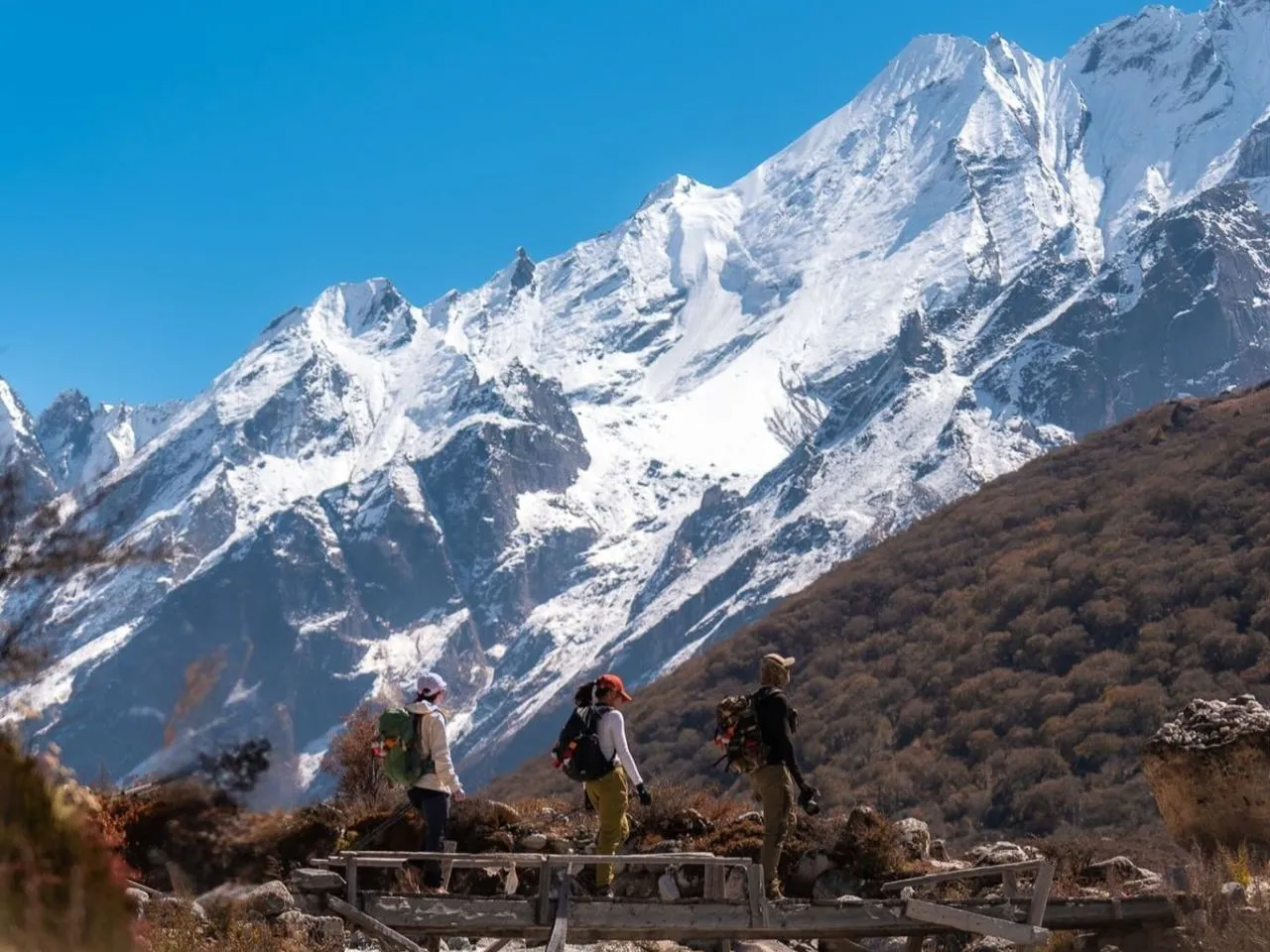
Trek de luxe de Langtang – 10 jours
Trek de luxe de Langtang – 10 jours
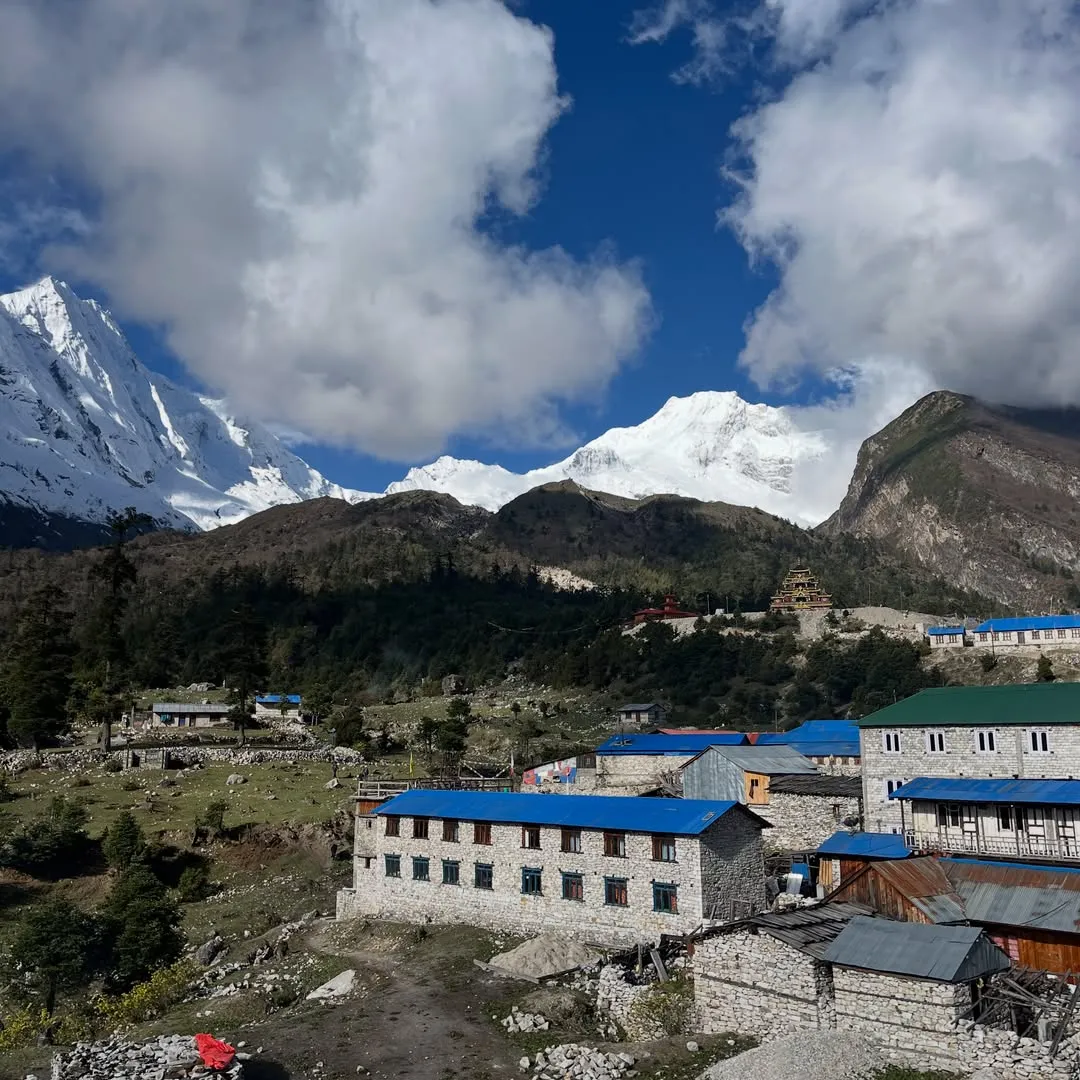
Treken en famille Manaslu – 12 jours
Treken en famille Manaslu – 12 jours
Trek de luxe à Manaslu – 14 jours
Trek de luxe à Manaslu – 14 jours

Trek de la photographie Manaslu – 17 jours
Trek de la photographie Manaslu – 17 jours
 English
 Deutsch
 Svenska
 Dansk
Dansk Русский
 Français
 Português
 Español
 Polski
 简体中文
简体中文 日本語
日本語 ไทย
ไทย العربية
 한국어
한국어