
respuesta rápida
Three trail conditions make Renjo La Pass harder in snow or ice. First, the steep scree above 5,000 m on the Gokyo side turns slick when frozen. Second, the 1.5 m narrow traverse at 5,200 m becomes a balance hazard with fresh snow. Third, the 600 m stone step descent to Lungden is icy in shadow until noon. Fresh snow above 5,000 m closes the pass for 1 to 3 days in peak season, and ice on the descent causes 70 percent of accidents.
Desglose detallado
Renjo La Pass at 5,360 m is the westernmost of the Three Passes in Khumbu, connecting Gokyo to the Bhote Koshi valley. The standard route climbs 1,100 m from Gokyo at 4,790 m over 8 km, then descends 1,400 m over 9 km to Lungden at 4,380 m. From October to April, snow and ice reshape the trail in three specific zones.
Zone one is the scree slope from 5,000 to 5,300 m on the south facing approach. Dry, it is loose but manageable. With fresh snow, it becomes a slick slab with high slip risk. Zone two is the traverse at 5,200 m, where the trail narrows to 1.5 m wide for 200 m of horizontal distance with a 100 m drop on the north side. With ice, this section requires microspikes and careful pole placement. Zone three is the descent, which faces north and stays in shadow until noon, leaving ice on the stone steps until late morning.
Desglose de costo/componente
| parte | parte | Costo USD |
|---|---|---|
| Microspikes | Kahtoola KTS or equivalent | $70 to $140 |
| B2 stiff boots | Scarpa Zodiac, La Sportiva | $340 to $560 |
| Bastones de trekking | Carbon, adjustable | $70 to $150 |
| Windproof down jacket | 800 fill, hooded | $220 to $420 |
| 4 season sleeping bag | Rated minus 15 Celsius | $280 a $480 |
| Sat messenger | Garmin en la zona mini 2 | $300 a $400 |
| Seguro de rescate de helicóp | Up to 6,000 m, 14 days | $45 to $85 |
| Full Renjo La package | 15 days, guide and porter | $1,650 to $2,250 |
que afecta la respuesta
Recent snowfall is the biggest factor. Fresh snow above 5,000 m in the 48 hours before crossing closes the pass for 1 to 3 days until a track is packed. Long range weather from mountain forecast dot com is reliable to 72 hours, but local conditions change fast. Wind above 5,000 m also matters, because Renjo La sits on a ridge and 40 kmh wind creates whiteout risk even without fresh snow.
Time of crossing also affects risk. Trekkers who leave Gokyo at 4 am reach the pass by 9 am, ahead of the afternoon thaw that loosens scree. Trekkers who leave at 6 am often hit the thaw at 5,200 m on the descent, where ice turns to wet snow and stone steps become slippery. A 4 am start with a headlamp is the safe standard.
Consejos de reserva
Book a guide who has crossed Renjo La at least 10 times in winter conditions. Check the mountain forecast dot com forecast for the 24, 48, and 72 hour windows. Carry microspikes even in October, because early season ice forms on the descent. Plan a buffer day at Gokyo so you can wait out fresh snow and cross the day after the track is packed.
Comparación con alternativas
Compared with Cho La at 5,420 m, Renjo La has more scree on the approach and a narrower traverse, but no glacier crossing. Compared with Kongma La at 5,535 m, Renjo La is 175 m lower but has a longer descent on stone steps. Compared with Thorong La at 5,416 m, Renjo La has similar altitude but more variable trail conditions because it is on a ridge rather than a col.
Errores comunes a evitar
Trekkers often cross Renjo La in fresh snow without microspikes, then slip on the stone step descent. A second mistake is leaving Gokyo at 7 am, hitting the afternoon thaw at the worst point. A third mistake is underestimating wind chill, which can drop minus 5 Celsius to minus 25 with 50 kmh wind. A fourth is crossing without a guide in low visibility, when the trail is invisible above 5,200 m.
preguntasrán el
When does Renjo La close for snow? After 20 to 30 cm of fresh snow above 5,000 m, the pass closes for 1 to 3 days until a track is packed. Check mountain forecast dot com for the 24, 48, and 72 hour windows.
Do I need microspikes for Renjo La in October? Yes. Early season ice forms on the north facing descent, and microspikes are standard from October to April. Carry them even if the forecast is clear.
What is the safest crossing time? Leave Gokyo at 4 am with a headlamp to reach the pass by 9 am. This avoids the afternoon thaw that loosens scree on the descent.
How narrow is the traverse at 5,200 m? About 1.5 m wide for 200 m of horizontal distance, with a 100 m drop on the north side. With ice, this section requires microspikes and careful pole placement.
sumario
Renjo La Pass at 5,360 m gets harder in snow or ice because of three trail zones: the scree approach above 5,000 m, the narrow traverse at 5,200 m, and the stone step descent to Lungden. Microspikes, a 4 am start, and a buffer day at Gokyo are the standard risk management tools.
idea de narración
Plan Renjo La like a mountaineering day, not a trek. Carry microspikes, leave Gokyo at 4 am, book an experienced guide, and wait out fresh snow at Gokyo. Trekkers who treat the pass with respect cross safely in 2027 to 2030, while those who rush the weather or skip spikes account for most of the accidents on the descent.
Paquetes de Trek Recomendados
Lugares de trekking para explorar
Explore Trips in Nepal
Hand-picked guided trips to this destination
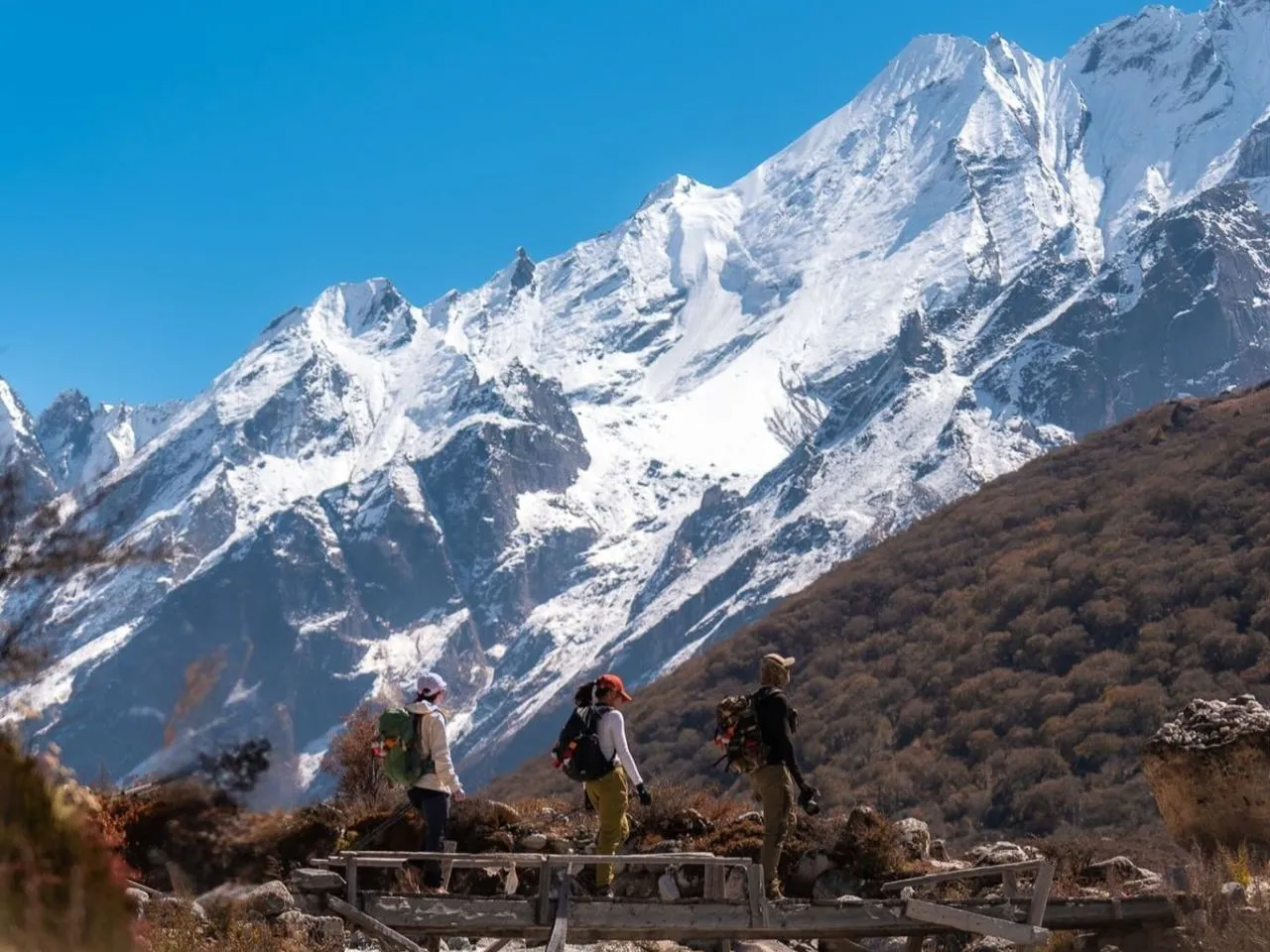
Trek de Lujo Langtang – 10 días
Trek de Lujo Langtang – 10 días
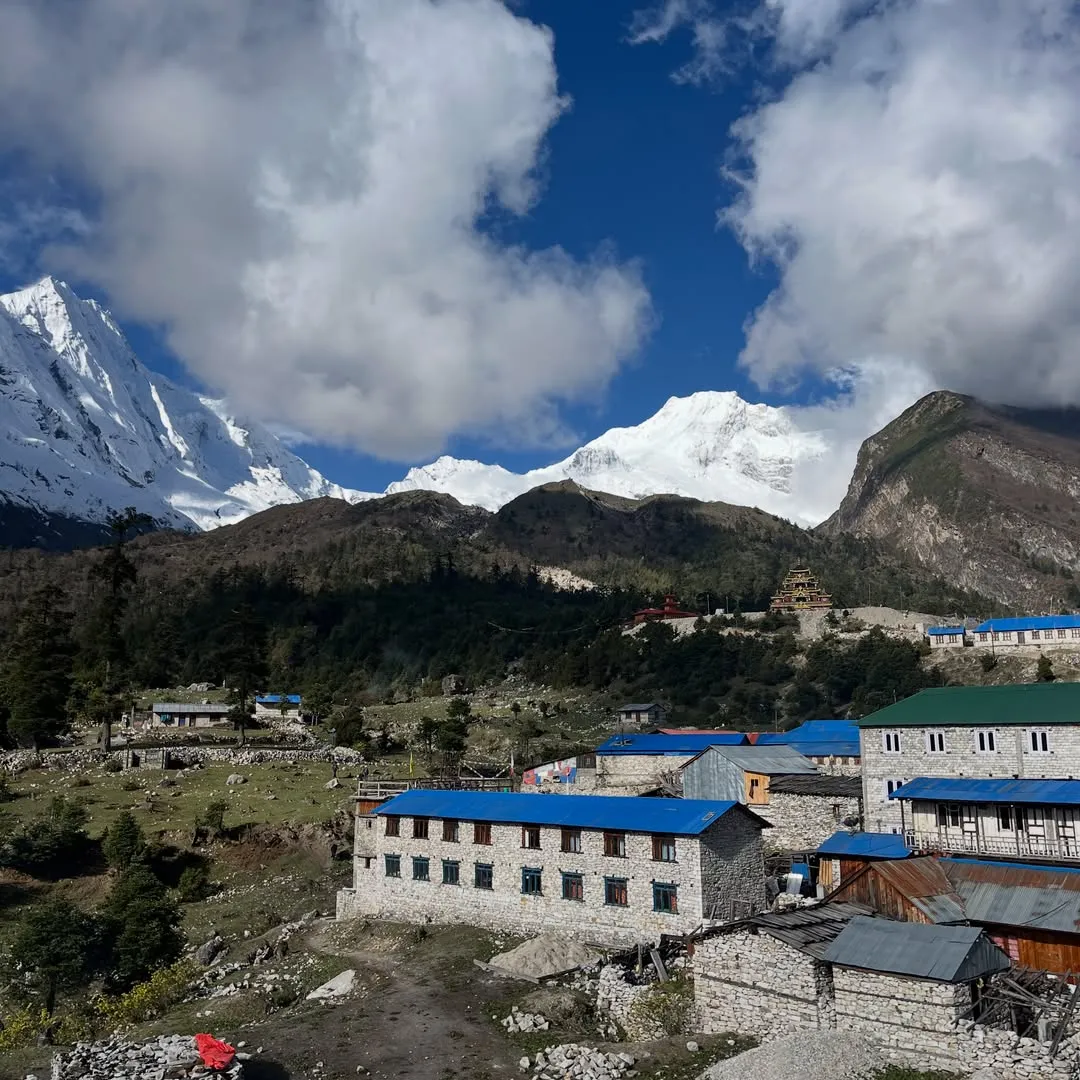
Trek Familiar Manaslu – 12 días
Trek Familiar Manaslu – 12 días
Trek de Lujo Manaslu – 14 días
Trek de Lujo Manaslu – 14 días

Trekking Manaslu - 17 días
Trekking Manaslu - 17 días
 English
 Deutsch
 Svenska
 Dansk
Dansk Русский
 Français
 Português
 Español
 Polski
 简体中文
简体中文 日本語
日本語 ไทย
ไทย العربية
 한국어
한국어