
schnelle Antwort
The best Nepal peak climbing trips in 2027 to 2030 are Mera Peak at 6,476 m for $2,800 to $4,200 over 18 to 22 days, Island Peak at 6,189 m for $2,400 to $3,600 over 16 to 20 days, Lobuche East at 6,119 m for $2,600 to $3,800 over 14 to 18 days, Kyajo Ri at 6,186 m for $3,400 to $4,800 over 18 to 22 days, and Chulu West at 6,419 m for $3,200 to $4,400 over 16 to 20 days. All five are NMA trekking peaks requiring a climbing permit, a climbing guide, and prior 5,000 m plus trekking experience.
Detaillierte Aufschlüsselung
Nepal peak climbing refers to ascents of 27 trekking peaks regulated by the Nepal Mountaineering Association. These peaks sit between 5,587 m and 6,654 m and require technical mountaineering skills including fixed rope use, jumar ascent, ice axe arrest, and crampon walking on 30 to 55 degree snow slopes. All five picks are expedition grade but accessible to trekkers with prior 5,000 m experience and a 5 day pre climb training course.
Mera Peak at 6,476 m is the highest NMA trekking peak and the most popular first climbing objective. The standard route from Mera La at 5,415 m follows a 30 degree snow slope to the summit. Island Peak at 6,189 m sits in the Khumbu above Dingboche and includes a 100 m headwall with fixed ropes at 6,100 m. Lobuche East at 6,119 m offers the closest climbing objective to Everest Base Camp with a technical rock and snow ridge.
Kyajo Ri at 6,186 m is the least crowded NMA peak in Khumbu with under 30 summiteers per year. Chulu West at 6,419 m sits in the Annapurna region above Manang with a 50 degree snow slope and a long approach from the Annapurna Circuit.
Kosten-/Komponentenaufschlüsselung
| Spitze | Höhe | Tage | NMA-Genehmigung | kosten pp |
|---|---|---|---|---|
| Mera Peak | 6.476 m | 18 bis 22 | $250 bis $350 | $2,800 bis $4,200 |
| Inselspitze | 6.189 m | 16 bis 20 | $250 bis $350 | $2,400 bis $3,600 |
| Lobuche Ost | 6.119 m | 14 bis 18 | $250 bis $350 | $2,600 bis $3,800 |
| Kyajo Ri | 6,186 m | 18 bis 22 | $250 bis $350 | $3,400 to $4,800 |
| Chulu West | 6,419 m | 16 bis 20 | $250 bis $350 | $3,200 bis $4,400 |
Was beeinflusst die Antwort
Three factors shape the peak pick. First, prior experience: Mera Peak suits first time climbers with 5,000 m trekking experience and a 5 day training course. Island Peak and Lobuche East suit climbers with one prior 6,000 m ascent. Kyajo Ri and Chulu West suit climbers with two prior 6,000 m ascents and ice climbing experience.
Second, season: spring from April to May gives stable snow conditions and 80 to 90 percent summit rates. Autumn from October to November gives colder conditions at minus 20 to 25 C at the summit and 70 to 80 percent summit rates. Winter and monsoon are not recommended.
Third, schedule length: Lobuche East fits in 14 to 18 days since it sits on the EBC trail. Mera and Island need 16 to 22 days due to the longer approach. Kyajo Ri and Chulu West need 18 to 22 days due to remote access.
Buchungstipps
Book 12 weeks ahead for spring departures since NMA permits take 7 to 10 working days and climbing guide availability drops by February. Confirm the operator provides a named IFMGA or NMA certified climbing guide with 5 plus prior summits of the target peak. Request the fixed rope, ice screw, and base camp tent inventory list.
Pack a 5 season sleeping bag rated to minus 30 C, double plastic or synthetic mountaineering boots, 12 point crampons, a single ice axe, a sit harness, a jumar, a belay device, and a climbing helmet.
Plan a 2 to 3 day pre climb training course at base camp covering fixed rope ascent, ice axe arrest, crampon technique, and crevasse rescue.
Vergleich mit Alternativen
Compared to trekking only options, peak climbing adds 2 to 4 days and $800 to $1,400 per person to a base trek.
For higher objectives, expedition peaks like Ama Dablam at 6,812 m cost $8,000 to $12,000 and need advanced climbing skills.
Häufige Fehler zu vermeiden
Do not book a peak climb without prior 5,000 m trekking experience, since the 6,000 m altitude raises altitude sickness risk by 60 percent.
Do not attempt Lobuche East or Island Peak without a named IFMGA guide, since the 100 m headwall and rock ridge sections need rope handling and anchor judgment.
FAQ
Which Nepal peak is best for first time climbers?Mera Peak at 6,476 m. The standard route from Mera La follows a 30 degree snow slope without technical rock sections, and the 18 to 22 day itinerary allows proper acclimatization.
How much does a Nepal peak climb cost?$2,400 to $4,800 per person for 14 to 22 days, including NMA permit, climbing guide, base camp crew, food, lodging, and Lukla or Juphal flights. Higher peaks and remote access push cost to $4,800 plus.
What is the summit success rate?80 to 90 percent in spring on Mera and Island. 70 to 80 percent in autumn. Winter and monsoon drop to 50 percent. Weather windows of 2 to 4 days determine success on the upper snow slopes.
Benötige ich Vorerfahrung beim Klettern?Yes for all five picks. Prior 5,000 m trekking and a 5 day training course are the minimum for Mera. Lobuche East, Island Peak, Kyajo Ri, and Chulu West need prior 6,000 m ascents.
Zusammenfassung
The best Nepal peak climbing trips in 2027 to 2030 are Mera Peak, Island Peak, Lobuche East, Kyajo Ri, and Chulu West.
Schluss
Pick Mera Peak for the highest and most accessible first climb, Island Peak for the classic Khumbu objective with a fixed rope headwall, Lobuche East for the shortest schedule, Kyajo Ri for the solitude, or Chulu West for the Annapurna region.
Empfohlene Trek-Pakete
Trekking-Orte zum Erkunden
Explore Trips in Nepal
Hand-picked guided trips to this destination
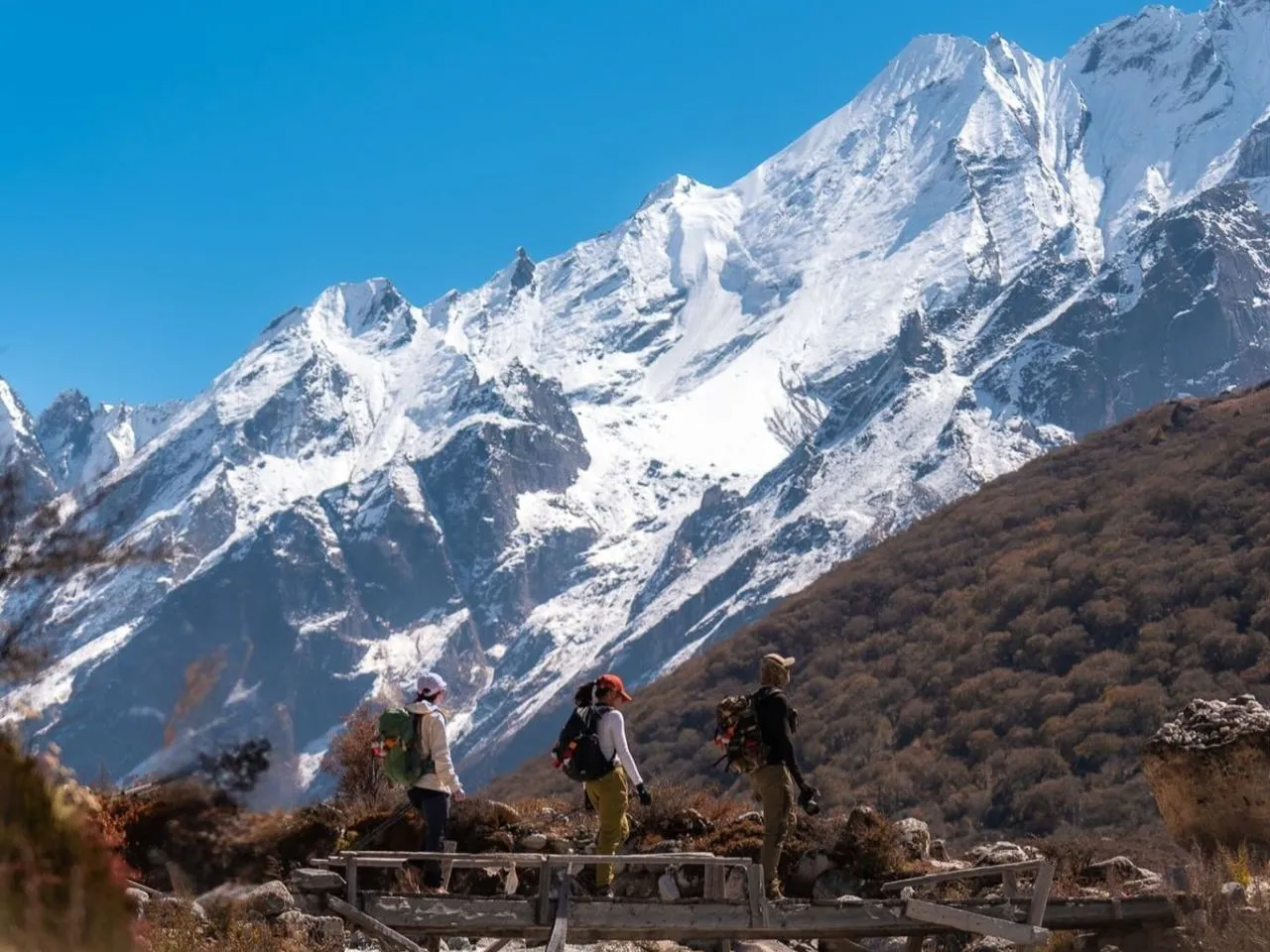
Langtang Luxus-Trek – 10 Tage
Langtang Luxus-Trek – 10 Tage
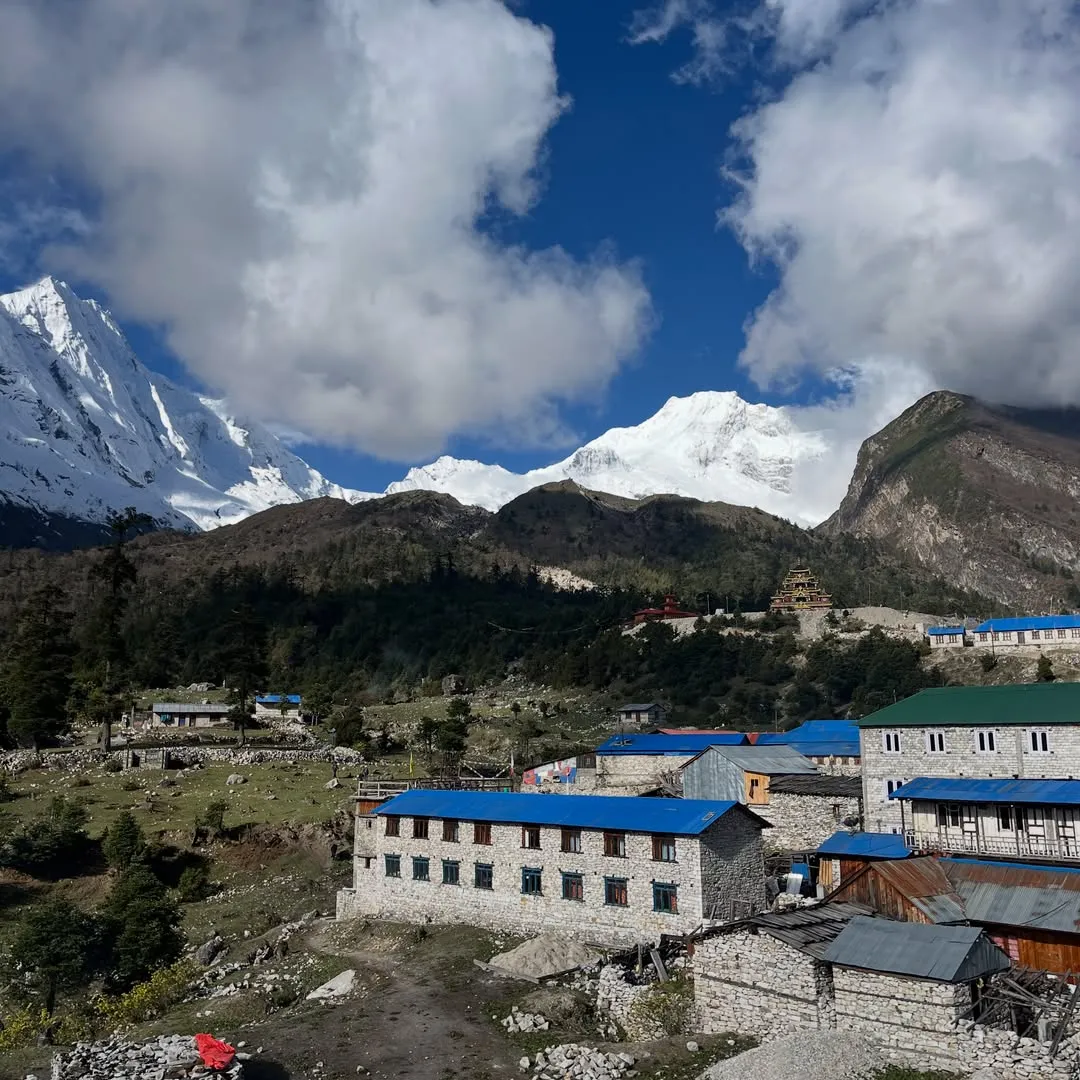
Manaslu-Familienwanderung – 12 Tage
Manaslu-Familienwanderung – 12 Tage
Manaslu-Luxus-Trek – 14 Tage
Manaslu-Luxus-Trek – 14 Tage

Manaslu-Fotografie-Trek – 17 Tage
Manaslu-Fotografie-Trek – 17 Tage
 English
 Deutsch
 Svenska
 Dansk
Dansk Русский
 Français
 Português
 Español
 Polski
 简体中文
简体中文 日本語
日本語 ไทย
ไทย العربية
 한국어
한국어