
hurtigt svar
Teahouse treks win on cost, social contact, and convenience at $90 to $150 per day on routes with established lodges such as Annapurna, Everest, Langtang, and Manaslu. Camping-supported treks win on access, solitude, and route flexibility at $180 to $260 per day on routes without lodges such as Api Nampa, Upper Dolpo, Dhaulagiri, and Kanchenjunga upper valleys. For remote Nepal above the lodge network, camping is mandatory, not optional.
Detaljeret opdeling
Teahouse treks sleep in family-run lodges along the trail. Trekkers carry only a daypack, eat from a printed menu, and pay $5 to $15 for a room plus $4 to $8 per meal. The lodge network covers the Annapurna region, Everest Khumbu, Langtang, Manaslu, and parts of Mustang. The 2024 to 2026 lodge upgrades added attached bathrooms and Wi-Fi at most stops under 4,000 m.
Camping treks carry tents, mess gear, food, and fuel on the backs of porters or mules. A standard crew for six trekkers runs one lead guide, one assistant guide, one cook, two kitchen helpers, and 12 to 18 porters or six mules. The crew pitches a dining tent, toilet tent, and two-person sleep tents each night. Cooking is on kerosene stoves to comply with national park rules.
The Api Nampa Trek in far west Nepal shows why the choice matters. The route crosses the Api Nampa Conservation Area at 1,903 sq km with just four basic lodges along 90 km of trail. Most groups run a hybrid plan: teahouse nights at Gokuleshwor, Chhangru, and Darchula, plus two to four camping nights near Api Base Camp at 4,000 m and Nampa Base Camp. Pure teahouse is not viable past Chhangru.
Omkostning/komponentopdeling
| bestanddel | Teahouse 12 Day | Camping 12 Day | Hybrid Api Nampa 14 Day |
|---|---|---|---|
| fører | $360 til $480 | $420 til $540 | $420 til $540 |
| porter eller muldyr | $180 til $240 | $540 til $720 | $360 til $480 |
| kok og køkkenpersonale | ikke nødvendig | $240 til $360 | $120 til $180 |
| Tents and mess gear | ikke nødvendig | $60 to $120 rental | $30 to $60 rental |
| logi | $120 til $200 | ikke nødvendig | $80 til $140 |
| Måltider | $360 til $480 | $360 to $480 food cost | $360 til $480 |
| Tilladelser | $40 til $90 | $40 til $90 | $60 til $110 |
| transportere | $120 til $180 | $120 til $180 | $180 til $260 |
| besætningsforsikring | $30 til $50 | $80 til $120 | $60 til $90 |
| I alt pr. person | $1.200 til $1.800 | $2.200 til $3.200 | $1.700 til $2.400 |
Hvad påvirker svaret
Three factors decide which style fits. Route infrastructure: the Annapurna, Everest, Langtang, and Manaslu networks support pure teahouse treks. Api Nampa, Upper Dolpo, Dhaulagiri, Makalu, Kanchenjunga upper valleys, and the western Great Himalayan Trail require camping or hybrid. Group size: camping costs drop 25 percent per person at six trekkers and 35 percent at eight, since fixed crew costs spread. Teahouse cost is mostly flat. Comfort expectation: teahouse rooms are basic with shared bath, while a camp set up by a good crew gives private twin tents, a heated dining tent, and a controlled menu.
Bookingtips
Book teahouse treks 6 to 8 weeks ahead for October and November. Confirm the operator pre books lodge rooms in Manang, Namche, Langtang Village, and Ghorepani where walk-in space runs out in peak season. Book camping treks 10 to 12 weeks ahead since crew, mules, and tents need coordination. For Api Nampa, ask the operator for a hybrid plan with two camping nights and lodge nights elsewhere. Ask for a named cook with at least three remote Nepal seasons. Carry 25,000 to 35,000 Nepali rupees cash for both styles since ATMs end at the trailhead. Camping treks need a redundant fuel plan since kerosene runs out at the last village.
Sammenligning med alternativer
Compared with a homestay trek in Helambu or Tamang Heritage Trail, teahouse treks offer more privacy and a printed menu, while homestays give deeper cultural immersion at $20 to $35 per night full board. Compared with a luxury lodge trek in Everest or Annapurna, camping treks are rougher but reach areas luxury lodges cannot. Compared with a self-supported tent trek without crew, organized camping treks cost more but eliminate the 18 to 25 kg pack weight and the cooking chore at altitude.
Almindelige fejl at undgå
Do not book a pure teahouse plan for Api Nampa, Upper Dolpo, or Dhaulagiri. The lodges either do not exist or close without notice. Avoid operators that quote under $150 per day for camping in remote Nepal since they typically skip crew insurance, food variety, and toilet tents. Do not bring your own stove for a teahouse route, since most conservation areas ban open fires and gas canisters are scarce. Do not skip the crew gear check for camping treks. Confirm tent condition, sleeping pad insulation, and dining tent stove before departure from Kathmandu.
FAQ
Is camping safer than teahouse trekking?Camping gives more control over food hygiene and sleep distance from crowded lodges, but adds weather exposure. Teahouses give solid walls, warm dining halls, and quick evacuation access. Both are safe when the operator is licensed.
Can I switch between teahouse and camping on the same trek?Yes. Hybrid plans are common on Api Nampa, Nar Phu, Upper Dolpo, and Kanchenjunga. The operator carries tents and food only for the nights without lodges, which trims cost and weight.
Do camping treks include showers?Most nights no. The crew heats a bucket of water on request at $3 to $5 per shower. Teahouse bucket showers run $2 to $4. Plan for one shower every three to four days on either style.
Which permits differ between teahouse and camping?Permits are the same for a given route. The difference is crew numbers, which raises the TIMS Card and insurance cost. Restricted area permits like Upper Mustang, Upper Dolpo, and Nar Phu apply to both styles.
oversigt
Teahouse treks run $90 to $150 per day on established routes with lodge networks. Camping treks run $180 to $260 per day on remote routes without lodges. Hybrid plans on Api Nampa and similar routes cost $1,700 to $2,400 for 14 days. Pick by route, group size, and comfort expectation.
ende
Pick teahouse treks for Annapurna, Everest, Langtang, and Manaslu where lodges are mature and the route is social. Pick camping for Api Nampa, Upper Dolpo, Dhaulagiri, and Kanchenjunga upper valleys where the route has no lodge network. Use a hybrid plan where lodges cover half the nights. Book 8 to 12 weeks ahead through a Kathmandu operator with a named cook and full crew insurance, and carry cash past the trailhead.
Anbefalede Trek-pakker
Trekking steder at udforske
Explore Trips in Nepal
Hand-picked guided trips to this destination
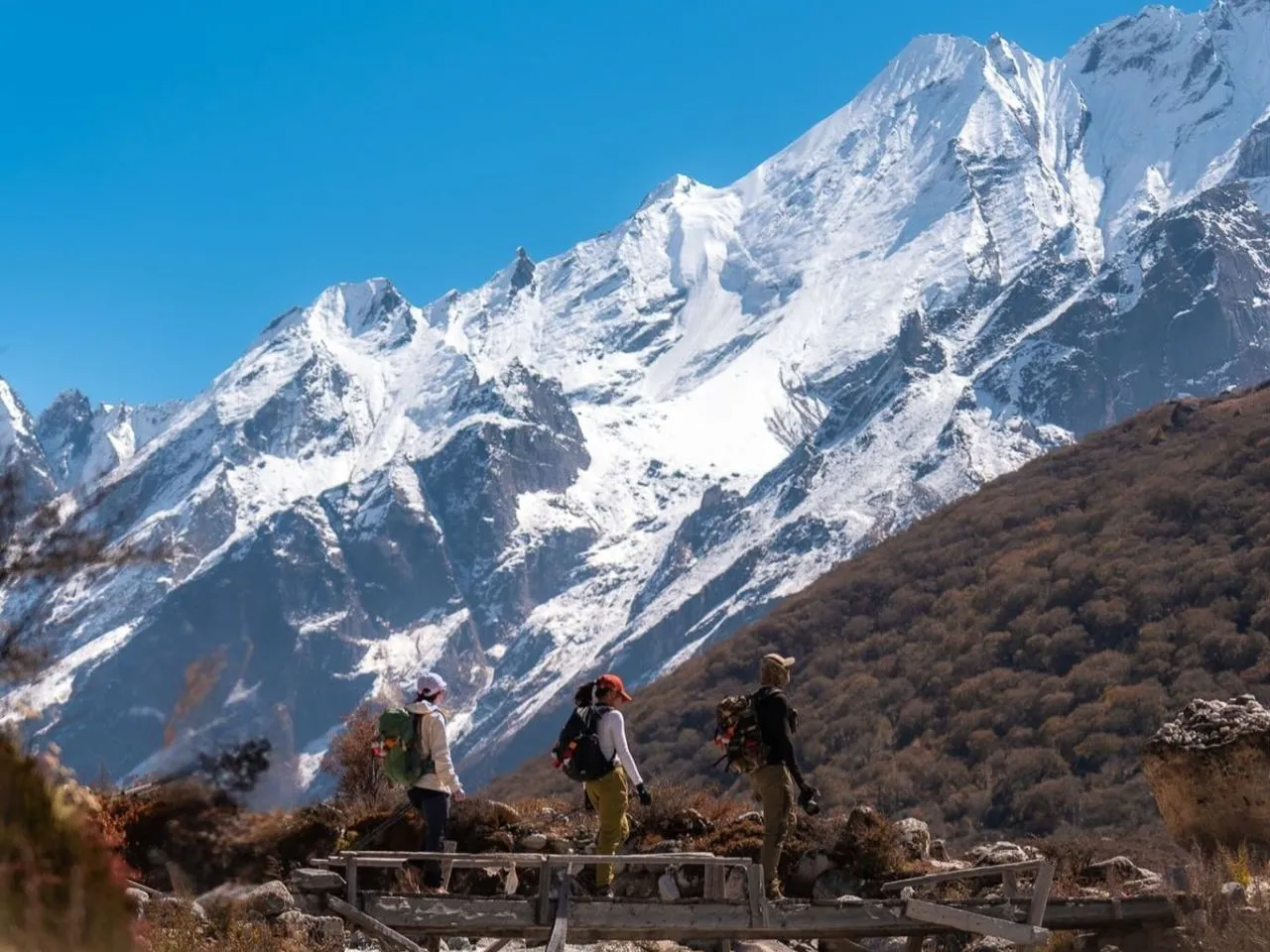
Langtang Luxury Trek – 10 dage
Langtang Luxury Trek – 10 dage
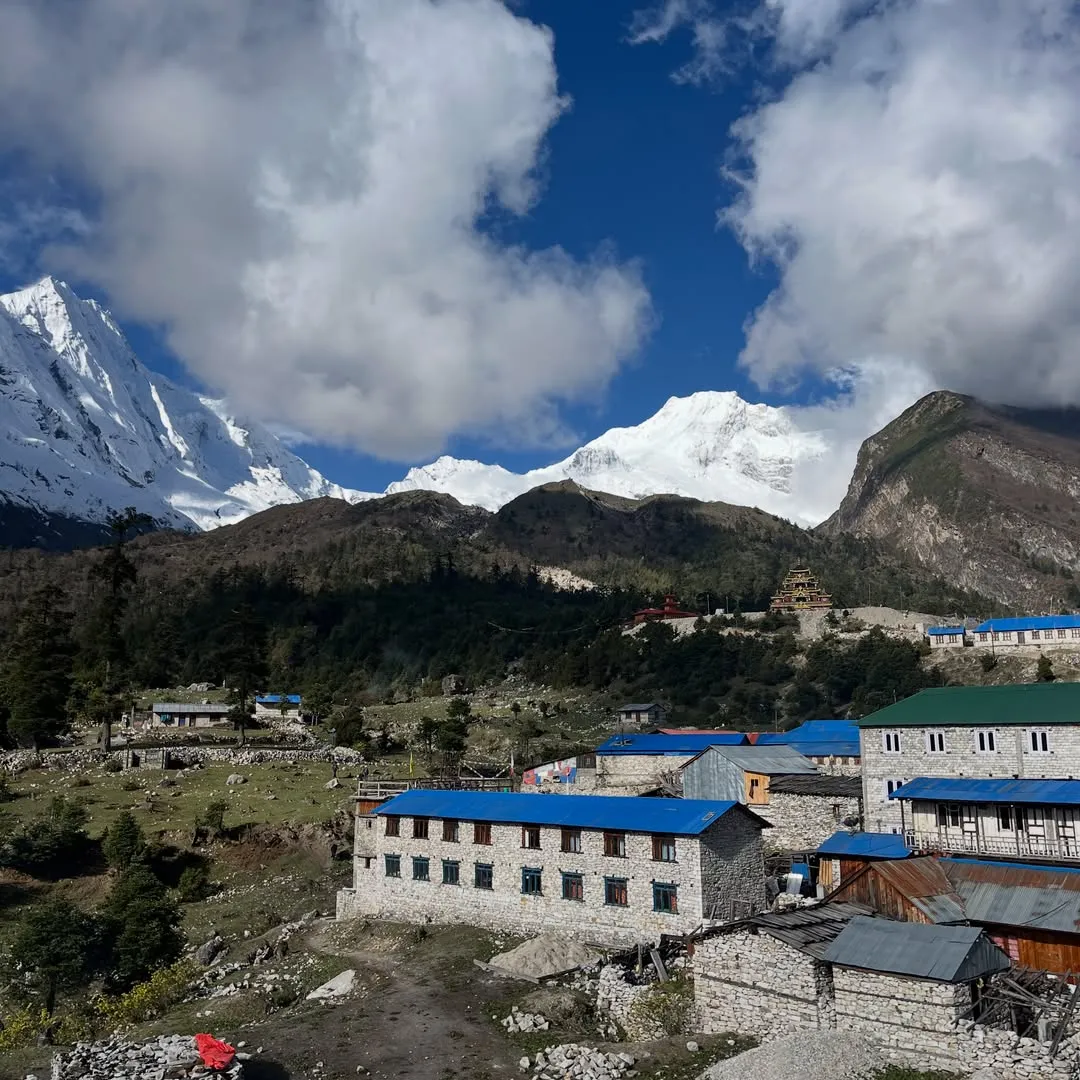
Manaslu Family Trek – 12 dage
Manaslu Family Trek – 12 dage
Manaslu Luxury Trek – 14 dage
Manaslu Luxury Trek – 14 dage

Manaslu Photography Trek – 17 dage
Manaslu Photography Trek – 17 dage
 English
 Deutsch
 Svenska
 Dansk
Dansk Русский
 Français
 Português
 Español
 Polski
 简体中文
简体中文 日本語
日本語 ไทย
ไทย العربية
 한국어
한국어