
respuesta rápida
Yes, the Rara Lake Trek includes meaningful village culture in Mugu district. Beyond the lake itself, the route passes Thakuri Hindu villages around Jumla, Tibetan Bon settlements at Pina and Chaudhabise, and the Mugu Karnali canyon villages of Gamgadhi and Rara Village, where traditional wooden architecture, Bonpo ritual, and Thakuri farming systems survive.
Desglose detallado
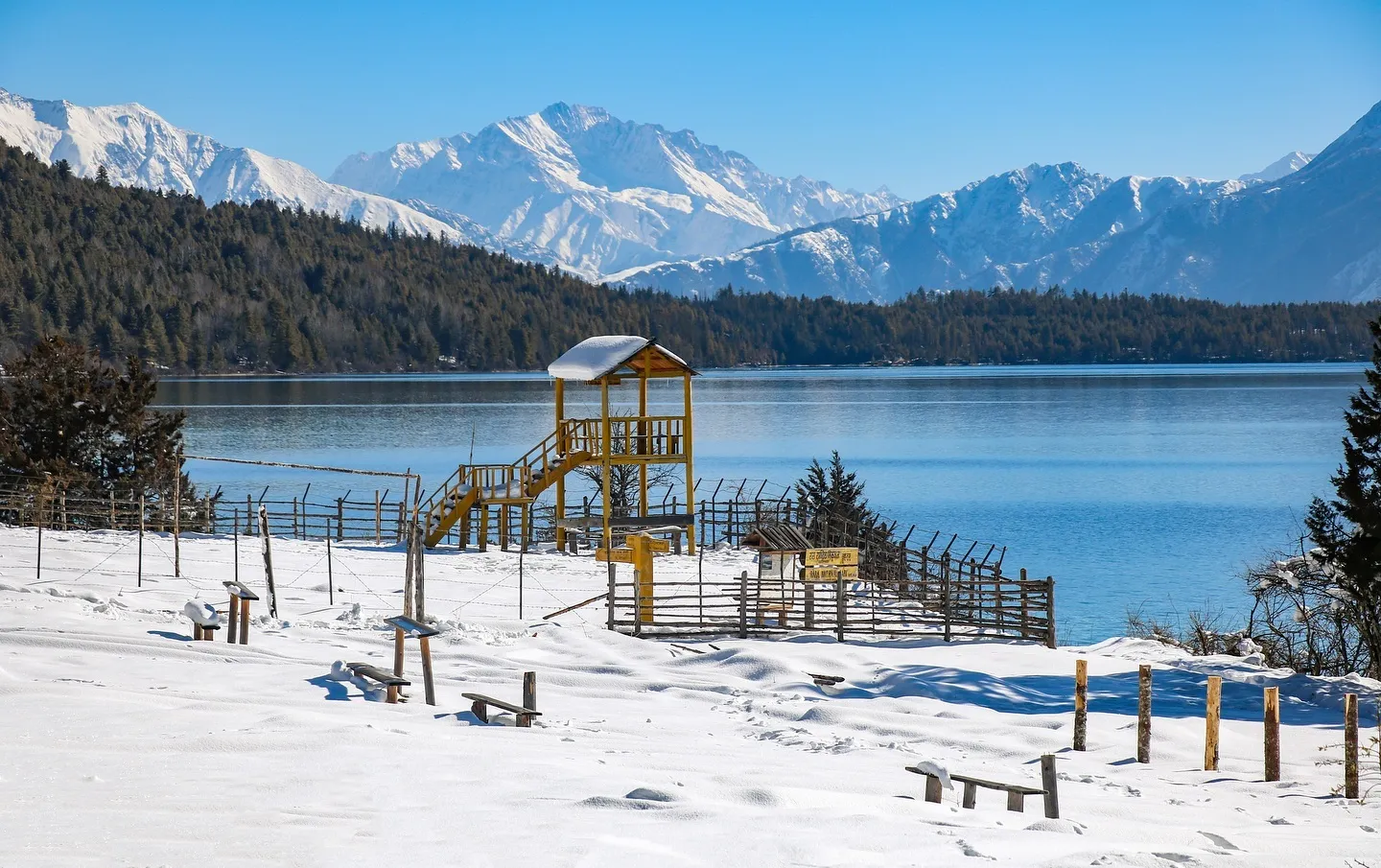
The Rara Lake Trek runs 8 to 12 days from Jumla to Rara Lake and back, reaching 3,850 metres at the lake outlet and 4,000 metres on the surrounding ridges. Rara is Nepal's largest lake, sitting at 2,980 metres inside Rara National Park. The route is in the Karnali zone, the most remote region in Nepal.
The cultural layer of the trek runs deeper than the lake itself. The route passes through three distinct cultural zones. The Jumla valley Thakuri Hindu villages around Khalanga and Chaudhabise, where traditional Khas architecture and Hindu farming communities continue. The mid elevation Bon Tibetan Buddhist villages of Pina and Chauta, where the pre Buddhist Bon religion survives alongside Tibetan Buddhism. The high Mugu Karnali canyon villages of Gamgadhi and Rara Village, where wooden houses, Bonpo shrines, and seasonal transhumance farming persist.
The Thakuri villages around Jumla are the cultural entry point. Trekkers on the standard route walk through Sinja, the medieval capital of the Khas kingdom, where the Sinja Khola valley retains stone temples and ancient inscriptions. The Thakuri are the Hindu Khas caste who ruled western Nepal for 800 years, and their architecture, dress, and food customs survive in Jumla.
Desglose de costo/componente
| parte | Standard 10 day | Cultural 12 day |
|---|---|---|
| Nepalgunj Jumla flight | $300 round trip | $300 round trip |
| Permiso de entrada al Parque Nacional Rara | $10 | $10 |
| tarjeta tims | $10 a $20 | $10 a $20 |
| Guía y portero por día | $45 a $60 | $45 a $60 |
| Lodge and meals per day | $25 a $35 | $25 a $35 |
| Sinja cultural extension | NO INCLUIDO | $80 a $120 |
| total | $1,100 a $1,500 | $1,250 to $1,700 |
que afecta la respuesta
Route choice matters. The standard route from Jumla to Rara Lake through Danphe Langa and Ghorasain is shorter at 8 days but skips Sinja and Pina. The cultural 12 day route adds Sinja and the Pina gompa and gives the deeper cultural payoff.
Season affects cultural contact. October to November and March to May are trekking season. June to September is monsoon and the trails are wet but the village life is most active with farming. December to February is winter and many villages empty as families move lower.
Consejos de reserva
Book a Mugu or Jumla based guide through a Nepalgunj operator. The guide speaks Khas and Tibetan dialects, knows the Bonpo ritual calendar, and arranges gompa visits. The Nepalgunj operator also books the Nepalgunj to Jumla flight and the Rara National Park permit.
Book the Nepalgunj to Jumla flight six weeks ahead for the October and April peaks. The flight is the bottleneck because it carries trekkers, government officials, and Karnali supply runs on a single daily service.
Plan two nights at Sinja for the medieval capital visit and two nights at Pina for the gompa. The cultural 12 day route is the right length for culture seekers.
Carry USD 300 to 400 in cash. ATMs stop at Nepalgunj. Lodges and village markets accept only Nepali rupees.
Comparación con alternativas
Compared with the Khaptad Trek, the Rara Lake Trek has deeper village culture. Khaptad has the ashram plateau and Doti Thakuri villages but no Bonpo settlements. Rara has Thakuri, Bon, and Mugu Karnali layers.
Compared with the Upper Mustang Trek, the Rara Lake Trek has more Bon culture and less Tibetan Buddhism. Mustang is Buddhist Tibetan. Rara is Bonpo with Hindu Thakuri overlay.
Compared with the Langtang Valley Trek, the Rara Lake Trek is more remote and less developed for tourism. Langtang has Tamang Buddhism and dense teahouse infrastructure. Rara has Bonpo shrines and basic homestay lodges.
Errores comunes a evitar
Skipping Sinja and Pina on a rushed 8 day itinerary. The 8 day route misses the two most culturally significant stops. Culture seekers should plan 10 to 12 days.
Booking only English speaking guides. A Khas and Tibetan speaking Mugu guide opens village conversations and gompa visits that an English only guide cannot.
Single night stops at cultural villages. One night gives a lodge meal and departure. Two nights give the gompa, the market, and the elder conversations.
preguntasrán el
Does the Rara Lake Trek include real village culture?
Yes. The route passes Thakuri Hindu villages in Jumla, Bon Tibetan settlements at Pina and Chauta, and Mugu Karnali canyon villages at Gamgadhi and Rara Village. Culture seekers should plan 10 to 12 days.
What is the most culturally significant stop on the Rara Lake Trek?
Sinja, the medieval capital of the Khas kingdom, and Pina, the Bon gompa village. Sinja has 14th century stone temples and inscriptions. Pina has a 14th century Bon monastery with painted mandalas.
What religion is practiced in Mugu district?
A mix of Bon, the pre Buddhist Tibetan religion, and Tibetan Buddhism in the high villages, with Hindu Thakuri in the lower Jumla valley. Bon is most visible at Pina and Chauta.
Do I need a guide who speaks local languages for the Rara Lake Trek?
Yes for cultural depth. A Mugu based guide who speaks Khas and Tibetan dialects translates conversations with village elders and arranges gompa visits. An English only guide gives less access.
sumario
The Rara Lake Trek includes meaningful village culture in Mugu district. The route passes Thakuri Hindu villages in Jumla, Bon Tibetan settlements at Pina, and Mugu Karnali canyon villages at Gamgadhi and Rara Village. Plan 10 to 12 days and book a Mugu based guide who speaks local dialects.
idea de narración
Rara is more than a lake. Culture seekers who extend the route to 12 days, add Sinja and Pina, and book a Khas speaking guide find a depth of village life that the standard 8 day lake rush completely misses.
Paquetes de Trek Recomendados
Lugares de trekking para explorar
Explore Trips in Nepal
Hand-picked guided trips to this destination
 English
 Deutsch
 Svenska
 Dansk
Dansk Русский
 Français
 Português
 Español
 Polski
 简体中文
简体中文 日本語
日本語 ไทย
ไทย العربية
 한국어
한국어