
hurtigt svar
Lodges on the Kanchenjunga North Base Camp route are basic but functional. Trekkers stay in shared twin rooms with foam mattresses, squat toilets, and dal bhat menus. The route from Taplejung to Ghunsa to Pangpema at 5,143 m runs 16 to 20 days and has 18 tea houses. Hot showers are available at 6 stages, mobile signal at 4, and Wi Fi at none. Carry a sleeping bag liner and a sat messenger.
Detaljeret opdeling
The Kanchenjunga North Base Camp Trek starts at Taplejung at 1,820 m and follows the Tamur river to Sekathum, Amjilosa, Gyabla, Ghunsa, Kambachen, Lhonak, and finally Pangpema at 5,143 m, the north base camp. The route has 18 tea houses spread across 14 stages, with the largest concentration at Ghunsa at 3,415 m, the main Limbu and Tibetan village on the route.
Rooms are twin share with foam mattresses on wooden platforms. Blankets are provided but unwashed for weeks at a time, so a sleeping bag liner rated to minus 5 Celsius is essential. Toilets are squat, Asian style, with a jug of water for washing. Some lodges at Ghunsa and Kambachen have western style toilets added in 2024 and 2025. Hot showers cost USD 3 to USD 5 and are heated by gas or solar, available at 6 of the 14 stages. Menus are limited to dal bhat, fried rice, chow mein, Tibetan bread, and instant noodles. Wi Fi is not available on the route, and mobile signal reaches 4 stages: Taplejung, Sekathum, Ghunsa, and Lhonak.
Omkostning/komponentopdeling
| bestanddel | detalje | koste USD |
|---|---|---|
| Kanchenjunga Begrænset områdetilladelse | Per person, 14 days | $20 |
| Kanchenjunga Conservation Area Permit | pr person | $20 |
| Tims kort | pr person | $10 |
| Flight Bhadrapur to Taplejung | 40 minutes, round trip | $280 til $340 |
| Tea house full board | Per day, 18 days | $22 to $30 |
| Varmt brusebad | 6 stages, optional | $3 til $5 hver |
| Licenseret guide | Per day, 18 days | $25 til $35 |
| I alt pr. person | With guide, 18 days | $1.400 til $1.950 |
Hvad påvirker svaret
Season affects lodging quality. In peak season from October to November and March to May, tea houses run at full capacity, so booking ahead is essential. In shoulder season from December to February and June to September, some tea houses close, but those open offer better service. Trekkers who travel in shoulder season should confirm open tea houses with a local agency 1 week ahead.
Group size affects lodging cost. A group of 4 to 6 splits the guide cost and pays USD 5 to USD 8 per person per day for the guide. A group of 2 pays USD 13 to USD 18 per person per day. Trekkers who want a single room should expect to pay double, because most lodges have only 4 to 6 rooms and cannot spare a single.
Bookingtips
Book through a Bhadrapur or Kathmandu based agency with Kanchenjunga experience. Confirm the agency books Ghunsa and Kambachen lodges 2 weeks ahead in October and November. Carry a sleeping bag liner rated to minus 5 Celsius, because blankets are not always washed. Carry a sat messenger, because mobile signal is patchy above Ghunsa. Pack a headlamp, because electricity cuts off at 8 pm at most lodges.
Sammenligning med alternativer
Compared with the Annapurna Circuit, the Kanchenjunga North route has 1/15th the tea houses and much more basic rooms. Compared with the Everest Base Camp Trek, Kanchenjunga has no Wi Fi and limited hot showers, while EBC has Wi Fi at every lodge. Compared with the Manaslu Circuit, Kanchenjunga has similar tea house quality but longer stages and a longer approach. Compared with the Kanchenjunga South route, the North route has slightly better tea houses at Ghunsa and Kambachen.
Almindelige fejl at undgå
Trekkers often arrive without a sleeping bag liner, then shiver through cold nights at Lhonak at 4,790 m. A second is booking a 14 day itinerary, which forces rushed stages and skips acclimatisation at Kambachen. A third is treating the lodges as hotels, demanding private rooms and western food. A fourth is underestimating the cold above 4,000 m, where nights drop to minus 10 Celsius even in October.
FAQ
What are the lodges like on the Kanchenjunga North Base Camp route? Basic but functional. Shared twin rooms with foam mattresses, squat toilets, and dal bhat menus. Hot showers at 6 of 14 stages, mobile signal at 4 stages, no Wi Fi.
Do I need to bring a sleeping bag? Yes. A sleeping bag rated to minus 10 Celsius is essential for nights at Kambachen, Lhonak, and Pangpema. A liner alone is not enough above 4,000 m.
Are there western toilets on the route? A few. Ghunsa and Kambachen lodges added western style toilets in 2024 and 2025. Most other stages have squat toilets with a jug of water for washing.
Kan jeg oplade min telefon på hytterne? Yes, at 8 of 14 stages, for a fee of USD 2 to USD 4 per charge. Solar power is common, so charging may be slow on cloudy days. Carry a 10,000 mAh power bank as backup.
oversigt
Lodges on the Kanchenjunga North Base Camp route are basic but functional. Shared twin rooms, squat toilets, and dal bhat menus. Hot showers at 6 of 14 stages, mobile signal at 4 stages, no Wi Fi. Carry a sleeping bag rated to minus 10 Celsius, a sat messenger, and a power bank. Cost is USD 1,400 to USD 1,950 per person for 18 days.
ende
For trekkers heading to Kanchenjunga North Base Camp in 2027 to 2030, expect basic tea house lodging, dal bhat twice a day, and limited connectivity. Bring a minus 10 Celsius sleeping bag, a sat messenger, and a flexible attitude. The lodges are functional, and the cultural and scenic rewards more than justify the simplicity. Book through a local agency, reserve Ghunsa and Kambachen ahead, and carry cash for hot showers and charging.
Anbefalede Trek-pakker
Trekking steder at udforske
Explore Trips in Nepal
Hand-picked guided trips to this destination
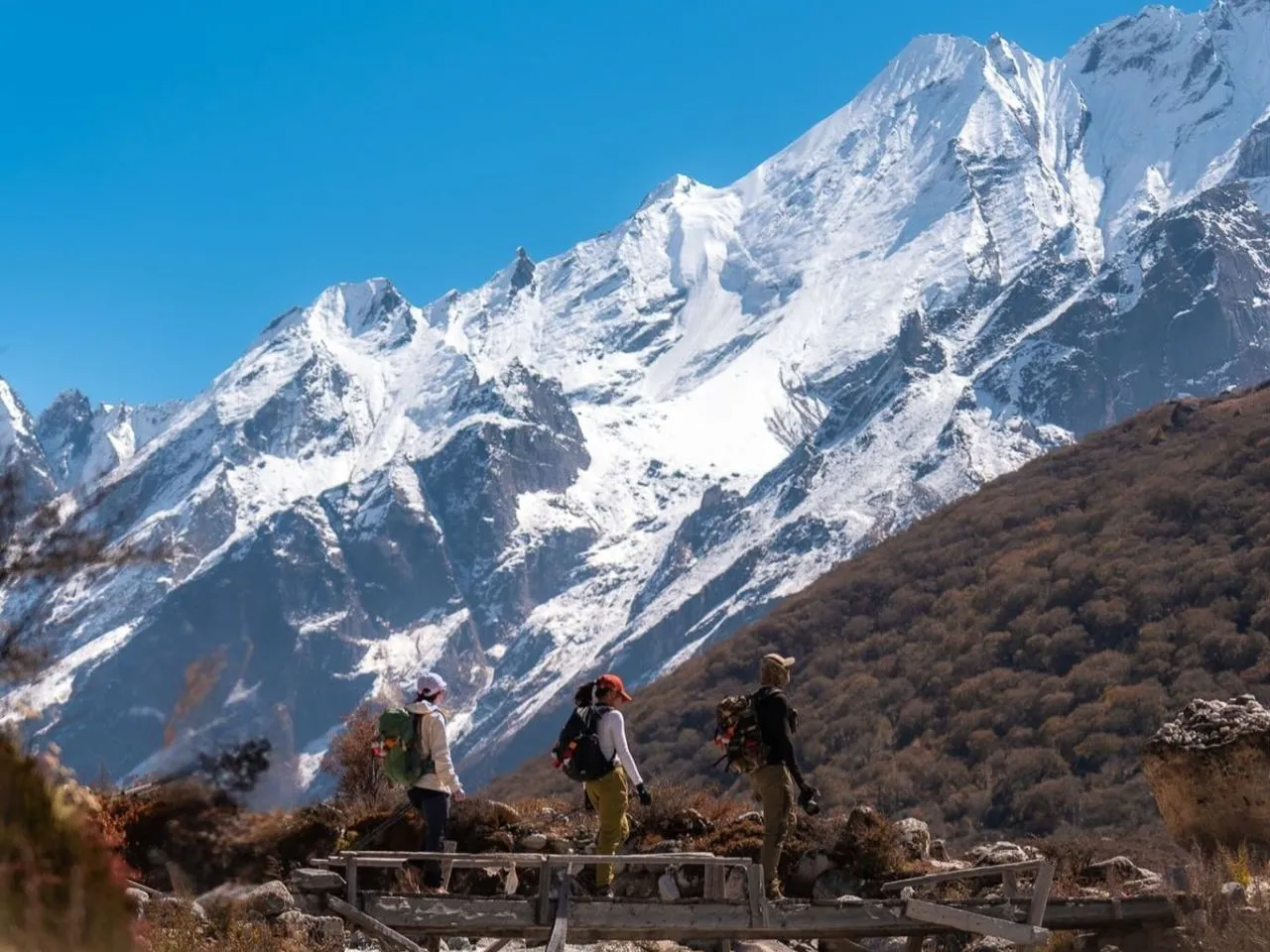
Langtang Luxury Trek – 10 dage
Langtang Luxury Trek – 10 dage
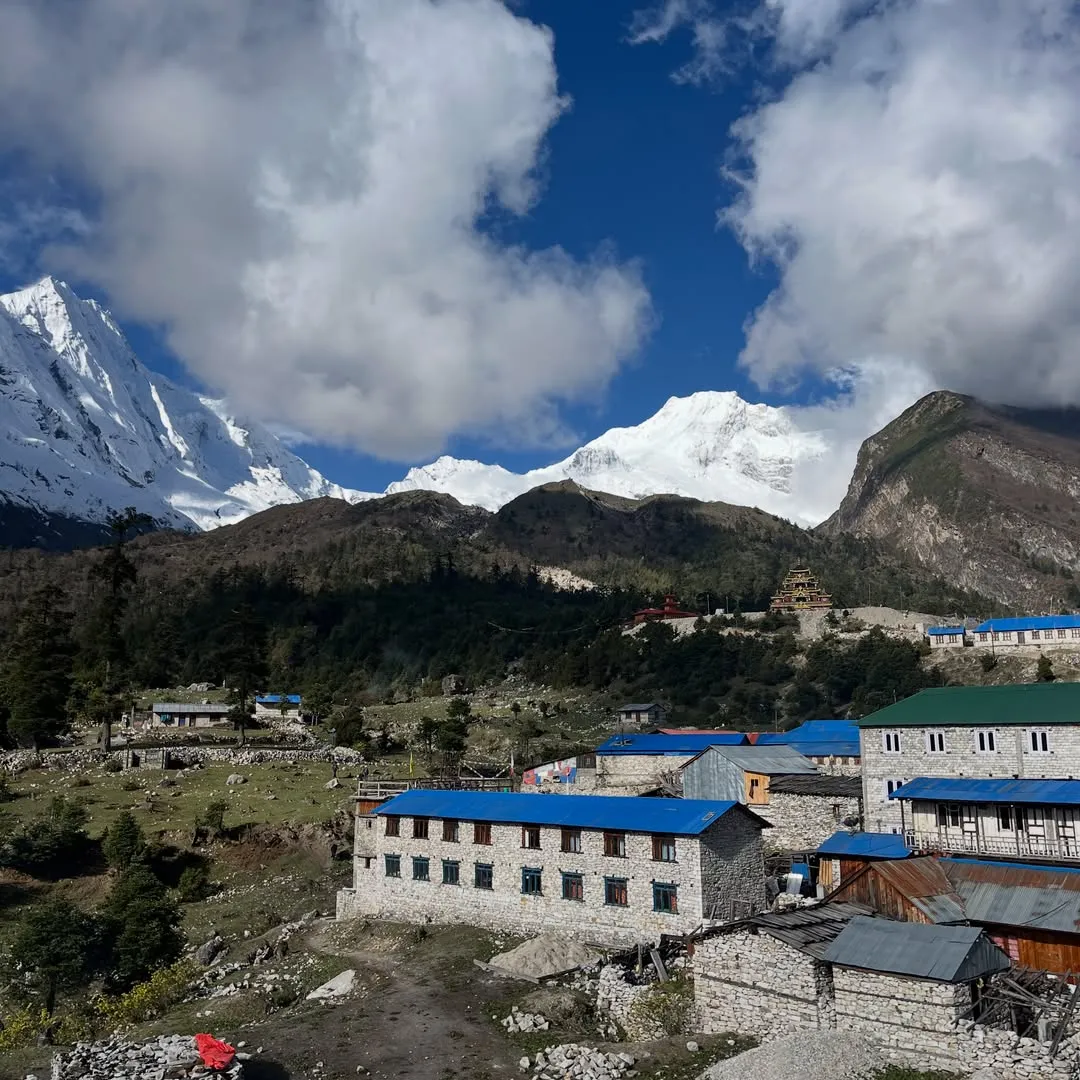
Manaslu Family Trek – 12 dage
Manaslu Family Trek – 12 dage
Manaslu Luxury Trek – 14 dage
Manaslu Luxury Trek – 14 dage

Manaslu Photography Trek – 17 dage
Manaslu Photography Trek – 17 dage
 English
 Deutsch
 Svenska
 Dansk
Dansk Русский
 Français
 Português
 Español
 Polski
 简体中文
简体中文 日本語
日本語 ไทย
ไทย العربية
 한국어
한국어