
snabbt svar
The Mount Kailash via Humla route offers the strongest pilgrimage and cultural experience because it walks the ancient Limi Valley trade corridor, crosses into Tibet at Hilsa on foot, and completes the three day kora with Drolma La at 5,638 m. The route runs 18 to 24 days for $3,800 to $5,500 per person. The Lhasa to Kailash drive in covers more Tibetan monasteries but skips the walking pilgrimage. The Purang direct flight is fastest at 8 days but offers the least cultural depth.
Detaljerad uppdelning
The Mount Kailash via Humla route starts at Simikot in far west Nepal at 2,950 m, climbs through the Limi Valley with its 1,000 year old monasteries at Halji and Til, crosses the 4,530 m Nara La pass into Tibet at Hilsa, drives to Lake Manasarovar, then completes the 53 km kora around Mount Kailash over three days. Total walking distance runs 130 km over 8 to 10 days, plus 4 to 6 days of jeep travel on the Tibetan plateau.
The Lhasa to Kailash route flies into Lhasa, drives west across the Tibetan plateau for 5 to 7 days with stops at Yamdrok Lake, Gyantse, Shigatse, and Saga, then reaches Kailash for the kora. The Purang direct route flies from Nepalgunj to Simikot, then helicopter to Hilsa, then drive to Purang and Kailash. It runs 8 to 10 days and is preferred by elderly pilgrims who cannot walk the Humla section.
Kostnad/komponentuppdelning
| beståndsdel | Humla 21 Day | Lhasa 14 Day | Purang 10 Day |
|---|---|---|---|
| Chinese Tibet Permit | $180 | $180 | $180 |
| Humla begränsat tillstånd | $90 | Behövs inte | $90 |
| Simikot to Hilsa crew | $600 till $800 | Behövs inte | Behövs inte |
| Helicopter Hilsa | Behövs inte | Behövs inte | $500 till $700 |
| Tibetan jeep and driver | $900 till $1 200 | $1 500 till $2 000 | $400 till $600 |
| Tibetan guide | $300 till $400 | $350 till $450 | $150 till $250 |
| Lhasa flights | Behövs inte | $450 till $600 | $300 till $400 |
| logi och måltider | $500 till $700 | $700 till $900 | $300 till $400 |
| Kora yak porter | $120 till $180 | $120 till $180 | $120 till $180 |
| Totalt per person | $3 800 till $5 500 | $4,200 to $6,000 | $2 800 till $3 800 |
Vad påverkar svaret
Three factors shape which route offers the strongest pilgrimage experience. Walking versus driving: the Humla route includes 8 to 10 days of walking pilgrimage before the kora, mirroring how Tibetan and Hindu pilgrims traveled for centuries. The Lhasa route drives the plateau and skips this walking meditation phase.
Bokningstips
Book the Humla route 12 weeks ahead since Chinese Tibet permits take 4 to 6 weeks to process and Simikot flights book out in May and June yatra season. Confirm the operator has a Kathmandu based Tibetan partner office with direct Tibet Travel Bureau permit access, not a sub contracted third party. Ask for a named Tibetan speaking lead guide who has done 10 plus Kailash koras.
Jämförelse med alternativ
Compared with the Inner Kora route, which is restricted to Buddhist pilgrims with special permits, the standard outer kora is open to all and runs 53 km over three days. The Charan Spelha inner route requires an additional permit from the Tibet Travel Bureau and a senior Tibetan guide, costing $1,500 to $2,000 more. Compared with the Amarnath Yatra in India, which is a 5 day Hindu pilgrimage at 3,888 m, the Kailash kora is a 3 day circumambulation at 4,570 to 5,638 m with deeper altitude challenge but stronger cultural fusion of Hindu, Buddhist, Jain, and Bon traditions.
Vanliga misstag att undvika
Do not book the Humla route with an operator that has no prior Limi Valley experience. The 4,530 m Nara La pass crossing needs local crew knowledge, and weather can close the trail for 2 to 3 days in shoulder seasons. Avoid booking in July and August when monsoon rains swell the Karnali river crossings.
fami
Which Kailash route is best for cultural depth?The Humla route walks through the Limi Valley with 1,000 year old monasteries at Halji and Til, crosses the ancient trade route into Tibet at Hilsa, and includes the kora. The Lhasa route visits more Tibetan monasteries but skips the walking pilgrimage.
How long does the Humla route take?18 to 24 days including 8 to 10 walking days from Simikot to Hilsa, 3 to 4 jeep days on the Tibetan plateau, the 3 day kora, and 2 travel days to and from Kathmandu.
Is the Humla route safe for elderly pilgrims?No. The 4,530 m Nara La crossing and 8 to 10 walking days are unsuitable for pilgrims over 65 or with heart conditions. The Purang direct route with helicopter transfer is safer for elderly pilgrims.
What permits are required for the Humla route?Chinese Tibet Travel Permit, Humla restricted area permit, TIMS Card, and Kailash kora permit. The operator handles all permits, and processing takes 4 to 6 weeks.
sammanfattning
The Mount Kailash via Humla route in 2027 to 2030 offers the strongest pilgrimage and cultural experience at 18 to 24 days for $3,800 to $5,500 per person. The Lhasa route covers more Tibetan monasteries at $4,200 to $6,000. The Purang direct route is fastest at 8 to 10 days for $2,800 to $3,800 but offers the least cultural depth.
slutsats
Pick the Humla route for the deepest pilgrimage experience with walking meditation, ancient Limi monasteries, and the full kora. Pick the Lhasa route for the broadest Tibetan monastery tour with the kora at the end. Pick the Purang direct route only if schedule or fitness rules out walking. Book 12 weeks ahead through a Kathmandu operator with a direct Tibet Travel Bureau permit partner, carry cash and Diamox, and acclimatize slowly to the 5,638 m Drolma La crossing.
Rekommenderade Trek-paket
Vandringsplatser att utforska
Explore Trips in Nepal
Hand-picked guided trips to this destination
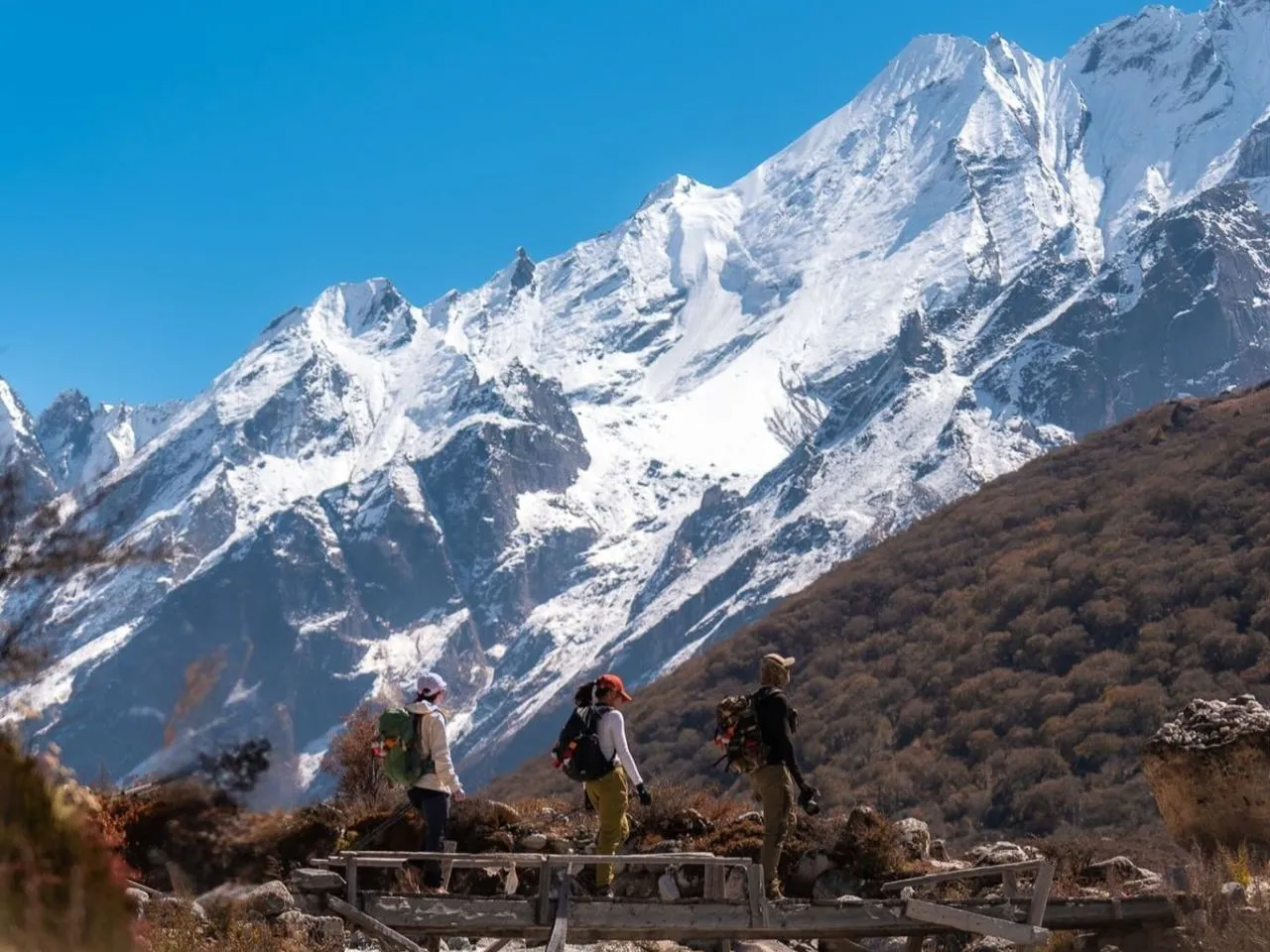
Langtang Luxury Trek – 10 dagar
Langtang Luxury Trek – 10 dagar
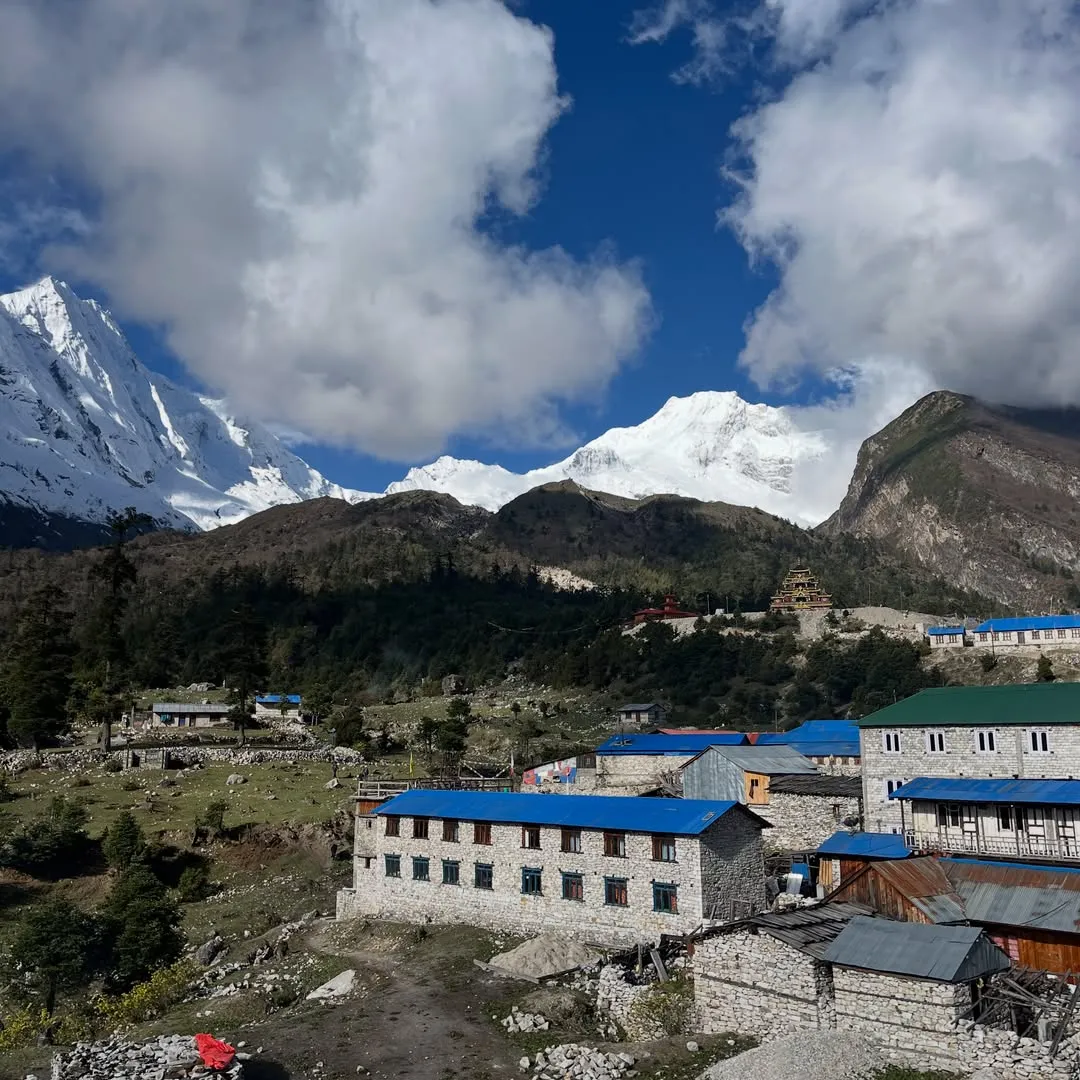
Manaslu Family Trek – 12 dagar
Manaslu Family Trek – 12 dagar
Manaslu Luxury Trek – 14 dagar
Manaslu Luxury Trek – 14 dagar

Manaslu Photography Trek – 17 dagar
Manaslu Photography Trek – 17 dagar
 English
 Deutsch
 Svenska
 Dansk
Dansk Русский
 Français
 Português
 Español
 Polski
 简体中文
简体中文 日本語
日本語 ไทย
ไทย العربية
 한국어
한국어