
réponse rapide
For guided Nepal peak climbing in 2027 to 2030, a local Nepal agency usually wins on cost and route knowledge, charging $2,400 to $4,800 for Mera Peak or Island Peak. An international expedition company adds $1,500 to $3,000 per climber for logistics insurance, Western guiding, and brand reputation. Choose a local agency for experienced climbers with their own evacuation insurance, and an international company for first time climbers wanting full backup.
Répartition détaillée
Nepal peak climbing covers the 28 Nepal Mountaineering Association peaks, ranging from Island Peak at 6,189 m to Mera Peak at 6,476 m and up to expedition peaks like Ama Dablam at 6,812 m. Local agencies operate under NMA license and provide Sherpa guides, base camp staff, climbing permits, and domestic logistics. International expedition companies subcontract most on ground operations to local agencies but add Western expedition leaders, satellite comms, comprehensive rescue insurance, and brand accountability.
The core decision comes down to risk tolerance, climbing experience, and budget. A local agency handles route knowledge, permit processing, cook crew, and Sherpa support for 30 to 50 percent less than an international company. An international company adds English speaking Western guides with IFMGA certification, full insurance coverage including trip cancellation, and a single point of contact for legal recourse.
Both options require the NMA Climbing Permit at $250 to $350 per peak, the national park or conservation area permit, and the TIMS Card. Garbage deposit fees add $500 to $1,000 refundable on return.
Répartition des coûts/composants
| composante | Agence locale (USD) | International Co (USD) |
|---|---|---|
| NMA Climbing Permit (Island Peak) | $250 | $250 |
| Permis de parc national de Sagarmatha | $30 | $30 |
| Carte TIM | $17 | $17 |
| Retour des vols de Lukla | $360 | $360 |
| Sherpa guide and base camp staff | $1,200 à $1,800 | $1,200 à $1,800 |
| Western IFMGA guide share | Non inclus | $1 500 à $2 500 |
| Comprehensive rescue insurance | Self arranged | $400 à $800 |
| Brand and logistics markup | nul | $500 to $1,200 |
| Total per climber (Island Peak) | $2 400 à $3 200 | $4 200 à $5 800 |
Qu'est-ce qui affecte la réponse
Three factors shape the choice. First, climber experience: a climber with prior 6,000 m experience and self arranged evacuation insurance saves $1,500 to $3,000 with a local agency. First time climbers benefit from a Western guide who can call the climb off without financial pressure on the operator.
Second, peak difficulty: trekking peaks like Mera and Island work well with local agencies since the technical demand is low. Technical peaks like Ama Dablam or Baruntse benefit from the international company backup since small Sherpa teams can be stretched by rescue needs.
Third, group composition: mixed experience groups, family groups, or climbers over 55 benefit from Western guide leadership for safety decisions. Solo expert climbers save significantly with a local agency.
Conseils pour la réservation
Verify the local agency holds a current NMA climbing license and Ministry of Tourism expedition permit registration. Request the assigned climbing Sherpa name and his last three summits on the target peak. Ask for IFMGA certification if you book an international company, since some brands subcontract to non certified guides.
Confirm fixed line installation on technical sections is included, since some local agencies charge extra for rope and anchor gear. Request a written summit day protocol covering oxygen, emergency descent, and radio communication. Buy helicopter evacuation insurance covering $15,000 minimum for 6,000 m peaks.
Book 4 to 6 months ahead for spring climbing season (March to May) and 3 to 4 months ahead for autumn (September to November). Carry 30,000 to 50,000 Nepali rupees cash for crew summit bonuses and emergency expenses.
Comparaison avec les alternatives
Mera Peak Climbing runs 16 to 20 days at $2,800 to $4,200 with a local agency and $4,500 to $6,800 with an international company. Island Peak Climbing runs 14 to 18 days at $2,400 to $3,200 with a local agency and $4,200 to $5,800 international. Ama Dablam Expedition runs 28 to 32 days at $5,800 to $7,800 local and $8,500 to $12,000 international.
Choose local agency for trekking peaks with prior 6,000 m experience. Choose international company for first time 6,000 m climbers wanting Western guide leadership. Choose a hybrid model with a local agency plus a personally hired Western guide for the best cost control with extra safety.
Erreurs courantes à éviter
Do not assume the international company brand means safer climbing, since most operations run through the same Sherpa teams. Avoid local agencies that quote under $2,000 for Island Peak, since they typically skip summit bonus and rescue protocol.
Skip international companies that do not name the Western guide in the contract, since some brands swap guides at the last minute. Do not skip helicopter evacuation insurance, since private rescue from 6,000 m costs $5,000 to $12,000.
FAQ
Ai-je besoin d'une expérience préalable en escalade pour l'escalade au Népal ? Trekking peaks like Mera and Island need basic mountaineering skills and prior 5,000 m trekking experience. Technical peaks like Ama Dablam need prior 6,500 m summit experience.
What is the difference between a Sherpa guide and an IFMGA guide? Sherpa guides know the route and conditions but may not hold formal certification. IFMGA guides carry international mountaineering certification and Western rescue protocols.
Le sauvetage par hélicoptère est-il inclus dans le package Local agencies typically do not include rescue insurance, while international companies bundle $5,000 to $15,000 coverage. Always confirm in writing.
Can I switch from a local agency to an international company mid trip? No, since expedition permits are tied to the operator. Choose before booking.
somm
For guided Nepal peak climbing in 2027 to 2030, a local agency wins on cost and route knowledge at $2,400 to $4,800 for trekking peaks, while an international company adds $1,500 to $3,000 for Western guiding and full insurance. Choose based on experience, peak difficulty, and group composition.
conclusion
Experienced climbers with self arranged evacuation insurance should choose a local Nepal agency and save $1,500 to $3,000 per climb. First time climbers, mixed experience groups, and technical peak aspirants should choose an international company for the Western guide leadership and full backup.
Forfaits Trek recommandés
Des lieux de randonnée à explorer
Explore Trips in Nepal
Hand-picked guided trips to this destination
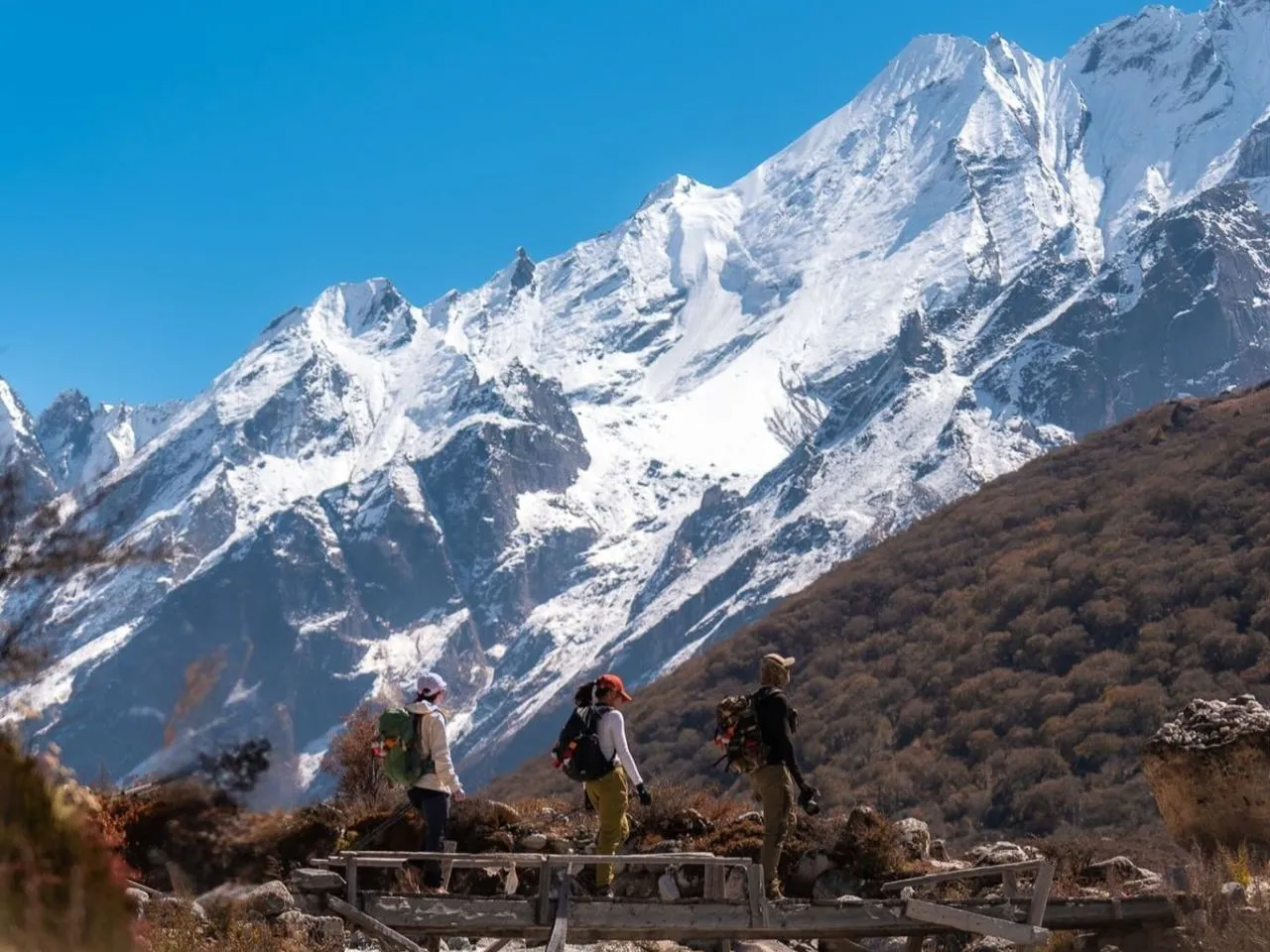
Trek de luxe de Langtang – 10 jours
Trek de luxe de Langtang – 10 jours
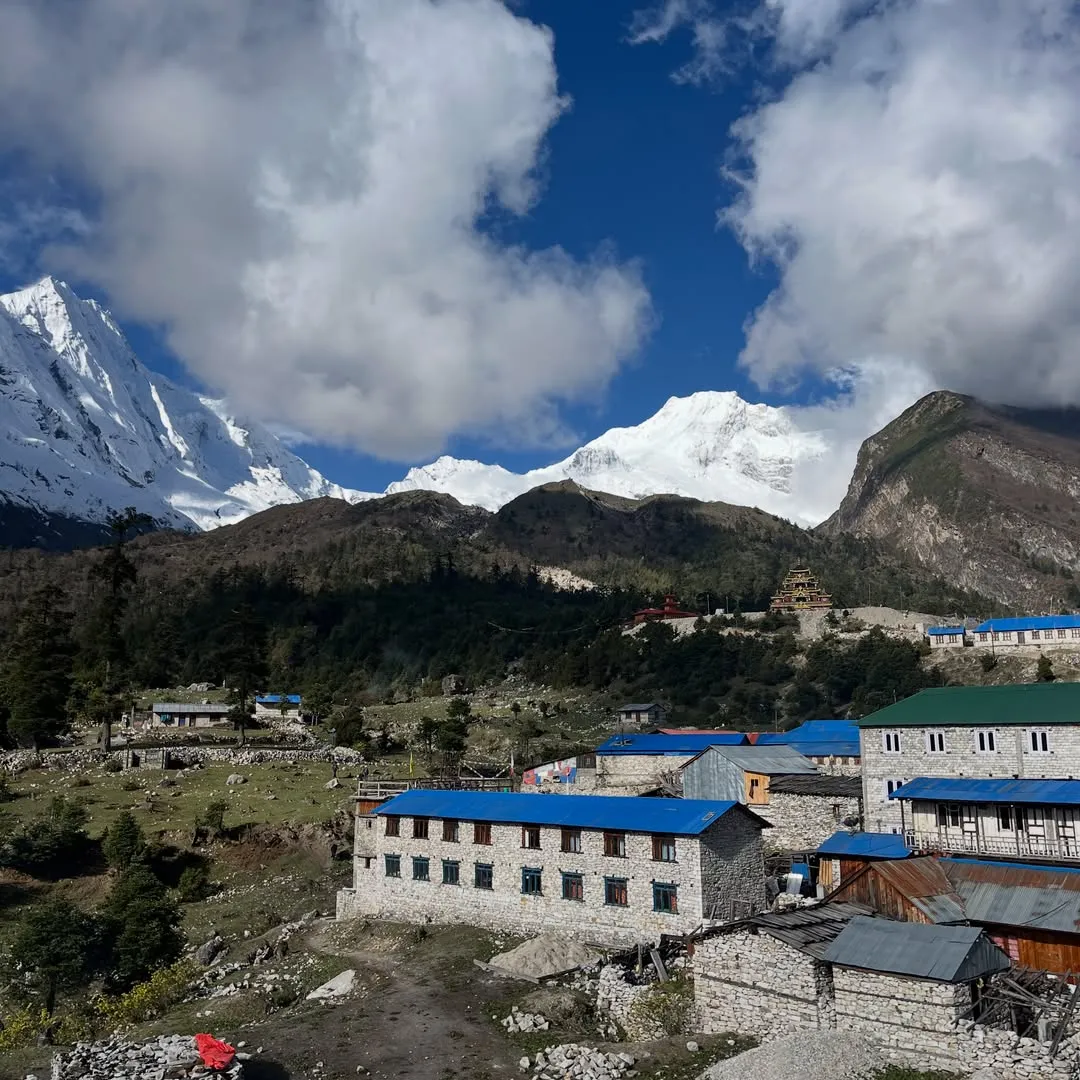
Treken en famille Manaslu – 12 jours
Treken en famille Manaslu – 12 jours
Trek de luxe à Manaslu – 14 jours
Trek de luxe à Manaslu – 14 jours

Trek de la photographie Manaslu – 17 jours
Trek de la photographie Manaslu – 17 jours
 English
 Deutsch
 Svenska
 Dansk
Dansk Русский
 Français
 Português
 Español
 Polski
 简体中文
简体中文 日本語
日本語 ไทย
ไทย العربية
 한국어
한국어