
respuesta rápida
Manaslu Circuit wins for village culture in 2027 to 2030. The route passes through Tibetan Buddhist villages of Soti Khola, Jagat, Deng, Namrung, Lho, and Samagaon with 1,200 year old monasteries, stone houses, and mani walls. Restricted area status caps trekkers at 600 per month, preserving cultural authenticity. Annapurna Circuit has road development on both sides that erodes village culture, with 1,500 trekkers per month and crowded teahouses. Manaslu costs $1,500 to $2,400 for 14 to 18 days versus Annapurna at $1,200 to $2,000 for 12 to 16 days.
Desglose detallado
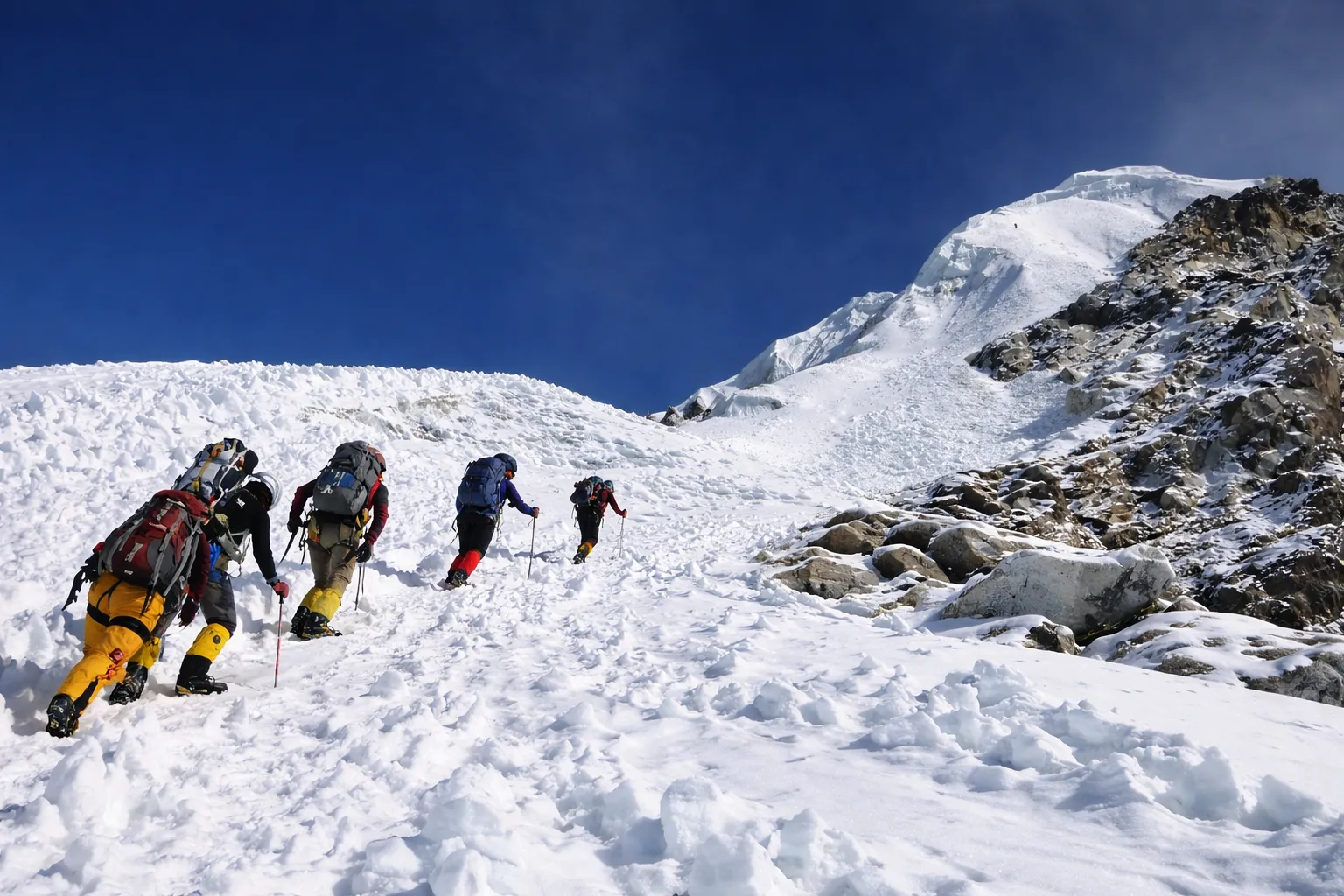
Manaslu Circuit covers 180 km over 14 to 18 days with Tibetan Buddhist Nubri and Tsum valley culture throughout. Villages like Namrung at 2,630 m, Lho at 3,180 m, and Samagaon at 3,520 m feature stone houses with flat roofs, prayer flag strung mani walls, and 700 year old gompas including Ribung Gompa and Pungyen Gompa. The route climbs from Hindu lowland at Soti Khola to Tibetan Buddhist highland at Samagaon over 7 days, with the cultural transition visible in architecture and language.
Annapurna Circuit covers 160 to 220 km over 12 to 16 days but now has jeep road access from Besisahar to Manang and from Muktinath to Jomsom, cutting the walking section to 5 to 8 days. Villages like Manang at 3,540 m and Muktinath at 3,760 m have grown into commercial trekking hubs with 30 to 50 teahouses each, losing much of their traditional character. The road brings 1,500 jeeps per month through the valley.
Manaslu restricted area permit caps at 600 trekkers per month during peak season, while Annapurna sees 1,500 trekkers per month on the Circuit section. The difference shows in village interaction quality: Manaslu villagers still invite trekkers for butter tea, while Annapurna villagers see trekkers as routine customers.
Desglose de costo/componente
| parte | Circuito de Manaslu | Circuito de Annapurna |
|---|---|---|
| Permiso de área restringida | $70 per week peak | NO REQUERIDO |
| Permiso MCAP | $30 | NO REQUERIDO |
| Permiso ACAP | $30 for Dharapani exit | $30 |
| tarjeta tims | $17 | $17 |
| Guía autorizado | $420 a $560 | $360 a $480 |
| Portero (1 por 2 excursionistas) | $210 a $280 | $180 a $240 |
| Alojamiento en la casa de té | $140 a $180 | $120 a $160 |
| Comidas en trek | $280 a $360 | $240 a $320 |
| Transport Kathmandu to Soti | $40 a $60 | $30 to $50 Besisahar |
| Seguro de evacuación de helicóptero | $50 a $80 | $50 a $80 |
| Total por persona (grupo de 4) | $1,500 a $2400 | $1200 a $2.000 |
que afecta la respuesta
Three factors shape the village culture comparison. First, road development: Annapurna Circuit has jeep roads from Besisahar to Manang and from Jomsom to Muktinath that cut walking days and bring commercial traffic. Manaslu has no road above Soti Khola, preserving the walking pilgrimage experience.
Second, restricted area status: Manaslu requires a $70 per week restricted area permit that caps trekkers at 600 per month and forces a minimum group of 2 with a licensed guide. Annapurna has no restricted area permit and no group minimum, allowing 1,500 trekkers per month on the Circuit section.
Third, cultural continuity: Manaslu Nubri valley villages speak a Tibetan dialect and practice traditional agriculture with yak herding and barley cultivation. Annapurna Manang valley villages have shifted to tourism based income with apple orchards replacing barley and teahouse operations replacing herding.
Consejos de reserva
Book Manaslu 12 weeks ahead for October departures since restricted area permits are quota capped at 600 trekkers per month. Confirm the operator has 10 or more MCAP permits logged in 24 months and a named lead guide with 5 or more prior Manaslu trips.
Book Annapurna Circuit 4 to 6 weeks ahead for October. Pick the full 16 day version that walks from Besisahar to Nayapul instead of the road shortened 12 day version that starts at Chame and ends at Jomsom.
For Manaslu, ask the operator to include the Tsum Valley extension at Lokpa, Chhokang Paro, and Mu Gompa for the deepest Tibetan Buddhist culture. The extension adds 4 to 5 days and $400 to $600 per person. Carry $400 to $600 cash for both treks.
Comparación con alternativas
The Upper Mustang trek costs $2,500 to $3,800 for 14 to 18 days and offers the deepest Tibetan Buddhist culture in Lo Manthang walled city.
Choose Manaslu Circuit for the best balance of Tibetan Buddhist village culture and moderate altitude.
Errores comunes a evitar
Do not pick Annapurna Circuit for village culture in 2027 if you have already trekked it before 2015, since the road development has significantly eroded the cultural experience.
Do not book Manaslu without a guide, since the restricted area permit requires a licensed guide and a minimum group of 2.
preguntasrán el
Which trek has better village culture, Manaslu or Annapurna?Manaslu Circuit, due to Tibetan Buddhist Nubri valley villages, restricted area status capping trekkers at 600 per month, and no road development above Soti Khola. Annapurna has road erosion and 1,500 trekkers per month.
Why is Manaslu more expensive than Annapurna?Manaslu requires a $70 per week restricted area permit and a licensed guide, while Annapurna has no restricted permit and allows solo trekking. Total Manaslu cost runs $1,500 to $2,400 versus Annapurna at $1,200 to $2,000.
Which trek has better high altitude scenery?Manaslu has the 5,106 m Larkya La crossing with Manaslu summit views. Annapurna has the 5,416 m Thorong La crossing with Annapurna range views. Both are comparable, but Manaslu is less crowded.
Can I combine Manaslu and Tsum Valley for deeper culture?Yes, the Manaslu Tsum Valley combined trek runs 18 to 21 days and adds the Tibetan Buddhist Tsum valley with Mu Gompa at 3,700 m. The extension adds $400 to $600 per person.
sumario
Manaslu Circuit beats Annapurna Circuit for village culture in 2027 to 2030 with Tibetan Buddhist Nubri villages, restricted area solitude, and no road development.
idea de narración
Pick Manaslu Circuit for the deepest Tibetan Buddhist village culture with restricted area solitude, the 5,106 m Larkya La crossing, and no road erosion.
Paquetes de Trek Recomendados
Lugares de trekking para explorar
Explore Trips in Nepal
Hand-picked guided trips to this destination
 English
 Deutsch
 Svenska
 Dansk
Dansk Русский
 Français
 Português
 Español
 Polski
 简体中文
简体中文 日本語
日本語 ไทย
ไทย العربية
 한국어
한국어