
schnelle Antwort
The best departure month for clear views on Kyanjin Ri and Tserko Ri is late October to mid November, with morning clarity at 9 out of 10 days and stable temperatures of minus 2 to 5 degrees at sunrise. Late March to mid April is the second best window at 8 out of 10 clarity, with rhododendron bloom as a bonus. Avoid June to September monsoon and late December to February winter storm windows.
Kyanjin Ri at 4,773 metres and Tserko Ri at 4,984 metres are the two main Langtang Valley viewpoints, and picking the right month makes the difference between a postcard panorama and a whiteout.
Detaillierte Aufschlüsselung
October is the most reliable month for clarity, with post-monsoon air washing the atmosphere clean and morning cloud cover averaging 10 percent. Sunrise temperatures at the Kyanjin Ri viewpoint run 0 to 5 degrees Celsius, comfortable for a 1 hour climb from Kyanjin Gompa. November offers similar clarity with colder nights of minus 2 to 2 degrees and slightly shorter daylight hours.
March brings warming temperatures and pre-monsoon stability, with morning clarity at 8 out of 10 days and afternoon clouds building by 11 am. April is the photographer month, with rhododendrons in full color along the trail and clear mornings, though haze increases after 15 April. December and January are very clear but extremely cold, with lodge water frozen at night, suited only for trekkers prepared for minus 10 conditions. May is hazy as monsoon approaches, and June to September is monsoon with low cloud and rare views.
Kosten- / Komponentenaufschlüsselung
Below is a 2027 cost guide for an 8 day Langtang Valley trek priced at $780 per person, with seasonal clarity and pricing.
| Reisefenster | Paketkosten | Morning Clarity | Temperature Range |
|---|---|---|---|
| Ende Oktober bis Mitte November | $820 peak | 9 von 10 | Minus 2 to 5 |
| Ende März bis Mitte April | $800 standard | 8 von 10 | 2 bis 12 |
| Early October | $780 standard | 7 out of 10 | 5 bis 15 |
| Ende April bis Mitte Mai | $740 off peak | 6 out of 10, hazy | 5 to 18 |
| Dezember bis Januar | $680 off peak | 9 von 10, sehr kalt | Minus 10 to 5 |
| Juni bis September | $640 off peak | 3 von 10 | 5 to 20 with rain |
Peak season pricing reflects lodge demand, not just weather quality.
Was beeinflusst die Antwort
Several variables shape which month gives the clearest views. Monsoon withdrawal timing matters, with late monsoons pushing the clear window into late October. Winter storm frequency affects December and January clarity, with storms followed by crisp clear days. Pre-monsoon haze from agricultural burning in late April reduces long-range visibility on Langtang Lirung. Your fitness matters too, because Tserko Ri requires a 4 hour pre-dawn climb that some trekkers skip in favor of the shorter Kyanjin Ri.
- Monsunabzug: Beeinflusst die Klarheit Anfang Oktober.
- Winterstürme: Clear but very cold in December and January.
- Vormonsun-Dunst: Baut nach dem 15. April, reduziert den Kontrast.
- Viewpoint choice: Kyanjin Ri is shorter, Tserko Ri is higher and clearer.
Buchungstipps / praktische Ratschläge
Book 3 to 4 months ahead for October and November departures, because Langtang lodges at Kyanjin and Lama Hotel fill fast in peak season. Ask your operator to confirm your Kyanjin Gompa night in writing, because some operators substitute Lama Hotel and force a longer day two climb. Build a 2 day buffer in Kathmandu before the trek, because the Syabrubesi road closes 5 to 10 days per year in monsoon and winter.
Photographers should plan Kyanjin Ri sunrise for 25 minutes before official sunrise, because first light hits Langtang Lirung before the sun clears the horizon. Carry a layer system rated to minus 5 even in October, because the viewpoint wind chill drops fast. Use Tserko Ri as a backup if Kyanjin Ri clouds over, because the higher altitude often rises above the cloud layer.
Vergleich mit Alternativen
Compared with Kala Patthar in the Khumbu, which offers Everest views at 5,545 metres, Kyanjin Ri is lower and easier but delivers a similar sunrise light show on Langtang Lirung. Compared with Khopra Ridge in the Annapurna region, which sits at 3,660 metres, Kyanjin Ri is higher and clearer but colder. Compared with Pikey Peak in the lower Khumbu, which offers a wider panorama at 4,065 metres, Kyanjin Ri is more focused on the Langtang massif.
Häufige Fehler zu vermeiden
Do not book late October if you want rhododendrons, because the bloom does not start until March. Avoid Langtang in May if your goal is mountain photography, because haze builds fast. Never assume Tserko Ri is optional, because its higher altitude often saves a clouded Kyanjin Ri sunrise. Do not skip the warm layers, because sunrise at 4,773 metres is cold in any season. Finally, do not book the morning Kathmandu to Syabrubesi jeep on a monsoon day, because road closures cascade.
Häufig gestellte Fragen
These are the questions we hear most about Langtang Valley viewpoint timing.
Zusammenfassung
Book Langtang Valley for late October to mid November for the best chance of clear Kyanjin Ri and Tserko Ri views, with morning clarity at 9 out of 10 days. Late March to mid April is the second best window at 8 out of 10 clarity with rhododendron bonus. Avoid monsoon and deep winter storm windows. Book 3 to 4 months ahead and build buffer days in Kathmandu.
Schluss
Kyanjin Ri and Tserko Ri deliver two of the most underrated sunrise panoramas in Nepal, and picking the right month is the single biggest decision you can make. Choose October or November for clarity, April for color, and book with an operator who confirms your Kyanjin Gompa night. With the right month, Langtang Lirung will glow pink at sunrise and stay with you for years.
Empfohlene Trek-Pakete
Trekking-Orte zum Erkunden
Explore Trips in Nepal
Hand-picked guided trips to this destination
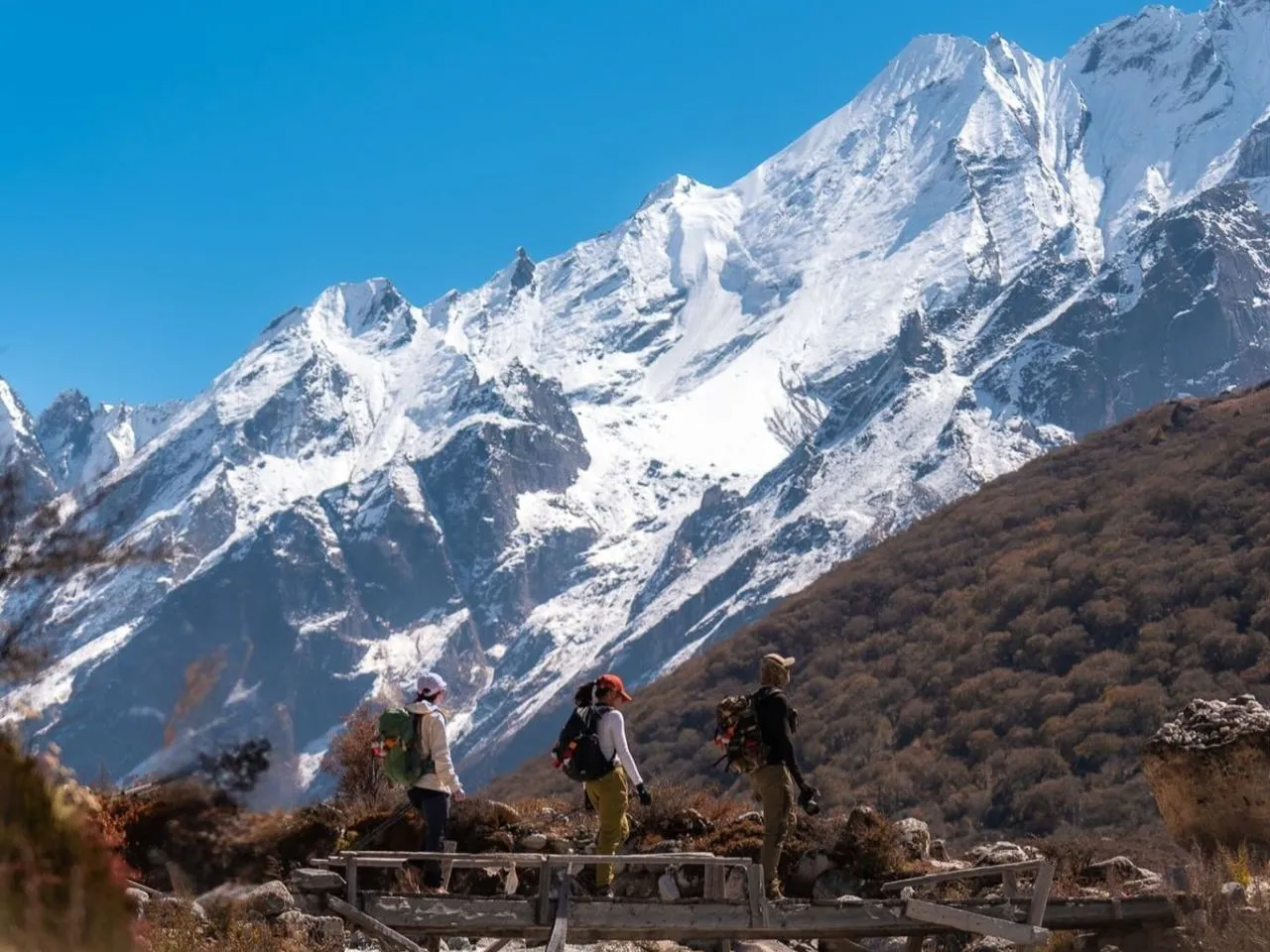
Langtang Luxus-Trek – 10 Tage
Langtang Luxus-Trek – 10 Tage
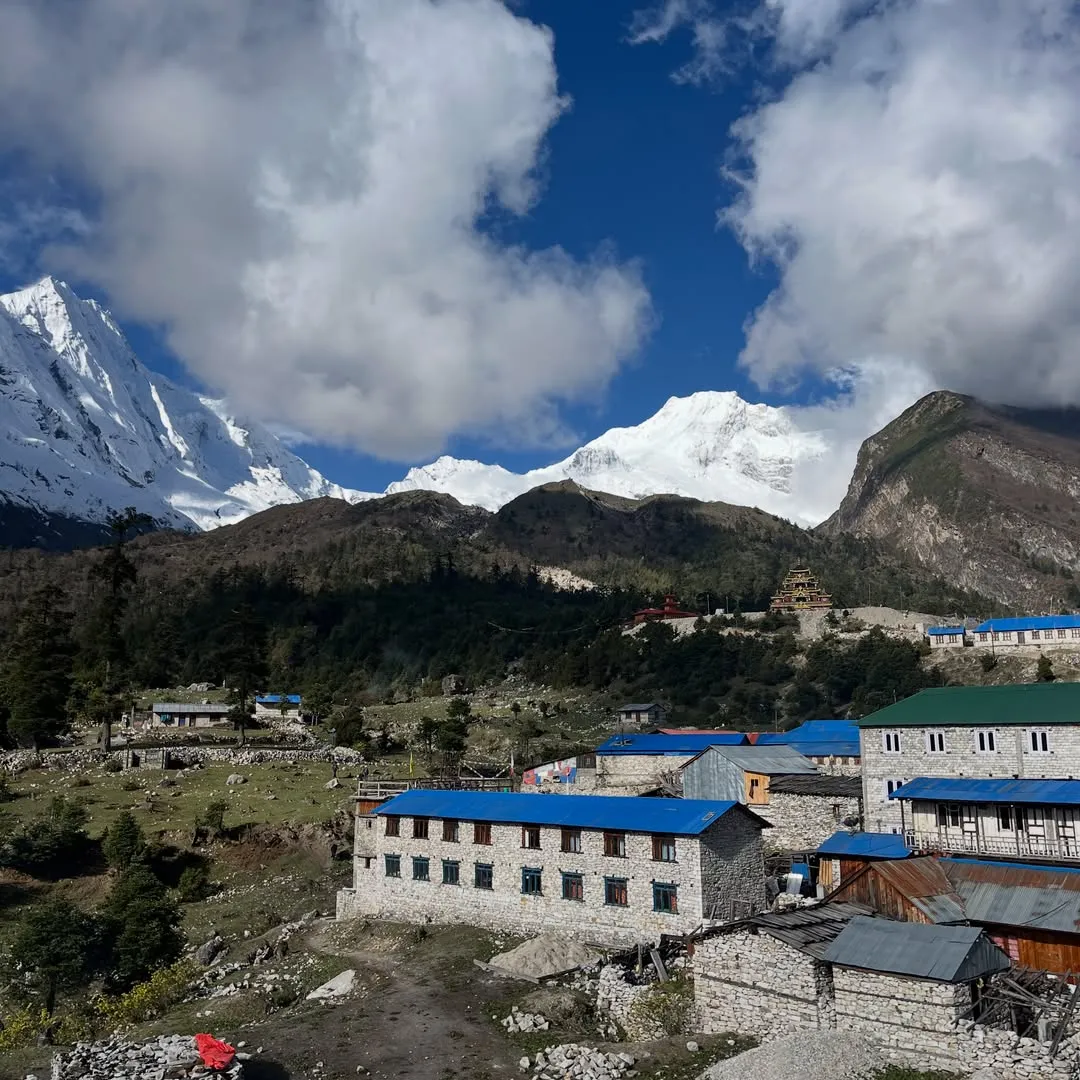
Manaslu-Familienwanderung – 12 Tage
Manaslu-Familienwanderung – 12 Tage
Manaslu-Luxus-Trek – 14 Tage
Manaslu-Luxus-Trek – 14 Tage

Manaslu-Fotografie-Trek – 17 Tage
Manaslu-Fotografie-Trek – 17 Tage
 English
 Deutsch
 Svenska
 Dansk
Dansk Русский
 Français
 Português
 Español
 Polski
 简体中文
简体中文 日本語
日本語 ไทย
ไทย العربية
 한국어
한국어